

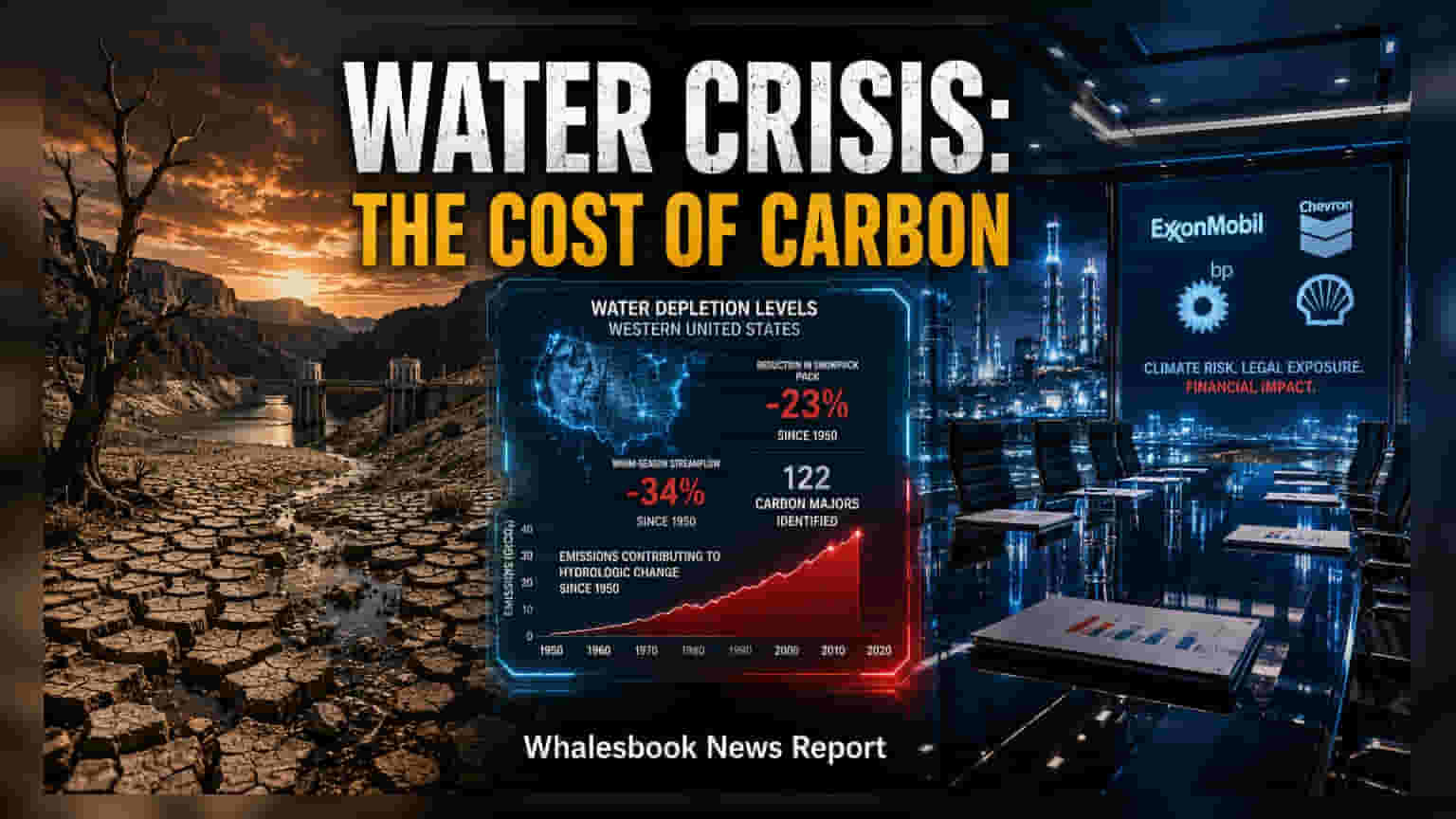
A new scientific study published in August 2026 links 122 major fossil fuel and cement companies to severe water shortages in the western United States. For global investors, the findings highlight a growing legal risk, as this scientific evidence is expected to strengthen climate liability lawsuits against these corporations ahead of a major US Supreme Court hearing scheduled for October 2026.
A scientific study published in the journal 'Communications Earth & Environment' in August 2026 has brought fresh attention to the potential legal risks facing some of the world’s largest energy companies. The research, conducted by teams from the Union of Concerned Scientists and the University of California, Merced, identifies 122 'carbon majors'—a group that includes major fossil fuel and cement producers—as significant contributors to water supply issues in the western United States.
The study suggests that emissions traced to these companies since 1950 have played a major role in regional hydrologic changes, including reductions in snowpack and warm-season streamflow. By quantifying these impacts, the researchers have provided data that could be used in upcoming courtroom battles. For investors holding shares in major global energy firms like ExxonMobil, Chevron, BP, and Shell, the news is relevant because it translates scientific research into a tangible legal risk.
The Shift Toward Climate Litigation
The timing of this research is critical for investors. The legal landscape for climate-related damages is evolving, and the focus is moving toward corporate accountability for regional environmental changes. With a significant case regarding state-law claims for climate-related injuries set to be heard by the US Supreme Court in October 2026, plaintiffs may use these findings to support arguments for financial restitution or damages.
While these companies operate globally and have large, diversified revenue streams, the potential for prolonged legal disputes creates financial uncertainty. Litigation can involve significant legal costs, the risk of settlements, and potential changes to how these companies are required to disclose climate-related risks to their shareholders.
Understanding the Investor Risk
The study does not immediately impact the day-to-day operations of these energy giants. However, it adds to the 'reputational risk' and 'regulatory pressure' that analysts often track within the energy and materials sectors. When scientific studies successfully link industrial activities to specific local or regional environmental harms, it often emboldens state and local governments to seek financial accountability or pursue 'superfund' style arrangements for environmental cleanup.
For investors, the key monitorable is not the study itself, but how this evidence is utilized in the US legal system. The outcome of the upcoming Supreme Court hearing will be a major indicator of whether such scientific attribution studies can effectively be used to force corporate compensation for regional climate damage. Investors may track news surrounding this court case and any subsequent policy changes in the United States, as these will likely determine the potential financial impact on the affected companies.