

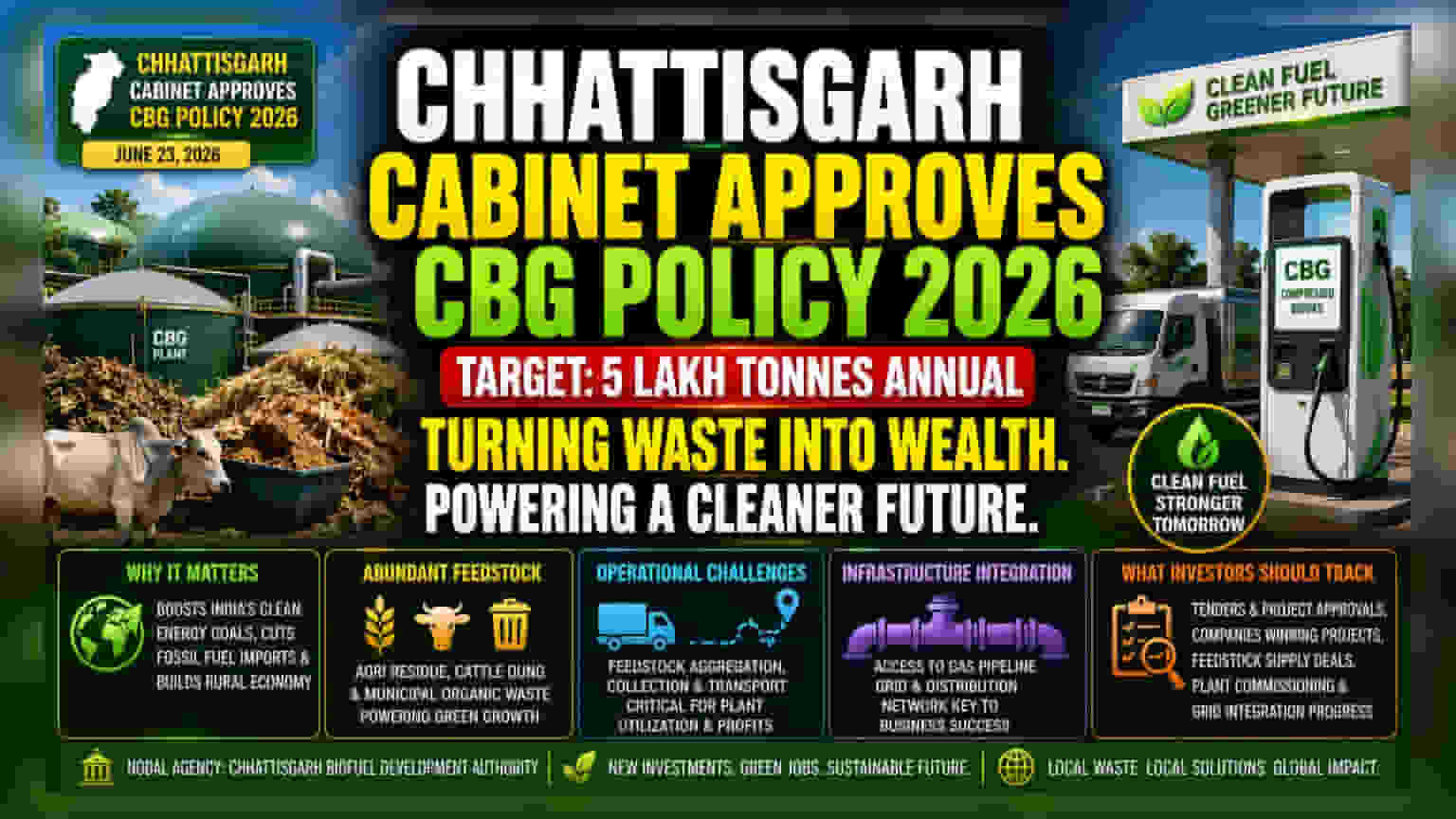
Chhattisgarh has approved a new Compressed Biogas (CBG) policy to convert agricultural and organic waste into clean fuel, aiming for nearly 5 lakh tonnes of annual production. This move signals a push for energy self-sufficiency and offers new business opportunities in the bio-energy sector, though investors should watch for challenges in supply chain and gas grid connectivity.
What Happened
On June 23, 2026, the Chhattisgarh state cabinet officially approved the Compressed Biogas (CBG) Policy 2026. The state aims to transform agricultural residue, cattle dung, and municipal organic waste into usable clean fuel. The policy sets a target of nearly 5 lakh tonnes of annual CBG production. The Chhattisgarh Biofuel Development Authority has been named the nodal agency to manage investments and coordinate between stakeholders. This initiative is designed to reduce the state's reliance on traditional fossil fuels and create new economic activity in rural areas.
Why This Matters For The Energy Sector
This policy reflects India's broader national effort to diversify its energy mix and lower import dependency on crude oil and LPG. For companies operating in the renewable energy, bio-fuel, and waste management sectors, this creates a new addressable market. The conversion of local waste into energy is a strategic move to build a more resilient energy supply. Investors can view this as a government-backed push to encourage private participation in green energy infrastructure, similar to the national push seen under various sustainability schemes.
The Operational Challenges
While the policy provides a framework, the actual business success for companies involved depends heavily on operational logistics. The primary risk in the biogas industry is feedstock aggregation, which means the consistent collection and transportation of raw materials like crop waste or organic waste. If a company cannot secure a steady supply of waste at a reasonable price, it will struggle to maintain high plant utilization. Investors should recognize that poor feedstock availability can lead to lower production and hurt profit margins.
Integration And Infrastructure Risks
Beyond the raw material supply, another significant hurdle is integrating the produced biogas into the existing natural gas distribution network. Biogas plants require access to a pipeline grid or efficient distribution channels to get the fuel to the end market. Without a clear plan to connect these plants to gas pipelines, the cost of transporting the fuel could rise, potentially making the business model less attractive. Success will depend on the state's ability to coordinate infrastructure development alongside the plant setups.
What Investors Should Track
Going forward, the key monitorable for investors will be the release of specific tenders and the approval of new projects by the Chhattisgarh Biofuel Development Authority. It will be important to see which companies secure these project contracts and whether they can establish long-term supply agreements for waste. The speed of commissioning these plants and their ability to integrate into the commercial gas grid will determine the financial viability of these investments.