

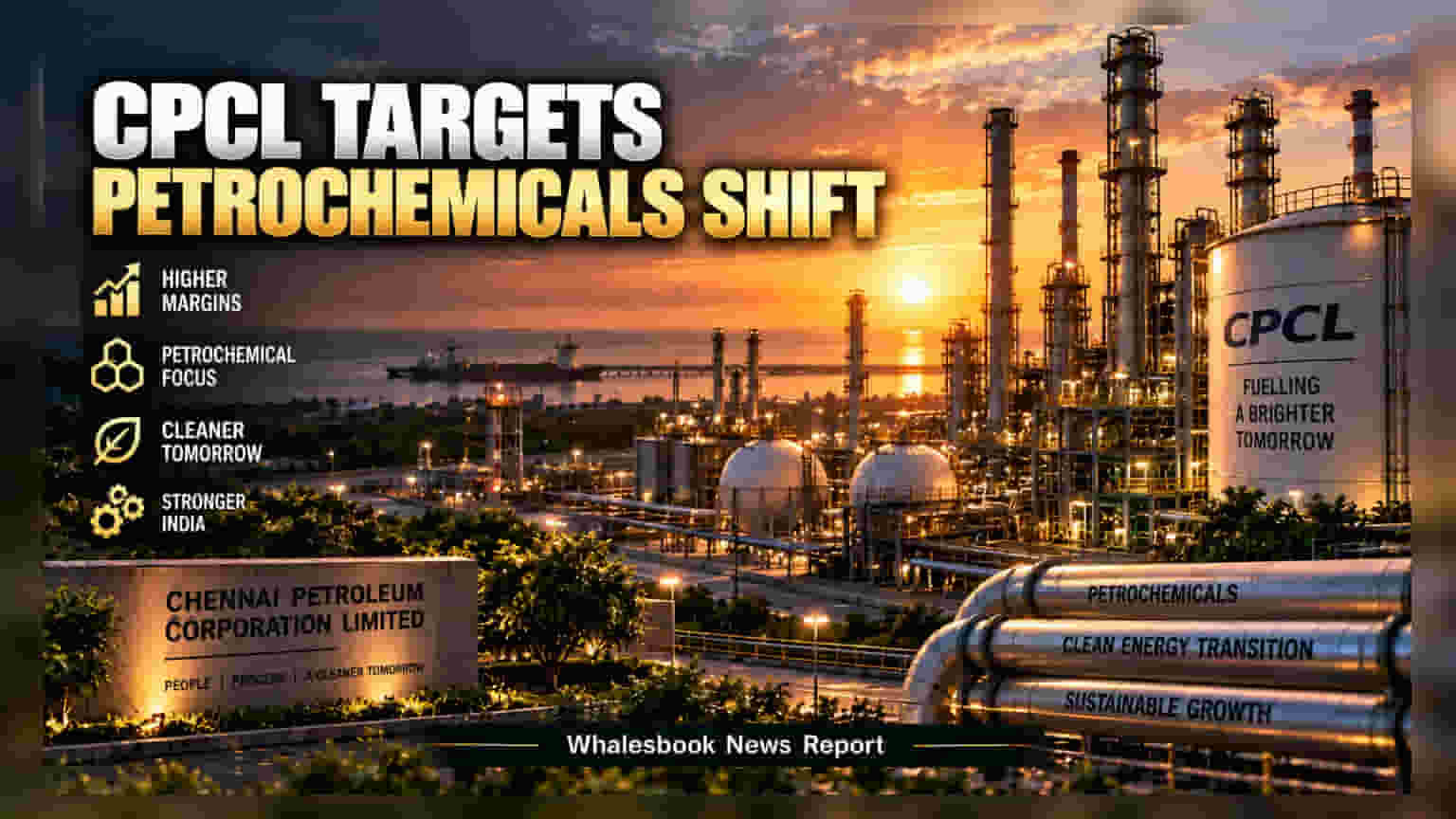
Chennai Petroleum Corporation (CPCL) is redesigning its 9-million-tonne Nagapattinam refinery project to prioritize high-value petrochemicals. This strategic shift aims to counter long-term declines in traditional fuel demand caused by the rise of electric vehicles. The company is also running its existing Manali facility at full capacity by using flexible crude sourcing to navigate global energy market volatility.
Chennai Petroleum Corporation Ltd. (CPCL) is changing the strategic direction for its upcoming 9-million-tonne refinery project in Nagapattinam. Instead of building a plant focused primarily on traditional fuels like petrol and diesel, the company is re-engineering the project to become a petrochemical-heavy complex. This move is designed to capture higher margins from non-fuel derivatives, as the company prepares for a long-term transition in global energy where demand for traditional transportation fuels may slow due to the increasing adoption of electric and hybrid vehicles.
The Nagapattinam project, operated under the joint venture Cauvery Basin Refinery and Petrochemicals Limited (CBRPL), represents a significant investment. By shifting the focus to petrochemicals immediately, the company hopes to secure a more sustainable revenue stream rather than relying heavily on fuel products that are sensitive to cyclical market shifts. Investors should watch the project timelines and funding requirements, as large-scale expansion projects involve significant capital spending and are susceptible to cost overruns or execution delays.
Simultaneously, the company is maximizing performance at its existing Manali refinery, which has maintained production levels exceeding 100% of its rated capacity over the last five years. This operational efficiency is supported by the ability to process more than 160 different grades of crude oil. This flexibility allows the refinery to source cheaper crude options when regional supply chains face disruptions, helping to insulate the business from the price shocks that often hit global energy markets.
In another move to boost profitability and support import substitution, the company is upgrading its production capabilities at the Manali plant. It is transitioning from the production of Group I lube oil base stock to the more efficient Group II and Group III categories. These higher-quality products are generally in higher demand and help the company compete more effectively with imported alternatives. The firm is also advancing its net-zero strategy, targeting a 2046 timeline that aligns with the roadmap set by its parent company, Indian Oil Corporation Ltd. Looking ahead, the critical monitorables for investors include the progress of the Nagapattinam petrochemical complex, the stability of petrochemical margins, and the company’s ability to manage its capital spending requirements without putting excessive pressure on its balance sheet.