

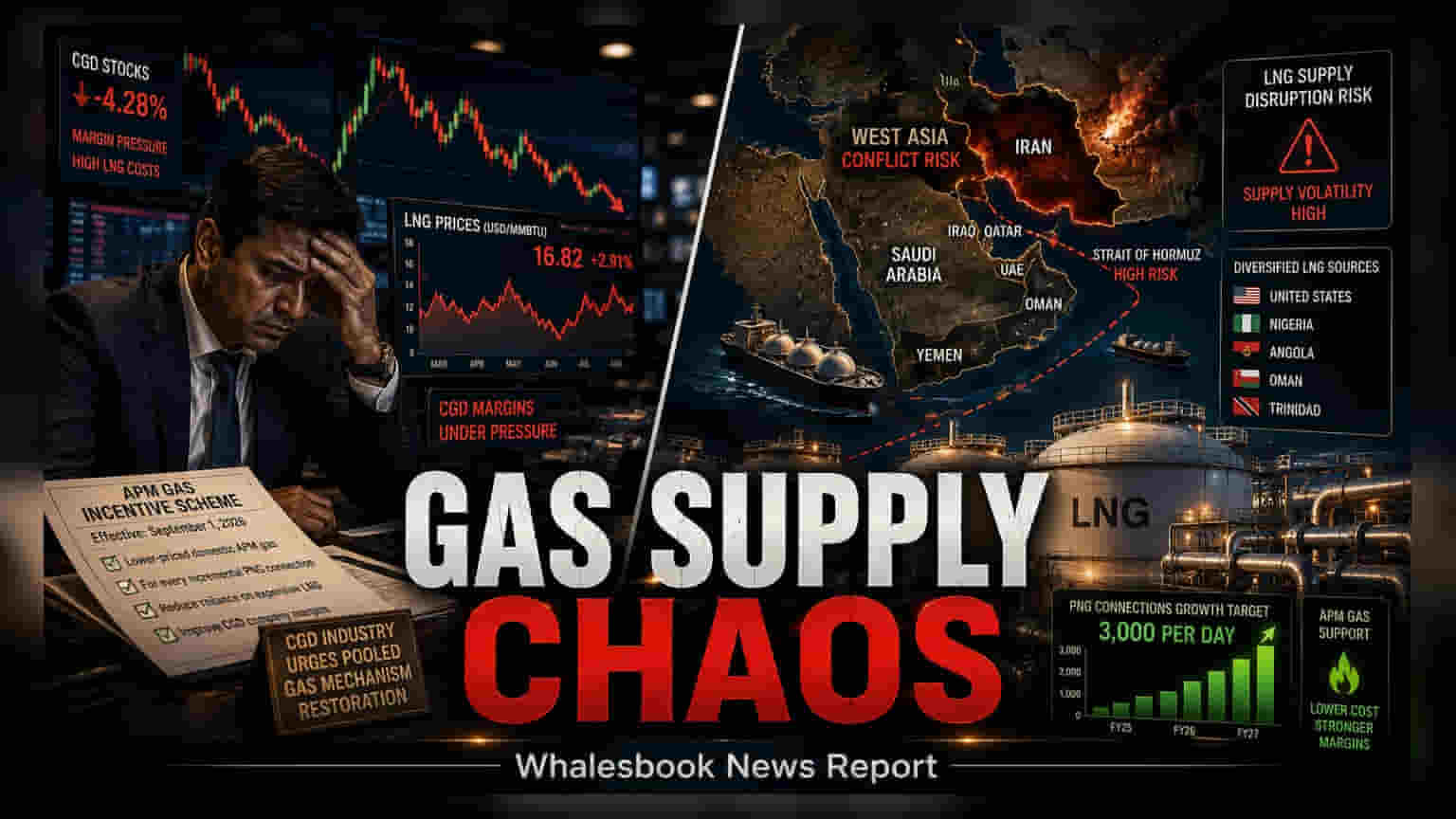
City gas distributors are pushing for a return of the pooled gas mechanism to counter supply risks from West Asian tensions. In response, the government has announced a new incentive scheme effective September 1, 2026, granting firms lower-priced domestic gas allocations for every new domestic PNG connection.
City gas distribution (CGD) companies are actively urging the central government to reinstate the pooled gas supply mechanism. This push comes as ongoing geopolitical instability in West Asia continues to threaten the stability and pricing of global liquefied natural gas (LNG) supplies. The industry argues that a return to this mechanism would provide a necessary buffer against the volatility currently seen in the global energy market.
Government Incentive Scheme to Address Supply Costs
While the government has not yet reinstated the previous pooled gas mechanism, it has introduced a new incentive scheme aimed at addressing the concerns of CGD firms. Starting September 1, 2026, the government will allocate additional volumes of lower-priced domestic Administered Price Mechanism (APM) gas to companies for every incremental billed domestic Piped Natural Gas (PNG) connection.
This policy shift is designed to reduce the industry's reliance on expensive spot-market LNG, which has been the primary cause of margin pressure in recent months. By increasing the availability of cheaper domestic gas, the government intends to help firms lower their overall procurement costs without needing to re-implement the more complex pooled gas system that was discontinued in July.
Geopolitical Impact on LNG Sourcing
For months, the Indian energy sector has navigated a difficult supply environment. Following force majeure declarations by Qatar Energy earlier this year due to regional conflicts, India’s supply chain faced significant disruptions. The volatility has been further exacerbated by security concerns in shipping lanes like the Strait of Hormuz, which are critical for energy transit.
In response to these supply risks, Indian companies have been aggressively diversifying their import portfolio. Reliance on Qatar has been reduced by increasing imports from the United States, Nigeria, Angola, Oman, and Trinidad. However, despite this diversification, the high cost of spot-market purchases continues to affect the financial performance of CGD operators.
Investor Monitorables
Investors are now looking toward the upcoming quarter to see how the new incentive scheme impacts the profit margins of CGD companies. While the allocation of APM gas is a positive step toward cost reduction, the final financial impact will depend on the speed of customer acquisition and the volume of incremental PNG connections added by each firm.
Looking ahead, the stability of global LNG prices remains the key risk factor. Continued tensions in West Asia could lead to further shipping disruptions or price spikes, which would keep the pressure on non-APM gas costs. Market participants will likely track whether these domestic gas incentives are sufficient to offset global price volatility or if the industry will continue to press for broader supply mechanisms.