

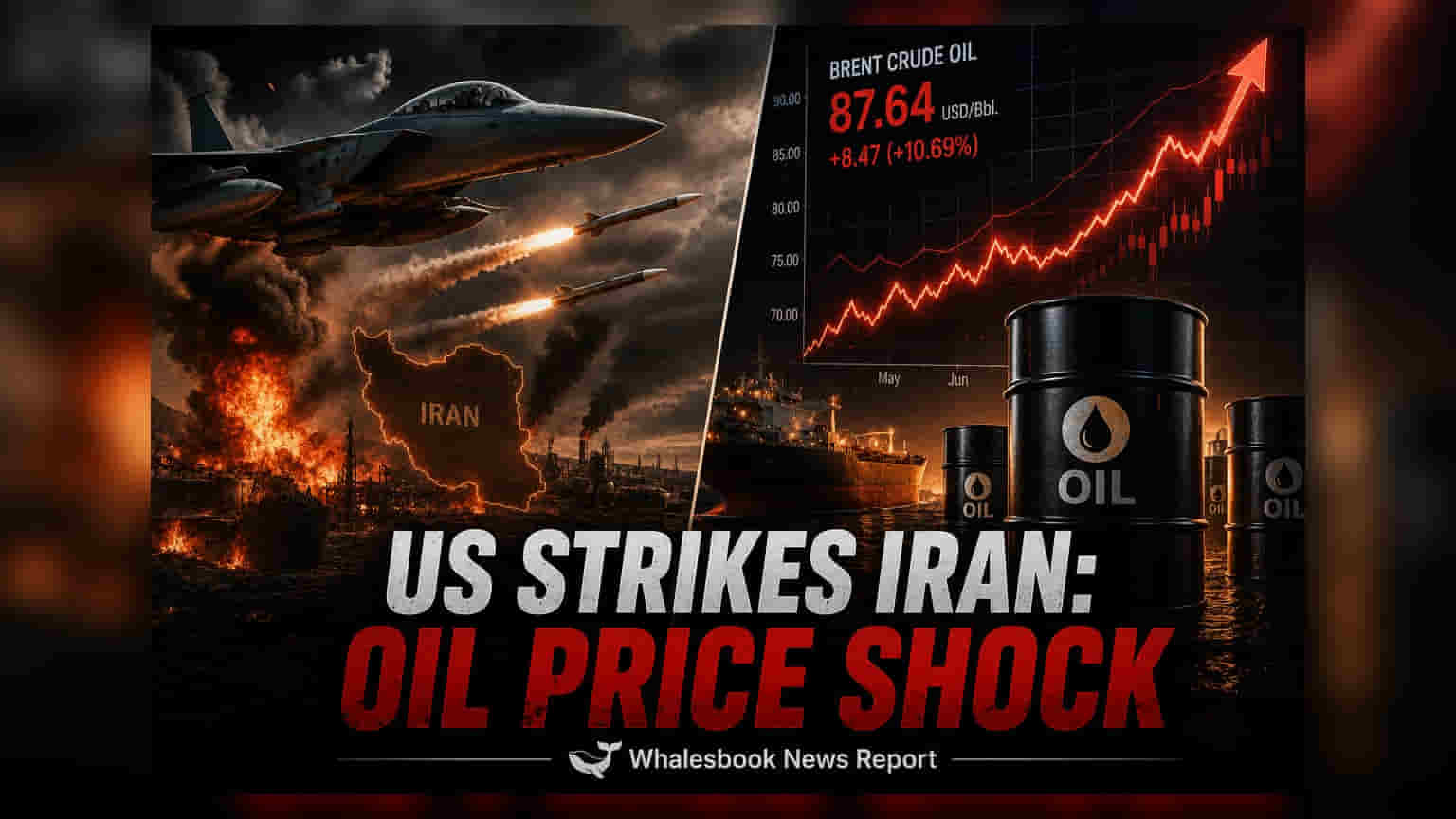
Brent crude prices jumped past $76 a barrel after the US military launched strikes against Iran following attacks on commercial vessels in the Strait of Hormuz. This geopolitical shift directly impacts global energy costs, while the Reserve Bank of India has announced a ₹25,000 crore liquidity auction to stabilize domestic banking conditions.
Global energy markets are reacting to fresh geopolitical volatility as the United States military began retaliatory strikes against Iran. This military action follows recent attacks on three commercial vessels, including an LNG tanker and an oil supertanker, within the Strait of Hormuz. As this region is a critical choke point for global oil transport, the threat of supply disruption has pushed Brent crude prices above $76 a barrel, while West Texas Intermediate (WTI) has climbed above $72 a barrel.
Impact on Indian Markets
For Indian investors, higher crude oil prices often create pressure on the country's import bill, which can influence the rupee's valuation and impact the profit margins of oil-consuming sectors such as aviation, paint manufacturing, and oil marketing companies. On the domestic front, the Reserve Bank of India is taking steps to ensure stability in the banking system. The central bank has announced an overnight Variable Rate Repo auction worth ₹25,000 crore to manage short-term liquidity. This operation, conducted under the Liquidity Adjustment Facility, is a standard tool used by the regulator to keep interest rates in the overnight market aligned with policy goals during times of financial uncertainty.
Global Market Context
Beyond energy markets, broader investor sentiment is also facing headwinds from recent developments on Wall Street. On Tuesday, July 7, major US indices saw a decline, with the Nasdaq-100 dropping nearly 2%, or more than 500 points. This retreat was primarily driven by a sell-off in semiconductor stocks, which has contributed to a cautious mood in global equities. Additionally, Hong Kong has started testing a new central gold clearing and settlement system. While this is an international initiative aimed at positioning Hong Kong as a major hub for bullion trading, it is a development that analysts may watch for its long-term potential to influence bullion trade flows across Asia, including India.
Investors will likely track the next steps in the Middle East conflict, as prolonged instability could lead to sustained higher energy prices. Domestically, the focus remains on how effectively the RBI manages banking system liquidity and whether these geopolitical tensions lead to any significant shifts in oil import costs for Indian corporations in the coming quarterly results.