

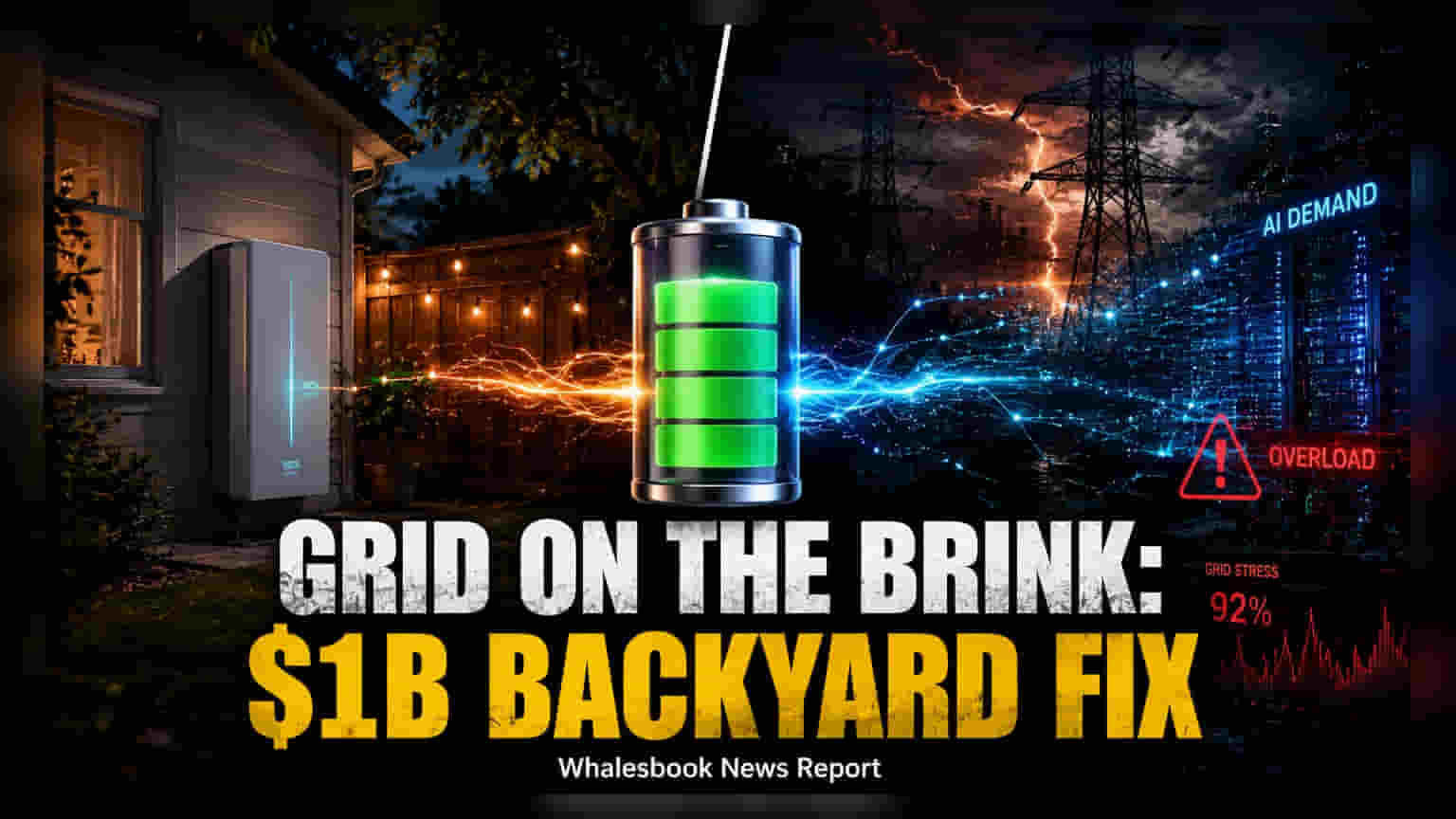
Energy storage startup Base Power has secured $1 billion in Series D funding, reaching a $13 billion valuation. The company installs residential batteries to help stabilize power grids facing high demand from AI data centers and electrification. This business model uses a subscription service to sell stored energy back to local grids during peak hours.
Base Power, an energy storage startup focused on residential grid stabilization, has successfully raised $1 billion in its latest Series D funding round. This financing round brings the company's total valuation to $13 billion, highlighting significant investor interest in infrastructure solutions designed to manage increasing electrical loads.
Operational Strategy and Expansion
The company is currently scaling its installation pace, which stands at approximately 100 residential battery units per day. Management aims to increase this installation volume by the end of the year. To support this growth, Base Power manufactures its proprietary home battery, the Base Core, at a dedicated facility in Austin, Texas. Each unit provides 39.2 kilowatt-hours of storage, a capacity designed to exceed several standard residential battery offerings currently available on the market.
Grid Services and Revenue Model
Unlike traditional providers that rely on upfront equipment sales, Base Power operates on a subscription-based model. In markets such as Houston, users typically pay an installation fee followed by a monthly subscription and charges based on electricity usage. This model allows the company to retain ownership of the batteries, which it then utilizes to provide grid services. By discharging stored energy back into the network during periods of high demand, the company generates revenue, effectively turning residential properties into a distributed energy resource.
Addressing Infrastructure Pressures
Base Power is primarily active in Texas and the PJM region, which covers parts of Illinois. These areas are currently dealing with significant pressure on their electrical infrastructure due to a combination of rising residential electrification and the expansion of power-intensive AI data centers. By placing energy storage capacity directly at residential locations, the company intends to alleviate stress on local grids. While the model provides a decentralized solution to grid stability, investors may monitor the company’s ability to manage the logistics of maintaining a large fleet of hardware across various states and the long-term effectiveness of its grid-service revenue under changing regulatory frameworks for distributed energy. The company's performance will depend on its ability to sustain rapid unit deployment while ensuring the reliability of the battery network over time.