

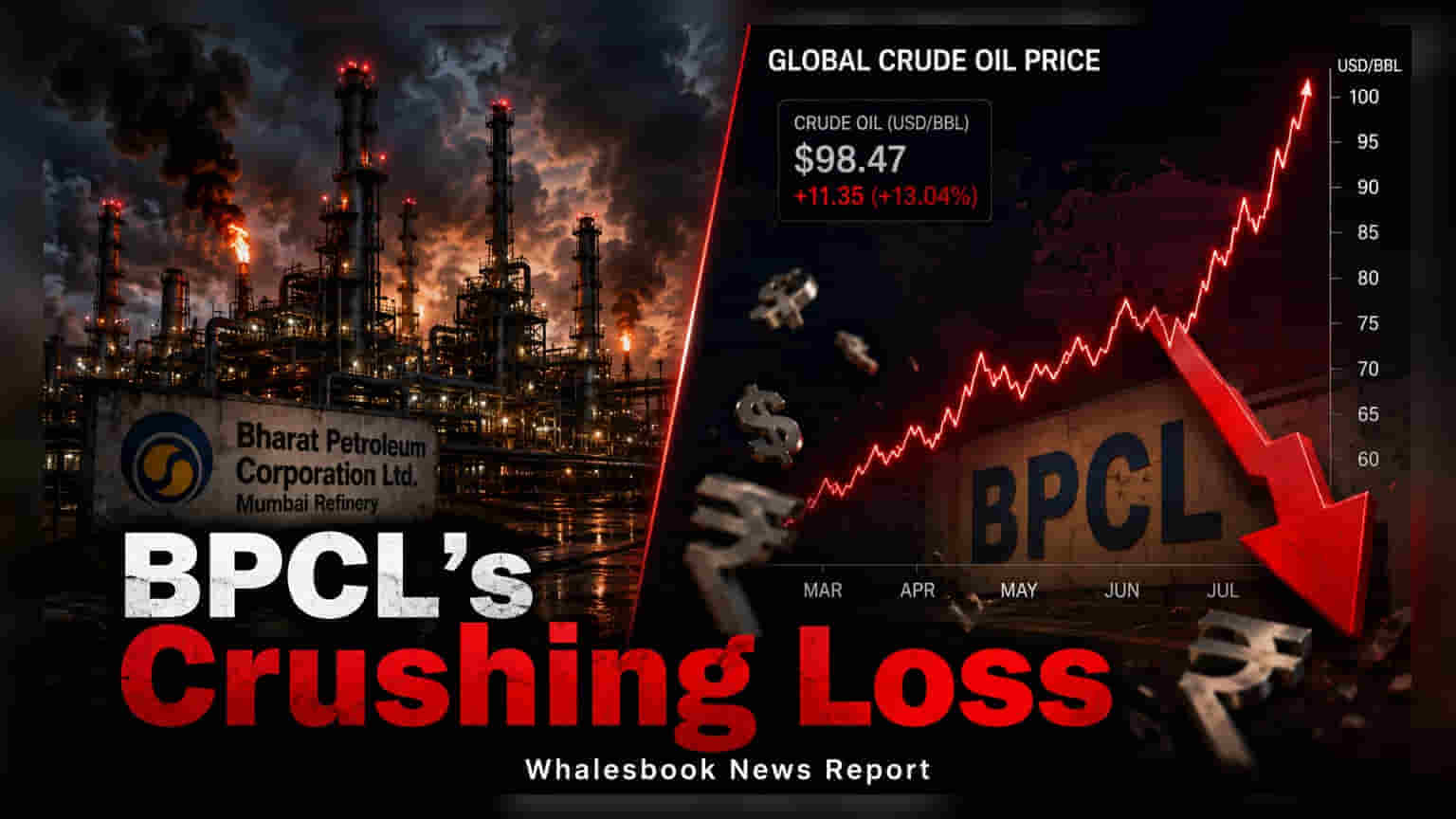
Bharat Petroleum (BPCL) reported a consolidated net loss of ₹3,962 crore for Q1 FY27, as rising global crude oil prices hit marketing margins. While revenue grew, the company absorbed significant under-recoveries on petrol, diesel, and LPG. Investors should monitor future fuel price trends and the recovery of outstanding government subsidy dues.
Detailed Coverage
Bharat Petroleum Corporation Ltd (BPCL) posted a consolidated net loss of ₹3,962.13 crore for the quarter ended June 2026. This performance marks a sharp departure from the profits recorded in the same period last year. The financial strain was primarily driven by the company’s decision to maintain retail fuel prices despite a significant rise in global crude oil costs.
Impact of Fuel Price Freeze and LPG Under-recoveries
BPCL’s revenue from operations rose by 23% year-on-year to reach ₹1,59,479.28 crore. However, this growth in top-line figures failed to translate into profit because the company absorbed heavy losses on the sale of petrol, diesel, and domestic LPG. During this quarter, marketing margins were squeezed as oil marketing companies kept retail prices steady for over ten weeks, despite the crude oil surge caused by geopolitical conflicts involving the US, Israel, and Iran.
The company specifically noted LPG under-recoveries of ₹3,485.22 crore for the June quarter alone. These under-recoveries occur when companies sell fuel at prices lower than the cost of production and distribution. Furthermore, as of March 31, 2026, BPCL reported that its unpaid LPG subsidy dues from the government reached ₹12,318.52 crore. While the company eventually implemented price increases—raising petrol and diesel rates by over ₹7.50 per litre and LPG cylinder prices by ₹89—these measures were not enough to fully cover the rising input costs.
Operational and Sector Context
The pressure on BPCL is part of a broader trend affecting state-owned fuel retailers like Indian Oil Corporation (IOC) and Hindustan Petroleum Corporation Ltd (HPCL). These companies often face similar challenges when global energy markets become volatile. BPCL’s operational data showed a slight decline in activity, with petroleum product sales volume at 13.62 million tonnes compared to 13.86 million tonnes in the previous year. Additionally, refinery throughput—a measure of how much crude oil is processed—dipped slightly to 10.15 million tonnes from 10.40 million tonnes.
Beyond direct fuel costs, the company also faced increased expenses due to higher freight rates and insurance premiums related to the ongoing geopolitical climate in West Asia. Investors tracking BPCL should look closely at how the company manages its working capital, particularly regarding the collection of long-standing subsidy dues from the government. The next few quarters will likely be defined by whether global oil prices stabilize and whether the company can maintain better margins to offset its high debt and operating costs.