

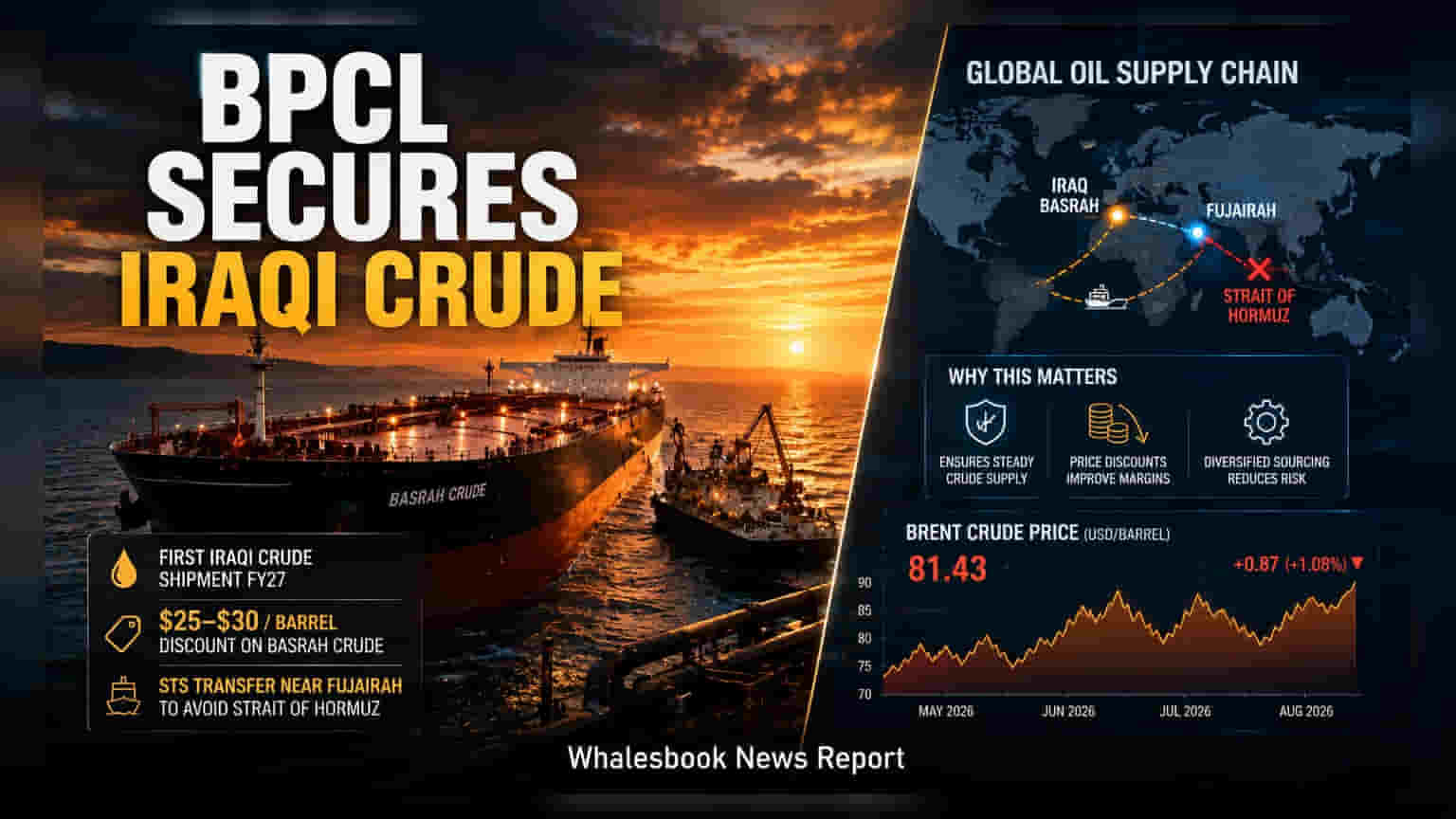
Bharat Petroleum Corporation (BPCL) has commenced receiving its first Iraqi crude shipment of the fiscal year, using ship-to-ship transfers off Fujairah to bypass maritime disruptions in the Strait of Hormuz. The move highlights the refiner’s efforts to maintain supply stability despite heightened geopolitical tensions and rising logistics costs in the Middle East.
Bharat Petroleum Corporation (BPCL) is managing its crude supply chain through a complex logistical shift, successfully securing its first Iraqi crude shipment of the current fiscal year. To avoid the restricted and volatile shipping routes within the Strait of Hormuz, the company is utilizing a ship-to-ship (STS) transfer process near Fujairah. This maneuver allows the refiner to ensure steady feedstock delivery for its refineries despite the ongoing maritime instability caused by the US-Iran conflict.
The decision to source and transport this cargo comes as suppliers in Iraq have offered significant discounts, reportedly ranging between $25 and $30 per barrel on August-loading Basrah crude. These price advantages provide a necessary cushion for refiners, helping offset the rising costs associated with insurance and the logistical complexity of bypassing standard shipping lanes. For BPCL, which relies on the spot market for approximately 60% of its total crude procurement, such diversified sourcing is a core part of its operational strategy.
Management has indicated that the company is actively exploring the purchase of Gulf crude on a free-on-board (FOB) basis. This approach shifts some of the logistical responsibility and associated costs, allowing the company to better manage its supply chain risks. The company’s ability to coordinate these transfers is becoming increasingly important as tanker traffic through the Strait of Hormuz remains heavily suppressed.
Financially, the company entered this period of high geopolitical pressure with a strong base, having reported a consolidated net profit of ₹25,843 crore for the fiscal year 2026. During the 73rd Annual General Meeting held on August 27, 2026, shareholders approved the financial statements, reflecting confidence in the company's recent performance. However, investors are watching how these logistical adjustments impact margins.
While the company has demonstrated an ability to navigate regional instability, the situation in the Middle East continues to pose risks. The primary challenges for the company include high insurance premiums for vessels operating in sensitive zones, potential delays in cargo arrival, and the risk of increased demurrage costs—fees paid when ships are delayed beyond the agreed time. Additionally, fluctuations in global refining margins remain a persistent concern. Moving forward, market participants will monitor whether the company can continue to secure favorable spot deals and manage the rising costs of shipping without significantly impacting its overall profitability.