

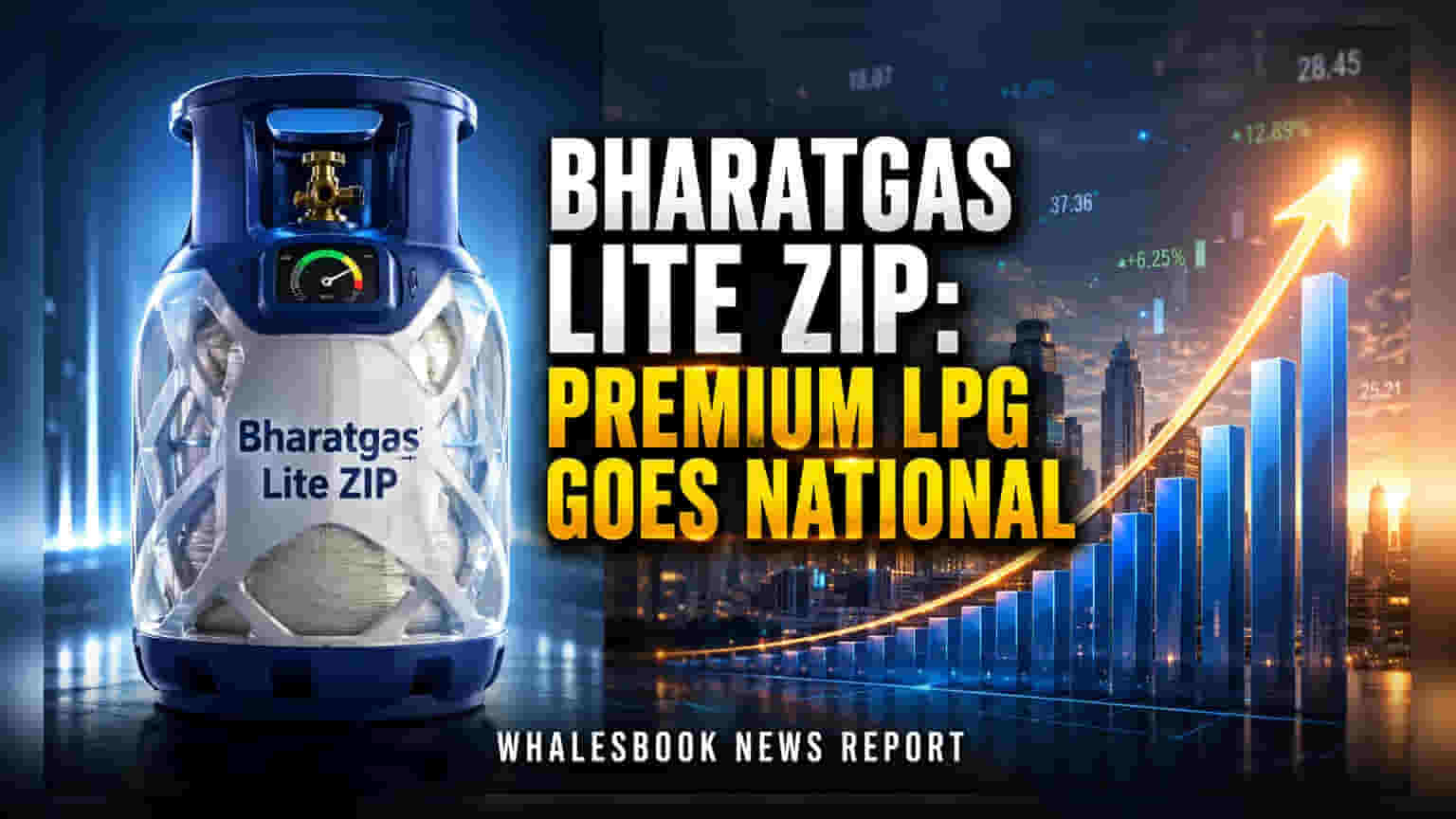
Bharat Petroleum (BPCL) is scaling its premium LPG service, Bharatgas Lite ZIP, to 100 cities across 24 states by August 15, 2026. The service, featuring lightweight composite cylinders and express delivery, marks a strategic effort by the state-run oil marketer to capture urban demand and compete with emerging quick-commerce delivery models.
Bharat Petroleum Corporation Ltd (BPCL) has announced a significant expansion of its premium LPG service, Bharatgas Lite ZIP. After an initial pilot in Mumbai, the company plans to scale the service to 100 cities across 24 states by August 15, 2026. This service targets urban consumers by offering a faster connection process combined with express delivery of composite LPG cylinders.
Product Focus and Convenience
The Bharatgas Lite ZIP service centers on the use of composite cylinders. These cylinders are notably lighter than traditional steel ones, are designed to be corrosion-free, and include a transparent window that allows users to monitor gas levels. By focusing on these features, BPCL aims to appeal to households looking for more convenience in their domestic energy usage. The company is positioning this as a modern solution for faster-paced urban lifestyles, which has become a competitive focus for major oil marketing companies in India.
Competitive Landscape in Urban LPG
The move comes as state-run oil marketing companies (OMCs) aggressively compete for urban market share through convenience-focused services. This sector has seen notable shifts as companies partner with quick-commerce platforms to shorten delivery times. For instance, Hindustan Petroleum Corporation Ltd (HPCL) has entered the space by partnering with Swiggy Instamart to facilitate the delivery of its HP Navya 10-kg composite cylinders in Bengaluru. A distinct aspect of the HPCL and Swiggy arrangement is the ability for customers to place orders even without a prior LPG connection, a feature that directly addresses the needs of transient urban populations like students and young professionals.
Investor Context and Strategic Shift
For investors, these developments highlight a broader shift among India’s major oil marketing firms toward service-led growth. By integrating their products into the digital-first, quick-commerce ecosystem, companies like BPCL are attempting to defend their market share against potential disruptions in the traditional distribution model. While the LPG segment has historically been driven by massive, standardized distribution networks, the move toward premium, user-friendly products reflects a strategy to tap into higher-value consumer segments.
Monitoring this trend will be important, as the success of these expansions depends on the company's ability to maintain efficient supply chains across a wider geographical footprint. Investors may track how these service-oriented investments influence marketing expenses and whether the convenience-led model translates into a sustainable increase in customer acquisition and brand loyalty over the coming quarters.