

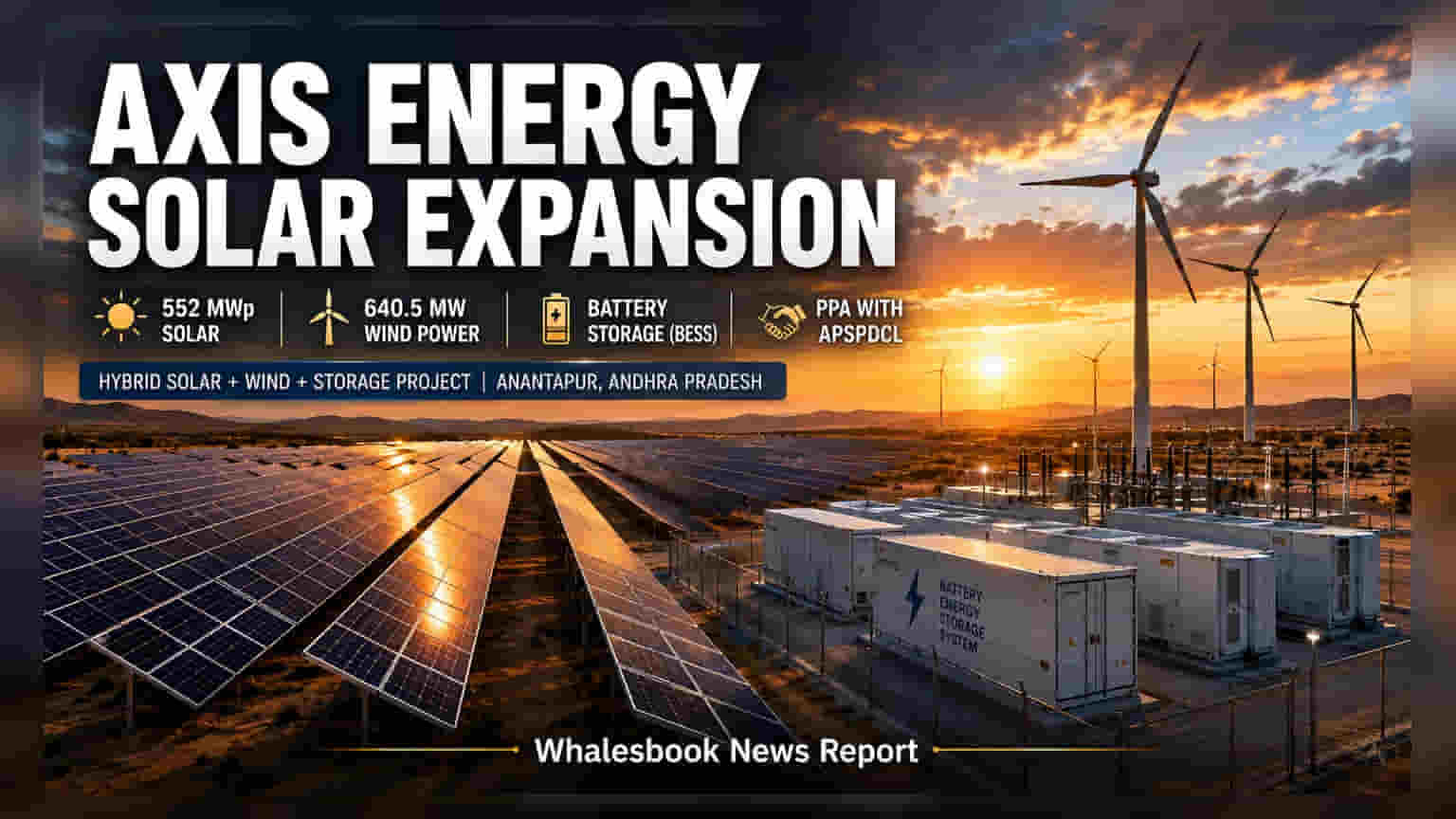
Axis Energy has secured the engineering, procurement, and construction contract for a 552 MWp solar project in Anantapur. The initiative, part of the Evren joint venture with Brookfield, integrates battery storage to stabilize regional grid power. This reflects the ongoing shift toward large-scale hybrid renewable energy projects in India to meet peak demand.
Axis Energy has finalized the contract to handle the engineering, procurement, and construction (EPC) for a 552 MWp utility-scale solar project. The facility is being built in the Anantapur district of Andhra Pradesh. This project is a key part of the renewable energy platform Evren, which is a joint venture between the Canadian asset manager Brookfield and the Indian renewable energy firm Axis Energy.
The project is significant because of its design. It is being developed as a hybrid facility, meaning it combines solar energy, wind power, and battery storage. Specifically, the project involves a 640.5 MW wind power component alongside the solar installation. By integrating Battery Energy Storage Systems (BESS), the facility aims to solve a common problem in the renewable sector: intermittency, or the fact that solar and wind power are not always available when electricity demand is at its highest. The battery system allows the project to store excess energy and release it to the grid during peak hours, ensuring more stable supply.
The project has secured long-term Power Purchase Agreements (PPAs) with the Andhra Pradesh Southern Power Distribution Company Ltd (APSPDCL). These agreements are essential for the commercial viability of such large-scale energy projects, as they provide a guaranteed buyer and price for the electricity produced. The commissioning of this facility is targeted within the next 18 months, which will be a key date for monitoring project progress.
For the energy sector, this development highlights the growing focus on complex, high-capacity hybrid power plants. While India has made significant strides in renewable energy, the ability to deliver power consistently remains a priority. Successfully managing the technical complexity of BESS and ensuring the timely integration of wind and solar capacity are the primary challenges for the company.
Investors and sector observers tracking the renewable energy space will likely watch the execution timeline. Large infrastructure projects of this nature face standard industry risks, including potential delays in project commissioning, cost overruns, and the technical complexity of scaling up battery storage infrastructure. Furthermore, the financial performance of the project will depend on maintaining stable operations and managing the long-term contractual obligations under the PPA with the state distribution company.