

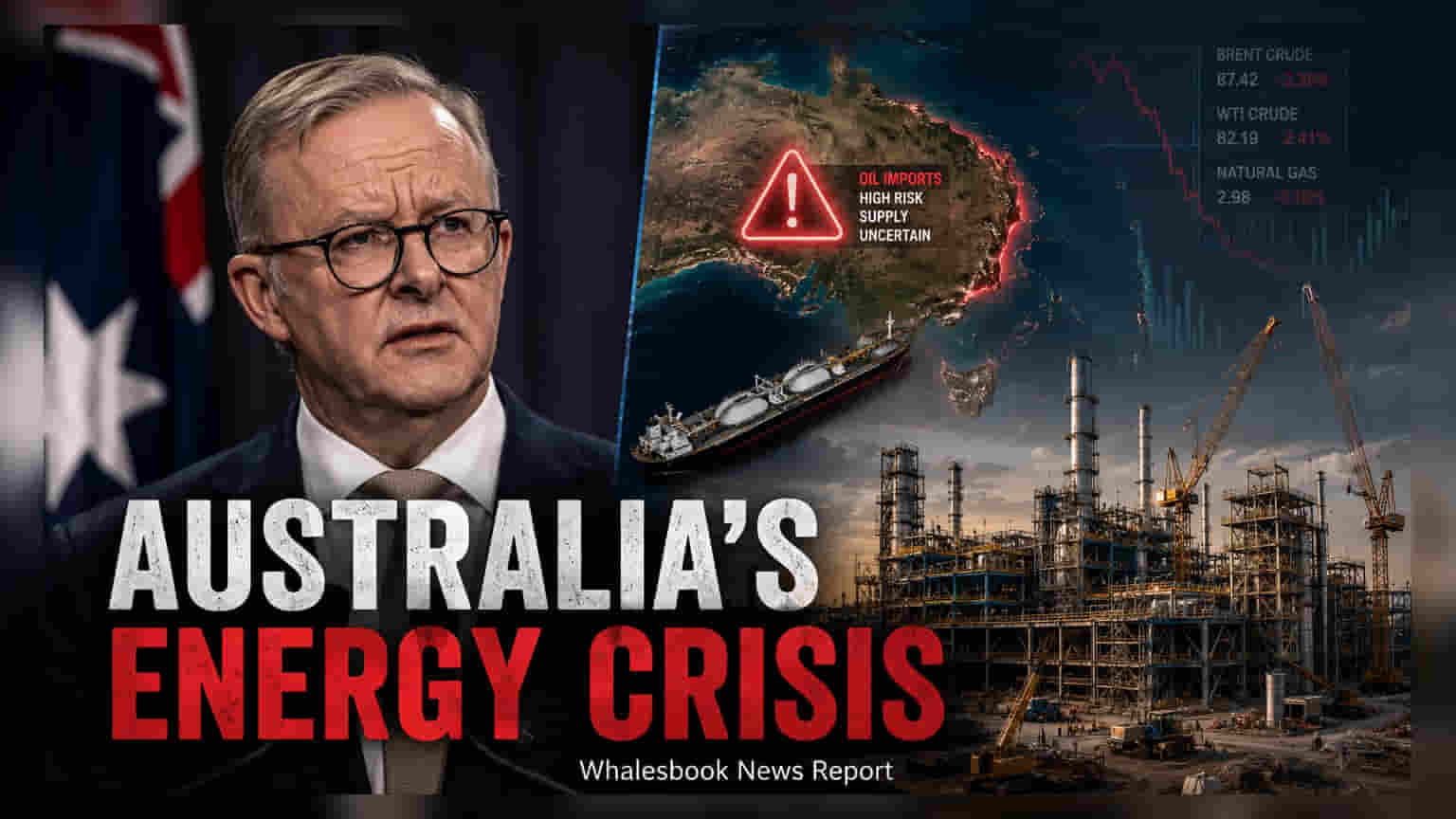
Australia is launching a joint feasibility study with Perdaman to build a new oil refinery, aiming to cut dependence on fuel imports. Currently, the nation imports 80% of its fuel, making it vulnerable to global supply shocks and price volatility. This move marks a major shift toward energy self-reliance following concerns about global market stability.
Detailed Coverage
The Australian government has officially announced a joint effort with the Western Australian state government to explore the construction of a large-scale oil refinery. This initiative, developed in partnership with industrial chemical producer Perdaman, marks the first potential addition to Australia’s refining capacity in over six decades. Both governments are investing a combined A$4 million into a comprehensive feasibility study to determine the project's viability and site location.
Addressing Energy Security and Import Risks
This strategic push is driven by the country's heavy reliance on external sources, with approximately 80% of Australia's fuel requirements currently met through imports. Prime Minister Anthony Albanese noted that the ongoing conflict in the Middle East has highlighted the fragility of global supply chains. By increasing domestic refining capacity, the government aims to build better defenses against international supply disruptions and unpredictable price spikes.
Financial and Strategic Context
For investors, this project signifies a notable shift in national energy policy. Australia's Treasury has previously warned that global oil markets have become more unstable, with limited capacity to handle sudden supply shocks. As global inventories tighten due to geopolitical tensions, local refining could offer a more stable fuel supply chain. However, any large-scale industrial project of this nature carries significant execution risks, including high capital intensity, long-term construction timelines, and the need for rigorous environmental and regulatory clearances.
Market and Operational Monitorables
Perdaman, the company identified for the potential development, is primarily known for its industrial chemical and fertilizer projects. Investors should track future updates regarding the feasibility study's results, which will be essential in determining if the project will proceed to the capital-intensive construction phase. Beyond the technical outcomes, the market will monitor whether the refinery can achieve cost-efficiency compared to importing refined products, which has historically been the more economical option for the region. The project timeline, government funding commitments, and any potential environmental impact assessments will be key factors for long-term project viability.