

US-based startup Apollo Atomics has raised $26 million to develop compact nuclear reactors, aiming for 2028 commercial deployment. This is a private company and is unrelated to publicly traded firms like India’s Apollo Micro Systems. The firm aims to lower electricity costs by redesigning reactor steam generators.
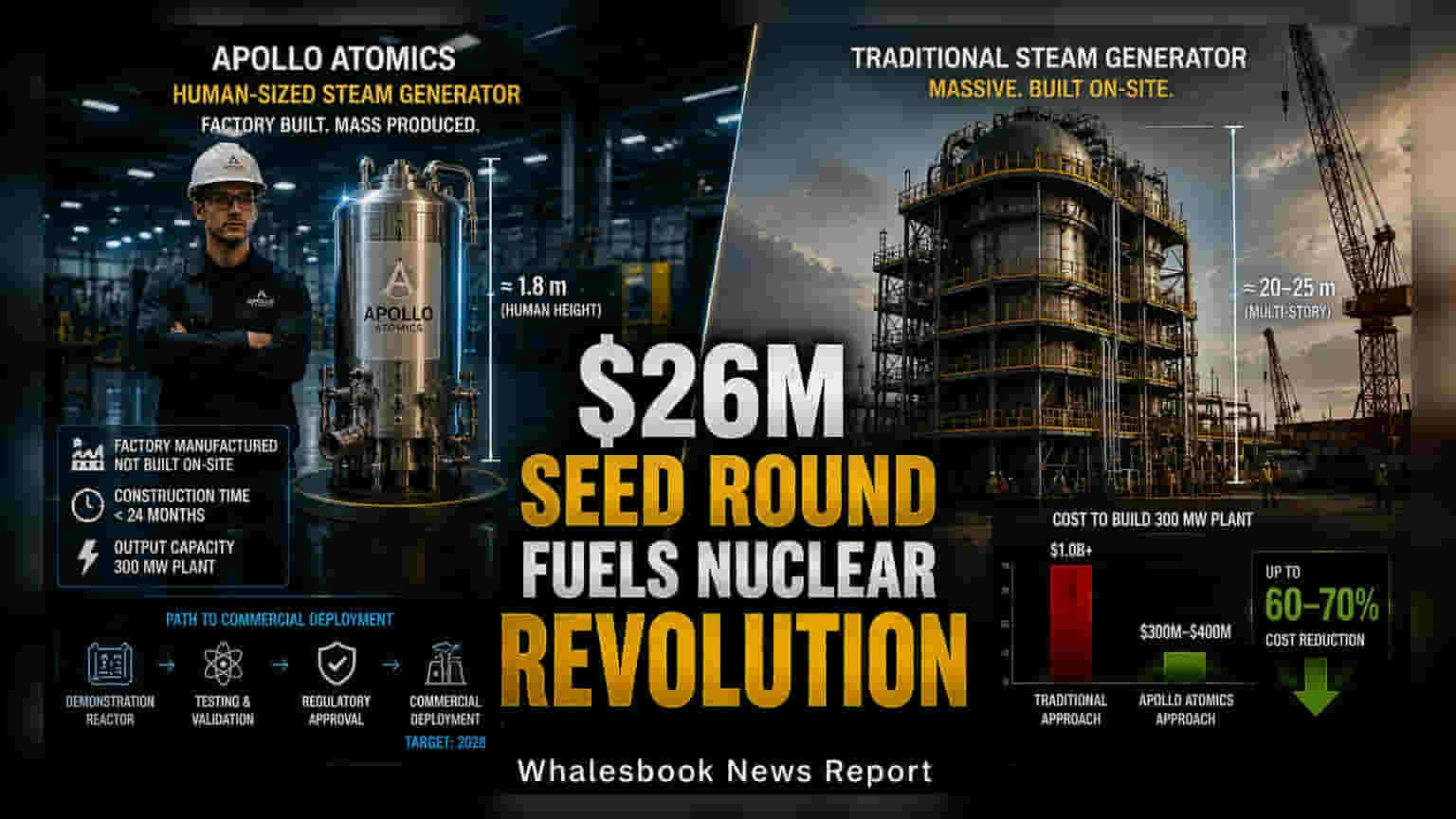
Apollo Atomics, a US-based nuclear energy startup, has secured $26 million in a seed funding round, including debt. The company plans to use these funds to construct a demonstration reactor and work toward commercial deployment by 2028. The core objective of the firm is to reduce nuclear power costs to approximately 3 cents per kilowatt-hour, a price point intended to compete with natural gas-based electricity generation.
The startup's technical strategy focuses on redesigning the steam generator, a critical component in nuclear reactors. Traditional steam generators are typically massive structures that must be built on-site. Apollo Atomics has developed a compact version, described as being roughly the size of an individual, which is designed for factory manufacturing. This shift from on-site construction to mass production aims to reduce the physical size of reactors by up to 40 times and lower construction times to under 24 months for a 300-megawatt plant.
Investors in India should be aware that Apollo Atomics is a private company and is not listed on the National Stock Exchange (NSE) or the Bombay Stock Exchange (BSE). There is no public stock associated with this entity. It is important to avoid confusing this startup with publicly traded companies such as Apollo Micro Systems Ltd (NSE: APOLLO). These are entirely separate businesses with different operations, promoters, and market segments.
The nuclear energy sector involves substantial risks, particularly for early-stage companies. Beyond typical startup challenges, such as funding needs and execution capability, the project faces rigorous regulatory and safety requirements. Before any reactor design can be used commercially, it must pass strict oversight by nuclear safety authorities. The company's goal of a 2028 commercial launch depends on its ability to navigate these complex regulatory processes and prove the safety and efficiency of its design at scale.
The main factor for observers to follow will be the successful commissioning of the demonstration reactor. Because the company is still in the development phase, future milestones will rely on whether the technology can meet its ambitious cost and safety targets outside of a laboratory environment.