

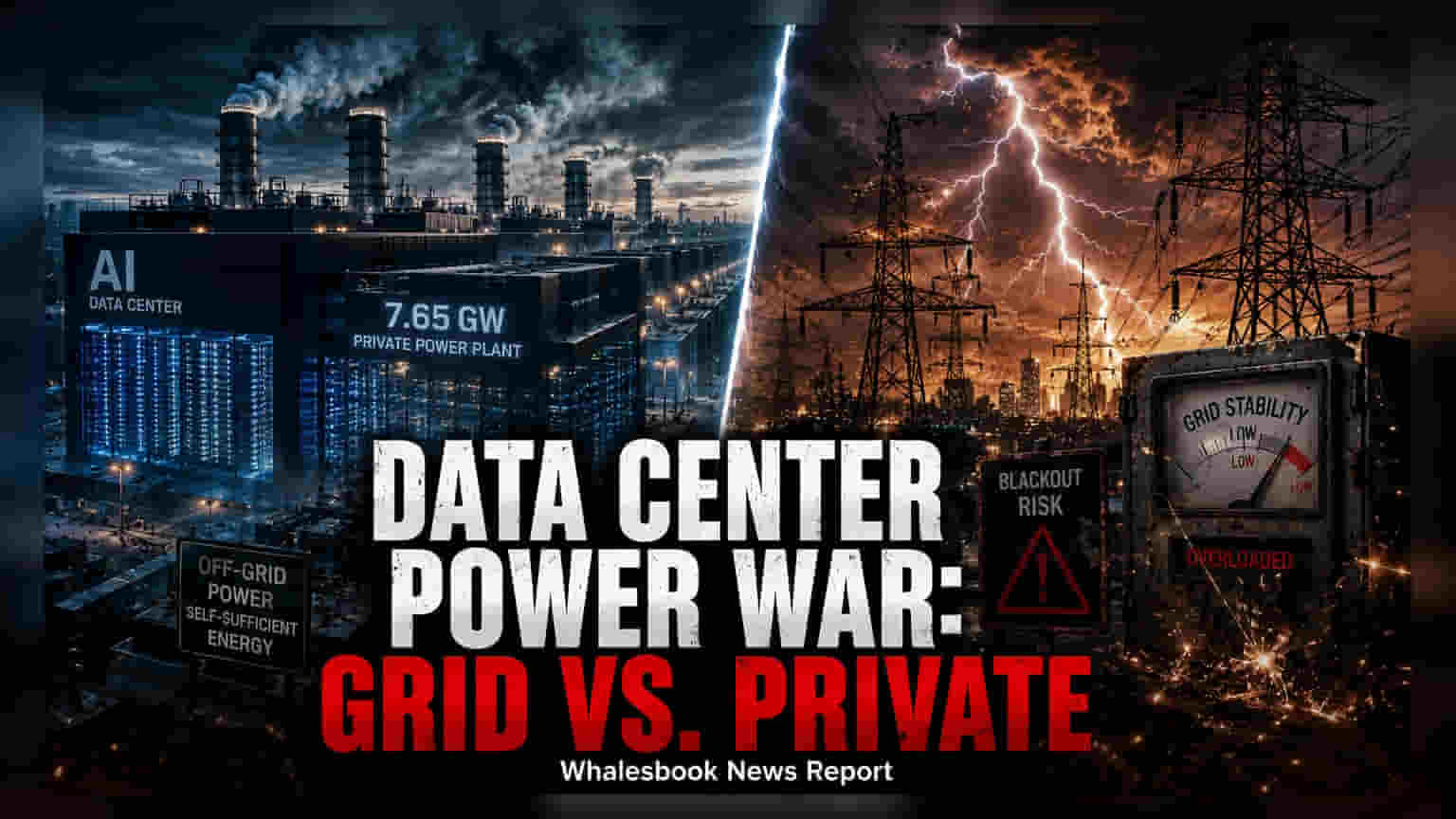
Big tech firms are building private, fossil-fuel-powered plants to bypass slow utility grid connections for AI data centers. While this strategy accelerates growth, it now faces a major regulatory moratorium in Texas, rising environmental backlash, and the financial risk of massive capital spending on independent infrastructure.
To satisfy the explosive energy demands of Artificial Intelligence, large technology companies are increasingly opting to build their own power plants rather than waiting for utility grid connections. This "behind-the-meter" strategy allows firms to generate electricity on-site, effectively creating a private, off-grid power network to keep data centers running at full capacity.
Amazon is currently leading this trend with a massive data center campus in Pecos County, Texas, known as the GW Ranch project. This facility is designed to host up to 7.65 gigawatts of natural gas-fueled power. To put that scale into perspective, such a plant would rival the electricity generation capacity of entire U.S. states. The core motivation is speed; by generating their own power, companies can sidestep the multi-year queues that have become standard for traditional utility grid hookups.
However, this aggressive shift toward self-reliance brings significant new challenges for investors and companies alike. While avoiding grid delays helps deploy AI infrastructure faster, it fundamentally changes the company's risk profile from a pure software or cloud business to one that is also an energy infrastructure operator. Building, maintaining, and fueling private power plants requires massive upfront capital spending, which could pressure cash flows and increase reliance on debt to fund long-term assets.
Regulatory and public opposition has also intensified. In August 2026, Texas Governor Greg Abbott implemented a moratorium on new data center grid connections, a move that impacted roughly 1,800 projects. This highlights a growing friction point: communities and regulators are increasingly concerned about the impact of data centers on local water resources, electricity prices, and grid stability. For the Amazon project specifically, environmental groups have raised concerns about the facility’s potential to emit up to 33 million tons of carbon dioxide annually, making it a visible target for climate-related regulatory scrutiny.
From a financial perspective, investors should consider the risk of stranded assets. If AI demand cools or if future regulations mandate stricter carbon emissions, these expensive, gas-dependent, on-site power plants could become liabilities rather than assets. Additionally, operating independent power infrastructure introduces the risk of operational inefficiency; if the on-site generators fail or require maintenance, the company cannot simply fall back on the public grid, potentially leading to costly downtime for expensive AI hardware.
The most important monitorable for investors will be how these companies manage the balance between infrastructure expansion and regulatory compliance. Future updates will likely focus on whether tech giants can secure the necessary environmental permits for these large, off-grid power plants or if they will be forced to renegotiate more collaborative, grid-integrated energy solutions with local authorities.