

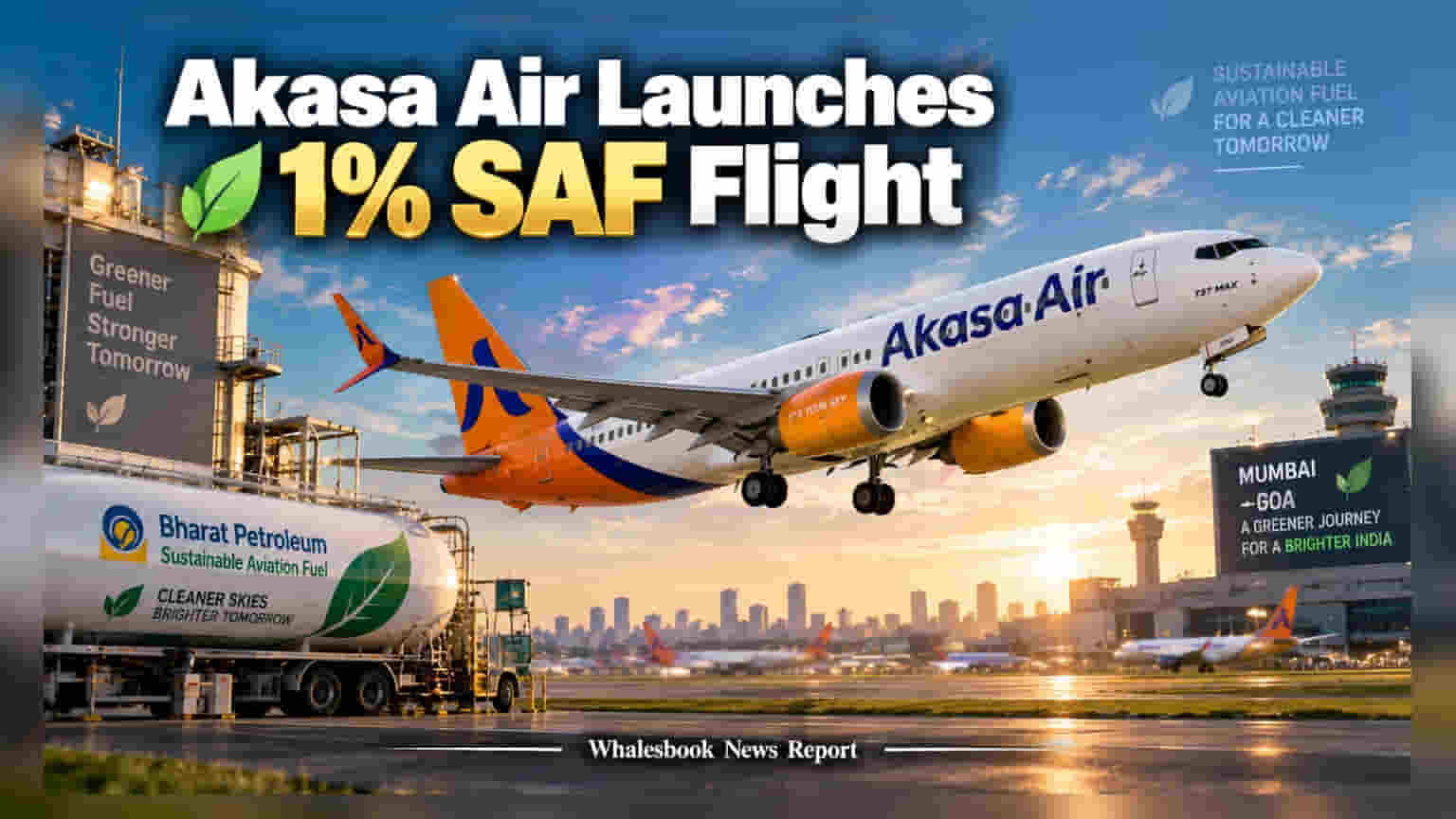
Akasa Air and BPCL have successfully operated a commercial flight from Mumbai to Goa using a 1% Sustainable Aviation Fuel (SAF) blend. This pilot project tests the feasibility of alternative fuels in India, supporting the national goal of 5% SAF blending by 2030. Investors and stakeholders are watching this development as a critical step in balancing sustainability goals with operational fuel costs.
On September 8, 2026, Akasa Air and state-run oil marketing company Bharat Petroleum Corporation Limited (BPCL) successfully completed a commercial flight from Mumbai to Goa using a 1% Sustainable Aviation Fuel (SAF) blend. This flight serves as a proof-of-concept for the two companies, who signed a Memorandum of Understanding in July 2026 to develop a framework for using greener fuel alternatives in the Indian aviation market.
The initiative is a direct response to India’s national objective of achieving 5% SAF blending by 2030. This target aligns with broader global commitments to lower the carbon footprint of the aviation industry, which is currently one of the hardest sectors to decarbonize. For the aviation and energy sectors in India, this represents the early stages of a transition that requires both technological innovation and significant supply chain adjustments.
BPCL's Strategic Energy Transition
For Bharat Petroleum, the move toward SAF is a strategic effort to diversify its energy portfolio beyond traditional aviation turbine fuel. The company is actively working to develop production capabilities at its refineries in Mumbai, Kochi, and Bina. Successfully scaling these operations is crucial for the company, as it helps secure its position in a future market where environmental regulations on carbon emissions will likely become stricter. Investors may track how BPCL manages the capital spending required to upgrade these refineries while balancing its overall refining margins.
Operational Efficiency at Akasa Air
Akasa Air’s participation in this pilot is part of a wider strategy to improve fuel efficiency. The airline relies on a modern fleet of Boeing 737 MAX aircraft equipped with CFM LEAP-1B engines, which provide a foundation for its fuel-saving initiatives. Beyond this fuel trial, the carrier utilizes digital tools, such as the SkyBreathe fuel management platform, to monitor and optimize fuel consumption across its flight network. These operational practices are designed to reduce resource waste and operational costs in a highly competitive sector.
Challenges in Scaling Alternative Fuels
The most significant hurdle for the widespread adoption of SAF is the cost. Sustainable aviation fuel is currently more expensive to produce than traditional jet fuel. For airlines and fuel suppliers, the path to profitability depends on the maturity of the domestic supply chain and the consistent availability of raw materials or feedstocks.
Another major factor for investors to monitor is future government policy. The speed at which airlines shift to higher blending percentages will depend heavily on regulatory support, such as tax incentives or mandates. While this 1% blend is a successful starting point, the long-term commercial viability of SAF will require finding a balance between the high production costs and the operational budgets of aviation companies. The industry will now monitor how these partners scale their operations and whether the data from this flight leads to wider implementation in the coming years.