 Whalesbook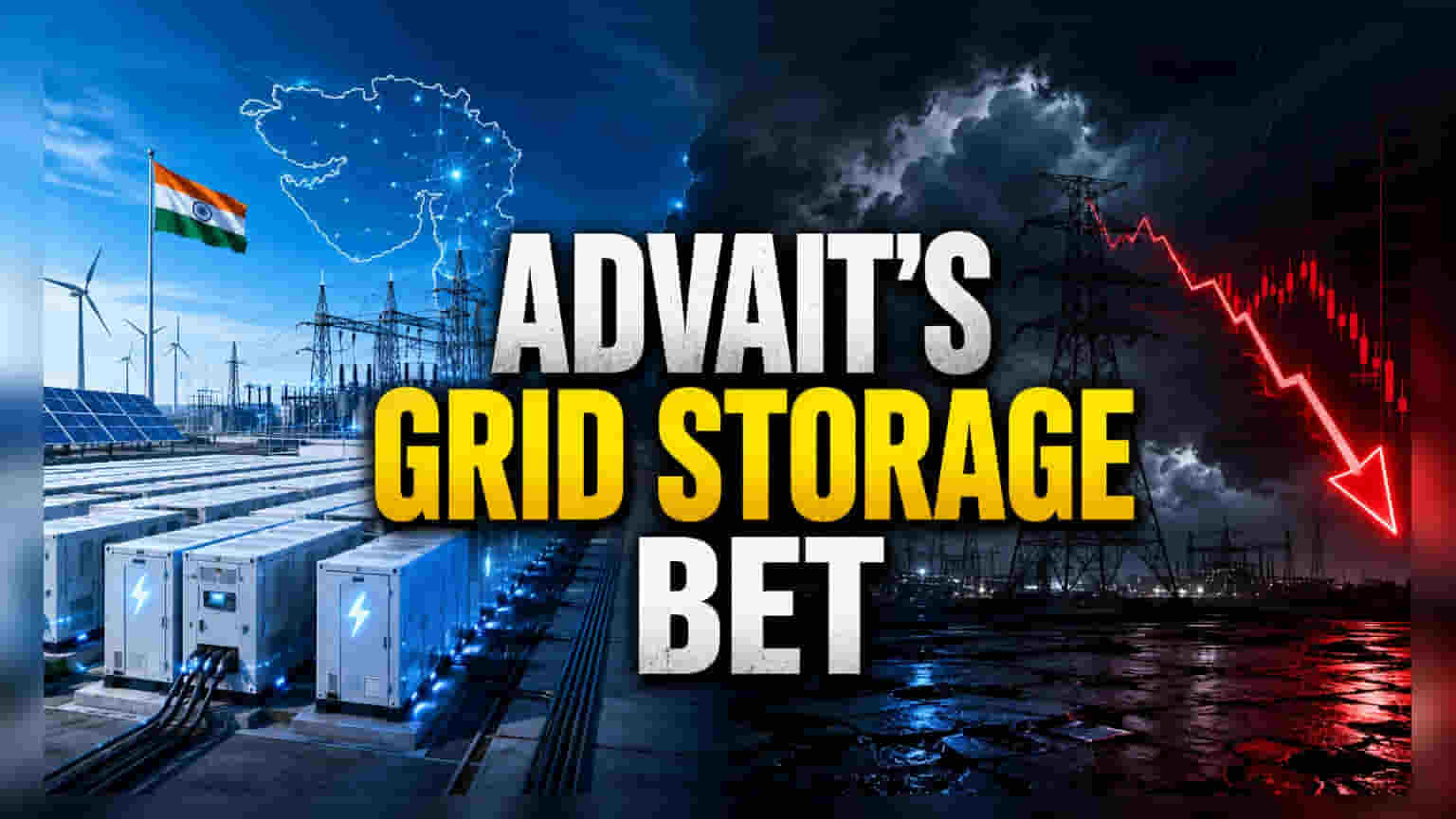


The Strategic Pivot to Grid-Scale Storage
The finalization of the Battery Energy Storage Purchase Agreement with Gujarat Urja Vikas Nigam marks a definitive shift in Advait Energy Transitions' operational profile. By securing this 150 MW/300 MWh capacity contract, the firm moves beyond its traditional role in power transmission and telecom infrastructure into the high-barrier utility-scale battery storage segment. The project, anchored near GETCO’s Bhesan substation, is positioned to address the growing intermittency challenges within Gujarat's renewable-heavy grid. This development follows a competitive bidding process under the eighth phase of the state's storage initiative, bolstered by Viability Gap Funding from the Power System Development Fund, which helps mitigate the high capital requirements typically associated with large-scale storage deployment.
Competitive Benchmarking and Market Context
Advait’s entry into this segment arrives as domestic utilities aggressively expand their storage infrastructure to support national non-fossil fuel capacity targets. Recent auctions have seen a sharp decline in battery storage tariffs, with intense reverse-auction participation forcing companies to optimize costs significantly. While Advait maintains a legacy business in Power Transmission Solutions—which historically provided operating margins of 16-17%—its newer renewable energy division is currently in a scale-up phase. The reliance on this tender-based, capital-intensive model places the company in direct competition with larger engineering, procurement, and construction players. However, by establishing a long-term, 12-year revenue stream with a stable state-run utility, the firm improves its cash flow visibility, moving closer to its objective of transforming into a multi-faceted clean-tech provider.
The Forensic Bear Case: Risks and Margin Pressures
Investors must weigh this contract against the inherent structural risks of Advait’s current trajectory. Although revenue growth has been robust, the transition to the energy sector has been accompanied by a shift in margin profiles; the renewable energy vertical currently operates at lower margins than the company’s legacy transmission business. Furthermore, the firm’s operations remain working-capital intensive, with high debtor days characteristic of projects tied to state utilities and government entities. The company's premium valuation, reflected in a P/E ratio significantly higher than traditional infrastructure peers, leaves little room for execution errors or delays in capital expenditure projects. Any failure to manage raw material price volatility or timeline slippage in the construction of the Bhesan site could lead to immediate margin compression.
Forward Outlook
Future growth depends on the successful commissioning of this storage asset and the ability to leverage this prototype for subsequent SECI storage rounds. With a growing order book and institutional backing, the firm has demonstrated strong execution capabilities to date. However, long-term success will require maintaining low debt levels and successfully scaling the new manufacturing and renewable divisions without further diluting the operational efficiency that defines its legacy transmission business.