

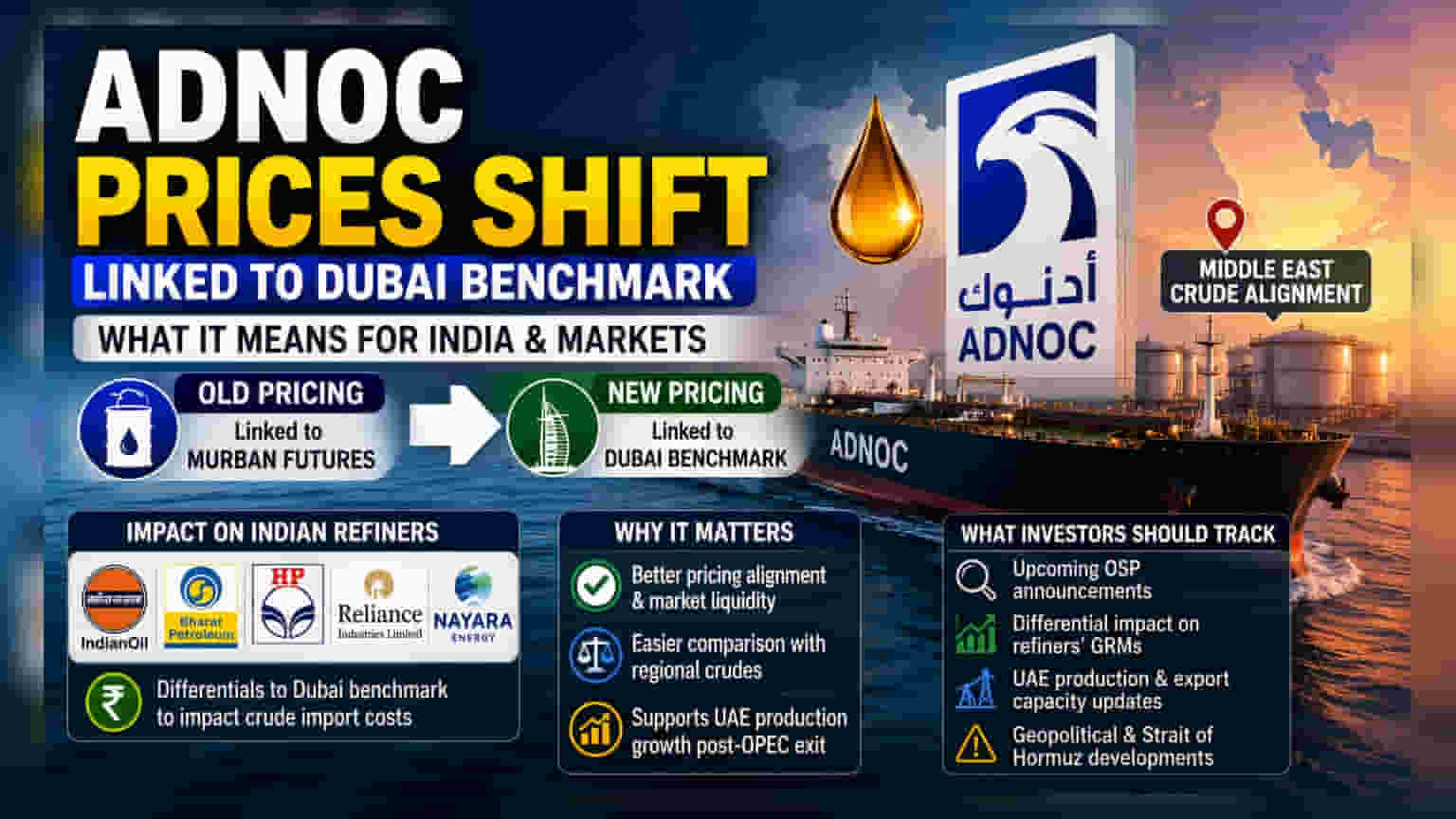
Abu Dhabi National Oil Co. (Adnoc) is updating its pricing strategy for key offshore crude grades like Upper Zakum and Das, shifting them to the Dubai benchmark. This adjustment, following the UAE's May 2026 exit from OPEC, aims to align prices with regional trading standards. For Indian refiners, changes in official selling price formulas directly impact the landed cost of crude imports from the Middle East.
What Happened
Abu Dhabi National Oil Co. (Adnoc) has initiated a strategic shift in how it prices its offshore crude oil supplies. The state-owned producer is moving away from linking prices for its medium sour crude grades—specifically Upper Zakum, Das, and Umm Lulu—to Murban futures. Instead, Adnoc plans to price these cargoes based on the Dubai benchmark, a common standard for Middle Eastern crude. This change applies to cargoes loading two months ahead. Adnoc’s flagship Murban crude will continue to be priced against its own futures contract, which is traded on the ICE Futures Abu Dhabi platform.
Why This Shift Matters
The primary objective behind this change is to create a more efficient trading environment. Historically, pricing medium sour crude like Upper Zakum against the lighter, lower-sulfur Murban grade created pricing distortions. By aligning these grades with the Dubai benchmark, which represents similar medium sour quality, Adnoc is making its oil easier to compare with other regional crudes such as Oman and Al-Shaheen. For buyers, this standardization simplifies trading decisions and hedging strategies, potentially improving market liquidity for Adnoc’s offshore barrels.
Impact on Indian Refiners
India is one of the world's largest importers of crude oil, with a significant portion traditionally sourced from the Middle East. Companies like Indian Oil Corp (IOC), Bharat Petroleum (BPCL), Hindustan Petroleum (HPCL), and private refiners like Reliance Industries and Nayara Energy regularly source crude from the region. Whenever a major supplier like Adnoc changes its Official Selling Price (OSP) formula, it can alter the 'differential' or premium that refiners pay over the benchmark. While this move is intended to align with market norms, Indian refiners will closely monitor how these new differentials influence the total cost of crude imports compared to previous pricing methods.
The Post-OPEC Context
This pricing update comes shortly after the United Arab Emirates’ exit from the Organization of the Petroleum Exporting Countries (OPEC) in May 2026. With the freedom to set its own production levels, the UAE is pushing to expand its crude output and export capacity. Adjusting the pricing methodology is a practical step to support this growth, ensuring that as production increases, the crude remains attractive and easy to trade for international customers in key markets like Asia.
Risks and Market Realities
While the pricing change is a technical adjustment, the oil market remains sensitive to external factors. Adnoc continues to navigate the complexities of crude exports through the Strait of Hormuz, a critical shipping lane. Amid regional geopolitical tensions, Adnoc has employed operational tactics to maintain supply continuity, such as selling on the spot market and encouraging buyers to take delivery within the Gulf. Investors should track these operational shifts alongside the new pricing framework, as both influence the reliability and cost-efficiency of global supply chains.
What Investors Should Track
The key monitorable for investors and market analysts will be the upcoming monthly OSP announcements from Adnoc. These will reveal the new differentials established under the Dubai-linked pricing model. Refiners will assess how these changes impact their gross refining margins (GRMs) and input costs. Additionally, any updates regarding production volume targets following the UAE's departure from OPEC will provide further insight into the long-term supply outlook for Asian markets.