

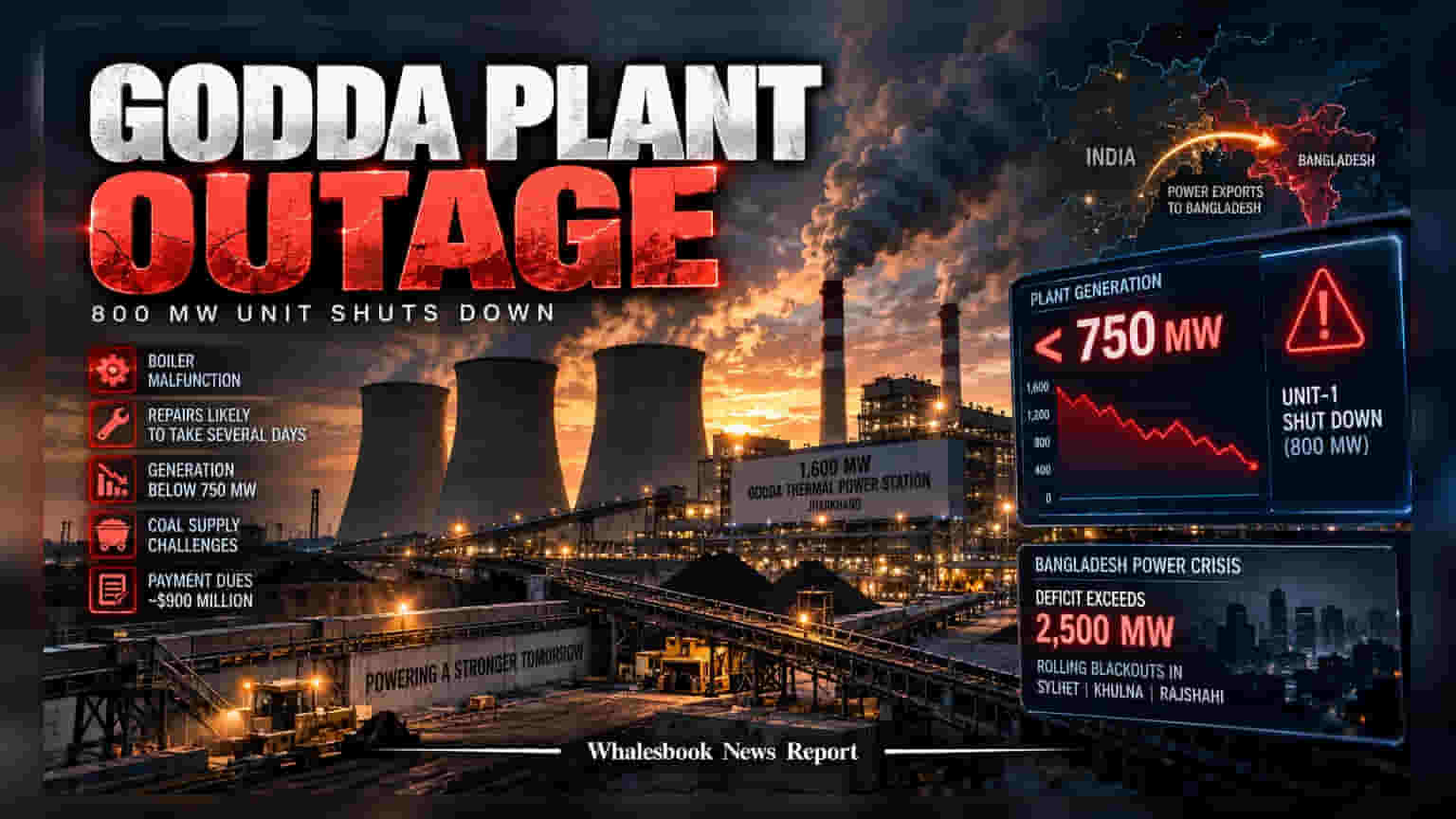
A boiler failure has forced one 800 MW unit of Adani Power’s Godda plant offline, halving its output. This outage worsens Bangladesh’s existing 2,500 MW energy deficit. Investors are monitoring the repair timeline and the facility's ongoing challenges, which include logistical hurdles and significant payment arrears from the Bangladesh Power Development Board.
Adani Power's 1,600 MW thermal power station in Godda, Jharkhand, is facing a significant operational interruption after a technical failure triggered a shutdown of one of its two 800 MW units late Thursday. Real-time grid data indicates that the facility's generation capacity has dropped to below 750 MW following the incident, which was attributed to a boiler malfunction. Technical teams are expected to require at least 48 hours to mobilize repair efforts, with full restoration of the unit likely spanning several days as the system requires a cooling period before maintenance can begin.
The loss of 800 MW of power places additional strain on Bangladesh's already stressed energy grid. The neighboring country is currently grappling with a national electricity deficit that frequently exceeds 2,500 MW, leading to widespread rolling blackouts in regions such as Sylhet, Khulna, and Rajshahi. As a facility specifically designed to export power to Bangladesh, the Godda plant is a critical component of that country's energy import strategy, making its reliability essential for grid stability.
This technical setback follows a period of operational difficulty for the Godda site. Since mid-August 2026, the facility had been functioning at reduced capacity due to recurring logistical hurdles involving coal transport to the plant. Beyond the immediate technical and logistical obstacles, the project also carries financial risk factors. As of mid-2025, public filings and industry reports highlighted substantial payment arrears from the Bangladesh Power Development Board to the project, with outstanding dues reported at approximately $900 million.
For market observers and investors, the event highlights the operational and geopolitical sensitivities inherent in large-scale cross-border infrastructure projects. The plant’s dependency on imported coal and complex cross-border logistics leaves it vulnerable to supply chain bottlenecks. Furthermore, the financial sustainability of the power purchase agreement depends on both consistent technical performance and the fiscal health of the utility counterparty. Investors will likely track the speed of the current repairs as a proxy for the plant’s maintenance efficiency, alongside any future management commentary regarding the collection of long-pending dues from the Bangladesh utility.