

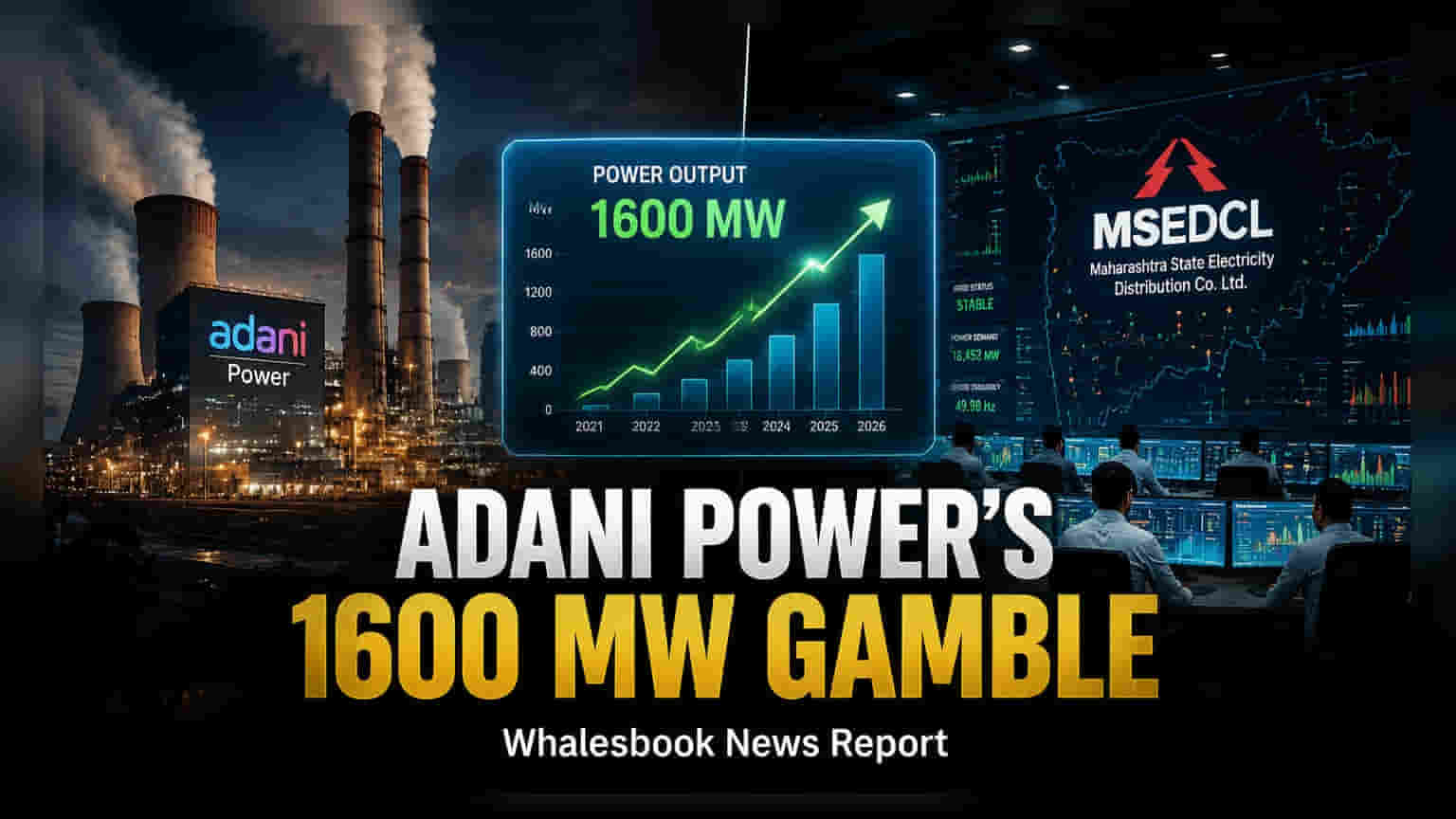
Adani Power has finalized a 25-year agreement to supply 1,600 MW of electricity to Maharashtra’s state utility. The power will be sourced from a new 1,600 MW ultra-supercritical thermal project developed under the DBFOO model, supported by an allocated coal linkage under the SHAKTI policy.
Adani Power has entered into a long-term power purchase agreement with the Maharashtra State Electricity Distribution Company Ltd (MSEDCL). Under this 25-year contract, the company is committed to supplying 1,600 MW of electricity to the state utility. The electricity will be generated from a new ultra-supercritical thermal power project that features two 800 MW units.
Project Execution Under DBFOO Model
The power facility is being developed under a design, build, finance, own, and operate (DBFOO) framework. This model shifts the responsibility of funding and managing the project’s construction and long-term operation to the private entity. For investors, this structure implies that Adani Power will bear the initial capital spending requirements, which typically involves significant debt funding or internal accruals until the project becomes operational.
Fuel Security and Policy Support
A critical factor in the viability of thermal power projects is the availability of coal. Adani Power has confirmed that the necessary coal linkage for this facility has been secured under the central government’s SHAKTI policy. This policy is designed to provide fuel security to thermal power producers, reducing the risk of supply disruptions that could otherwise force plant shutdowns or reliance on expensive imported coal. Ensuring this fuel supply is essential for maintaining consistent operating margins over the 25-year life of the contract.
Financial and Strategic Context
For Adani Power, this agreement provides long-term revenue visibility, as power purchase agreements with state utilities are generally designed to provide a steady stream of income. However, thermal power projects carry inherent risks, including the potential for construction delays and cost increases. Given the size of the 1,600 MW expansion, investors often monitor the company’s debt-to-equity ratio and the timing of the project’s commissioning. Because the company manages a large portfolio of power assets, tracking the execution progress of this specific facility against its stated timeline will be important for assessing future cash flow contributions. The final benefit of this deal to the company’s bottom line will depend on the actual cost of generation, the efficiency of the new units, and the timely execution of the construction phase.