 Whalesbook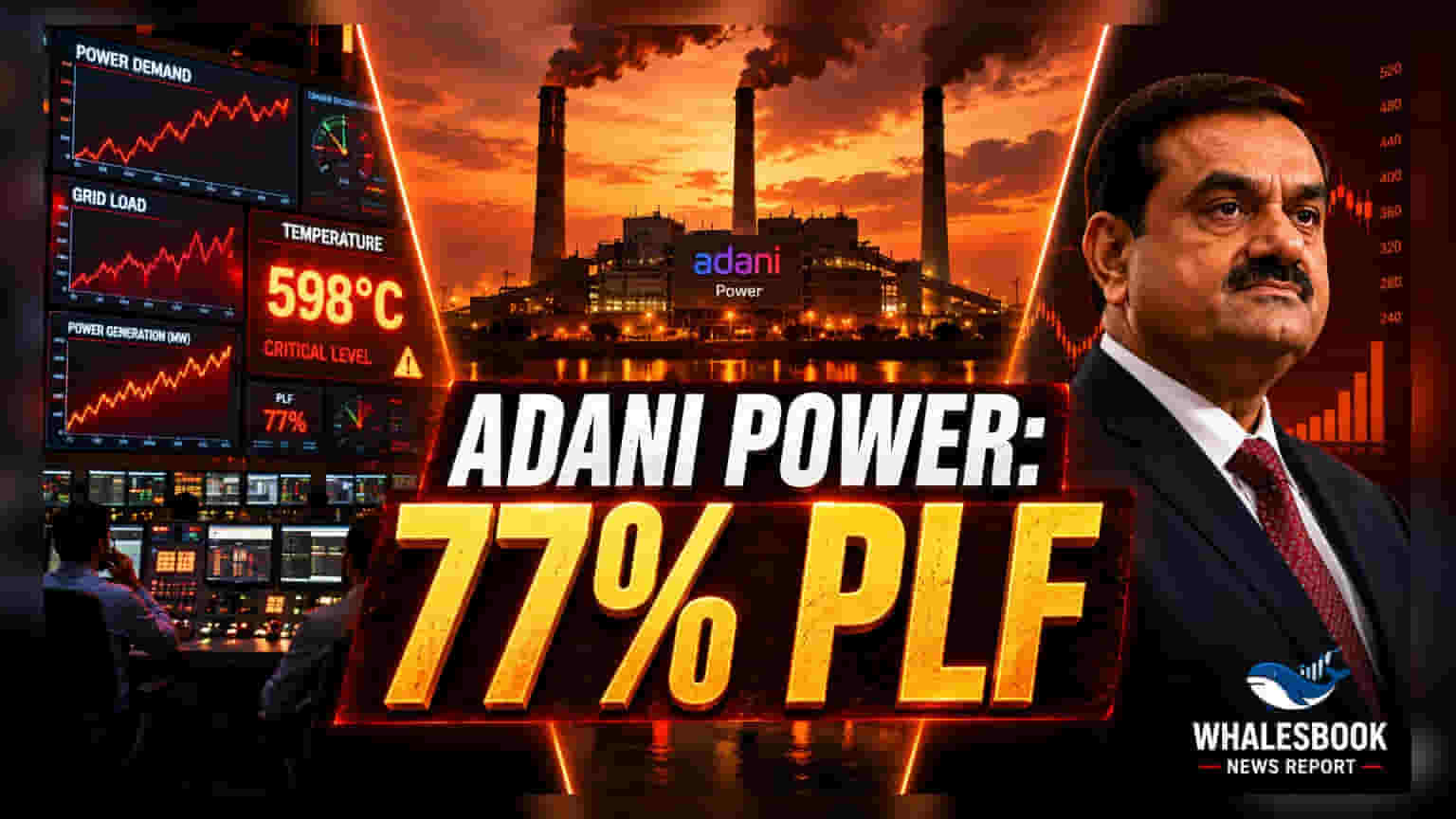


The Operational Surge
Adani Power has become a critical pillar of India’s energy stability as record-breaking temperatures push national electricity demand to new heights. By maintaining an average Plant Load Factor of 77% across its 12 thermal facilities, the company is significantly outperforming the national thermal average of approximately 65%. This operational intensity is supported by an impressive 96% plant availability, which the firm has achieved through proactive maintenance schedules and the integration of predictive AI systems designed to minimize unplanned downtime.
Scaling for the Energy Supercycle
Beyond immediate crisis response, the company is executing one of India’s most ambitious private-sector infrastructure build-outs. With an investment program valued at approximately $22 billion, Adani Power intends to scale its generation capacity from 18.15 GW to 42 GW by 2031-32. This expansion is strategically timed to capture the structural demand growth driven by industrial electrification and power-intensive digital infrastructure. The company’s Godda plant further emphasizes its regional influence, currently meeting 10% of Bangladesh’s baseload demand as a specialized cross-border provider.
The Forensic Bear Case
Despite the bullish sentiment surrounding the company's role as a national energy backbone, institutional scrutiny remains focused on its financial structure. Total debt has climbed to Rs 53,555 crore as of March 31, 2026, marking a significant increase from the previous fiscal year's Rs 38,334 crore. To fund its expansion, the firm is tapping into local debt markets for an additional Rs 8,000 crore, raising questions about interest coverage sustainability if growth targets encounter delays. Furthermore, while the stock has achieved record valuations—trading at a P/E multiple of approximately 36x—analysts have cautioned that this premium assumes perfect execution. Risks include potential payment delays from cross-border contracts, the sensitivity of merchant power realizations, and the lingering threat of regulatory or legal volatility, despite the group's efforts to move past prior international scrutiny.
Competitive Standing
Market positioning for Adani Power has evolved rapidly in 2026, with the stock delivering over 125% returns in a one-year window. While state-owned rivals like NTPC offer greater stability through a diversified portfolio and integrated coal mining, Adani Power has differentiated itself through aggressive execution and superior profitability margins. Current valuation premiums reflect investor confidence in the company's ability to maintain high margins compared to peers, yet the reliance on long-term power purchase agreements (PPAs) means the company remains sensitive to fuel price fluctuations and the evolving regulatory framework for thermal assets.