

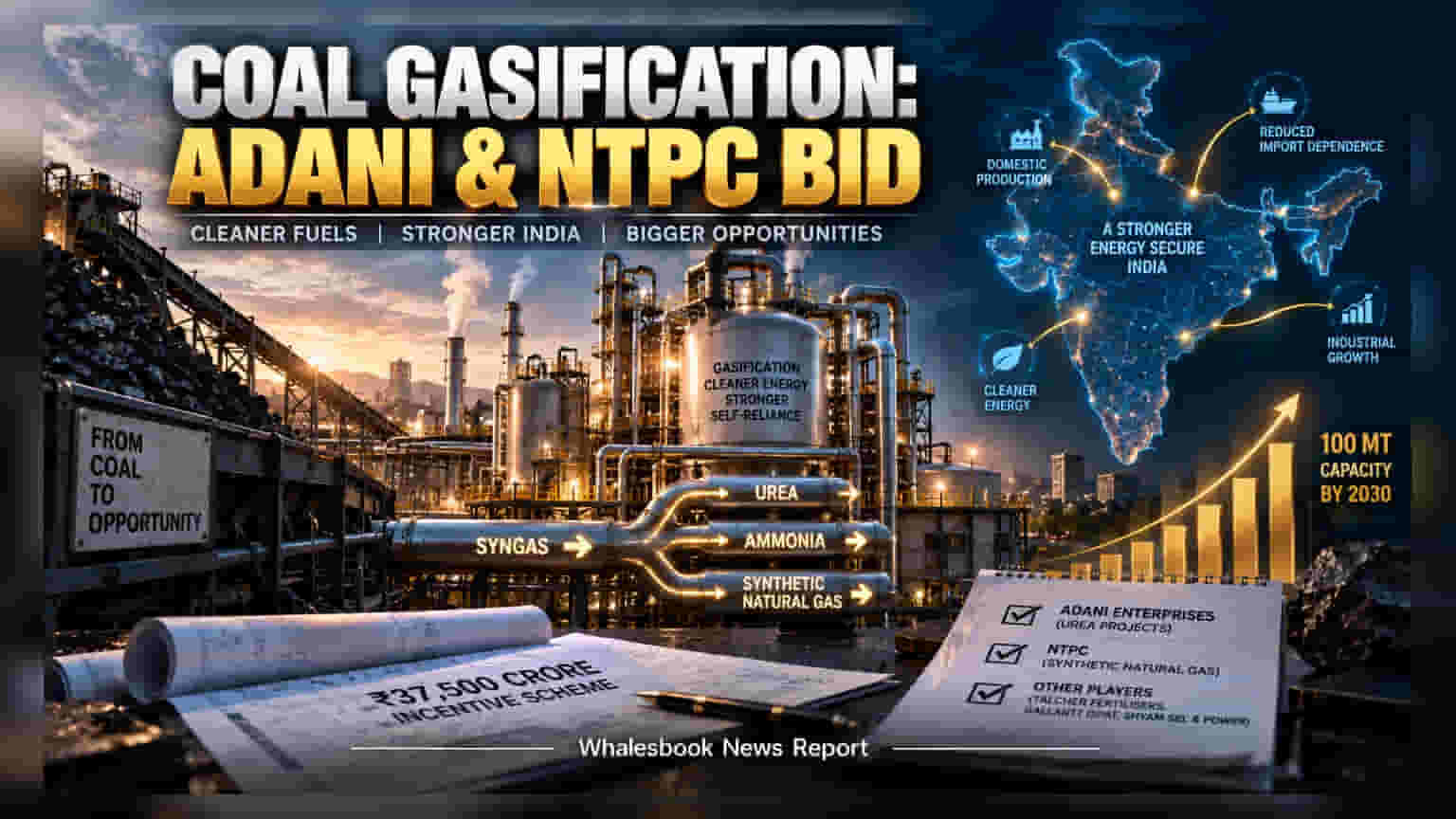
The Ministry of Coal has received seven proposals for its ₹37,500 crore coal gasification incentive scheme, marking a push to reduce import dependence. Major companies like Adani Enterprises and NTPC submitted bids, signaling industry interest in long-term chemical and fuel projects. Investors should track these capital-intensive projects for potential impacts on balance sheets and long-term debt profiles.
The Union government’s ₹37,500 crore coal gasification incentive scheme has moved into the evaluation stage, with the Ministry of Coal confirming it received seven formal applications by the close of the first round on September 7, 2026. This scheme is a central part of India's industrial strategy to convert coal reserves into high-value products like urea, ammonia, and synthetic natural gas, aiming to lower the country's heavy reliance on imported chemicals and fuel.
Industrial Participation and Projects
Among the participants, Adani Enterprises has submitted three distinct applications, all focused on the production of urea. State-owned power utility NTPC has also entered the fray, proposing a project for synthetic natural gas. Other industry players, including Talcher Fertilisers, Gallantt Ispat, and Shyam Sel & Power, have also submitted plans covering various applications of coal gasification technology. The government’s broader goal is to build 100 million tonnes of gasification capacity by 2030, a move intended to restructure the domestic energy and chemical supply chain.
Investor Context and Risks
For investors, these projects represent a significant shift toward long-term, capital-heavy infrastructure. While the incentive scheme is designed to support the financial viability of these initiatives, the actual execution involves several layers of difficulty. Coal gasification technology is complex and requires substantial upfront capital spending. As companies move from planning to implementation, the key monitorables for shareholders include the project execution timelines and the potential impact on debt levels.
Large-scale industrial projects of this nature often come with long gestation periods, meaning cash flow benefits may take years to materialize. Additionally, the profitability of these units will be sensitive to domestic and global commodity price cycles, as well as the availability of stable feedstock. Investors should monitor how individual companies manage their capital allocation and whether these massive projects lead to an increase in leverage.
Looking Ahead
The Ministry of Coal has already opened the second application window effective September 8, 2026, and plans to keep a rolling window for future proposals. This ensures that interested companies still refining their blueprints have the opportunity to participate. The government's continued focus on this rolling process suggests a long-term commitment to the sector, but the actual pace of capacity addition will depend on how quickly these initial proposals reach technical and financial closure.