

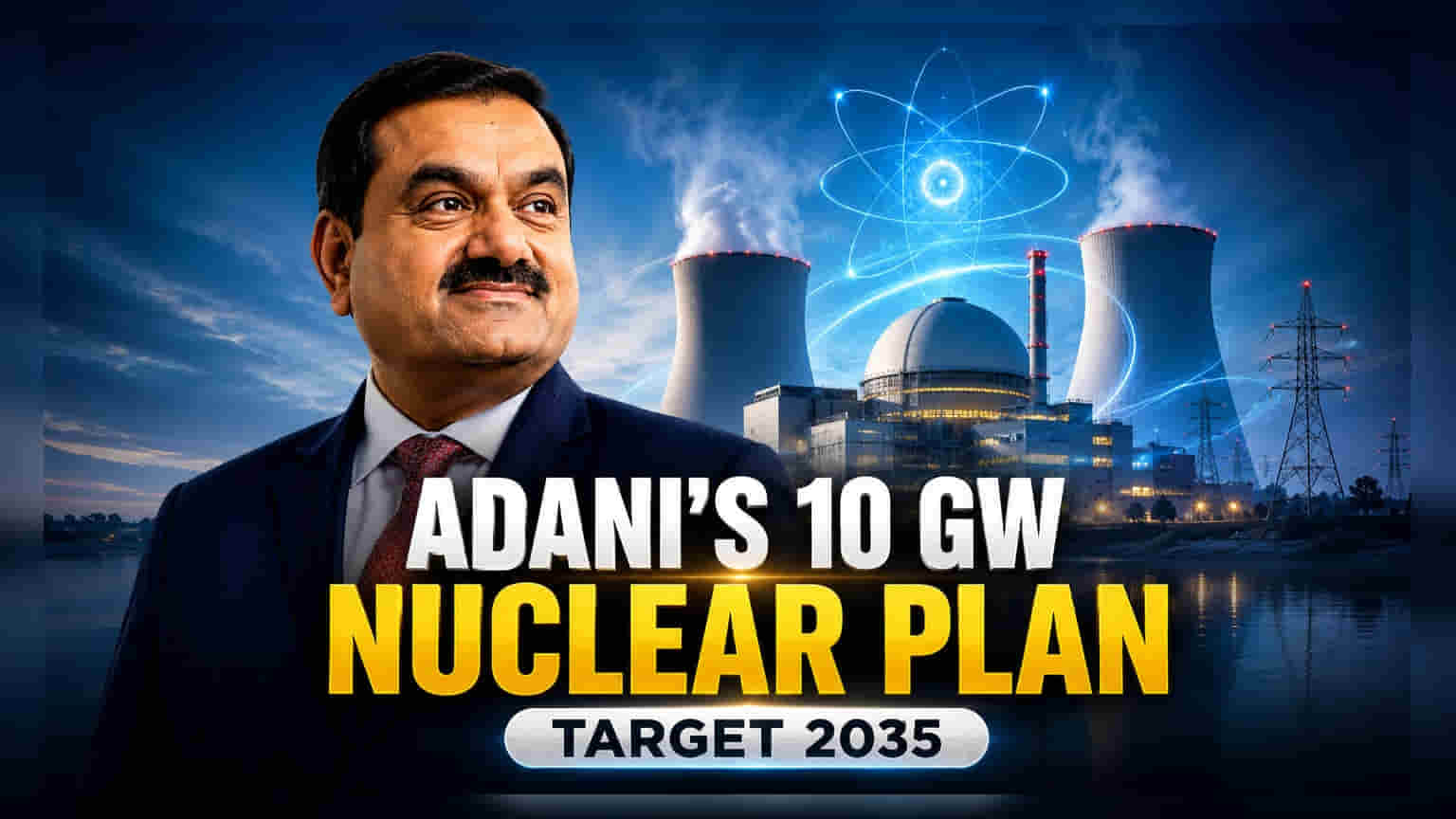
Adani Group plans to build 10 GW of nuclear power capacity by 2035 through its new vertical, Adani Atomic Energy. This marks the conglomerate's entry into the nuclear sector following the 2025 legislative reforms that enabled private participation. Separately, the group announced a ₹2 lakh crore capex plan for Adani Power to reach 45 GW generation capacity over the next five years.
What Happened
The Adani Group has announced a formal entry into the nuclear energy sector, targeting 10 gigawatts (GW) of capacity by 2035. Chairman Gautam Adani confirmed the plan at the group’s annual general meeting, stating that land for the projects has already been identified. This initiative will be spearheaded by a new subsidiary, Adani Atomic Energy. The announcement follows legislative changes in late 2025 that opened the nuclear generation sector in India to private companies, ending the long-standing monopoly of state-owned entities.
Strategic Shift to Baseload Power
For the Adani Group, nuclear power is a strategic move to provide steady, round-the-clock electricity. While solar and wind energy are core to the group’s existing renewable portfolio, these sources are intermittent and depend on weather conditions. Nuclear energy offers stable baseload power, which is essential for industrial consumption. By entering this space, the company aims to position itself as a key supplier for India's increasing electricity demand while supporting national decarbonization targets.
Capex and Growth Plans
The nuclear initiative is part of a broader expansion strategy. Adani Power has committed to a capital expenditure program exceeding ₹2 lakh crore. The goal is to reach a total generation capacity of 45 GW within the next five years. This investment includes not just thermal and nuclear expansion but also partnerships in the hydropower sector, such as the 5,000 MW project with Bhutan’s Druk Green Power Corporation. The large-scale capital deployment reflects the group's intent to maintain its scale in India's infrastructure sector.
Regulatory and Execution Realities
While the legislative environment has changed, nuclear projects are significantly more complex than standard thermal or renewable plants. Private players must navigate strict oversight from the Atomic Energy Regulatory Board (AERB) and adhere to high safety standards mandated by the Department of Atomic Energy. Nuclear plants typically have a long gestation period, often taking over a decade from planning to commissioning. Investors may note that successful execution will depend on regulatory clearances, project safety compliance, and the ability to manage the high upfront capital costs inherent in nuclear technology.
Financial Context and Risks
Historically, the nuclear sector has been a state-controlled monopoly due to safety and national security sensitivities. While the 'Sustainable Harnessing and Advancement of Nuclear Energy for Transforming India' (SHANTI) Bill, passed in 2025, has paved the way for private participation, the operating model for private firms is still evolving. Adani Power’s expansion is massive, and like all large-scale infrastructure projects, its success depends on consistent funding, demand stability, and effective debt management. Investors may watch how the company balances this large capital expenditure with its existing debt profile and cash flow generation over the coming years.
What Investors Should Track
Moving forward, the primary monitorables for shareholders include the progress of project approvals, the signing of specific power purchase agreements, and updates on the financial structuring of the nuclear projects. Investors may also look for management commentary on the expected timeline for the first reactor commissioning and any further regulatory updates regarding private sector involvement in nuclear fuel supply chains.