

Adani Energy Solutions has secured a Rs 4,700 crore transmission project in Maharashtra to support renewable energy and pumped storage capacity. The 36-month project expands the company's transmission network and adds to its order book of approximately Rs 85,000 crore. Investors should monitor the company's ability to manage project execution and debt alongside this expansion.
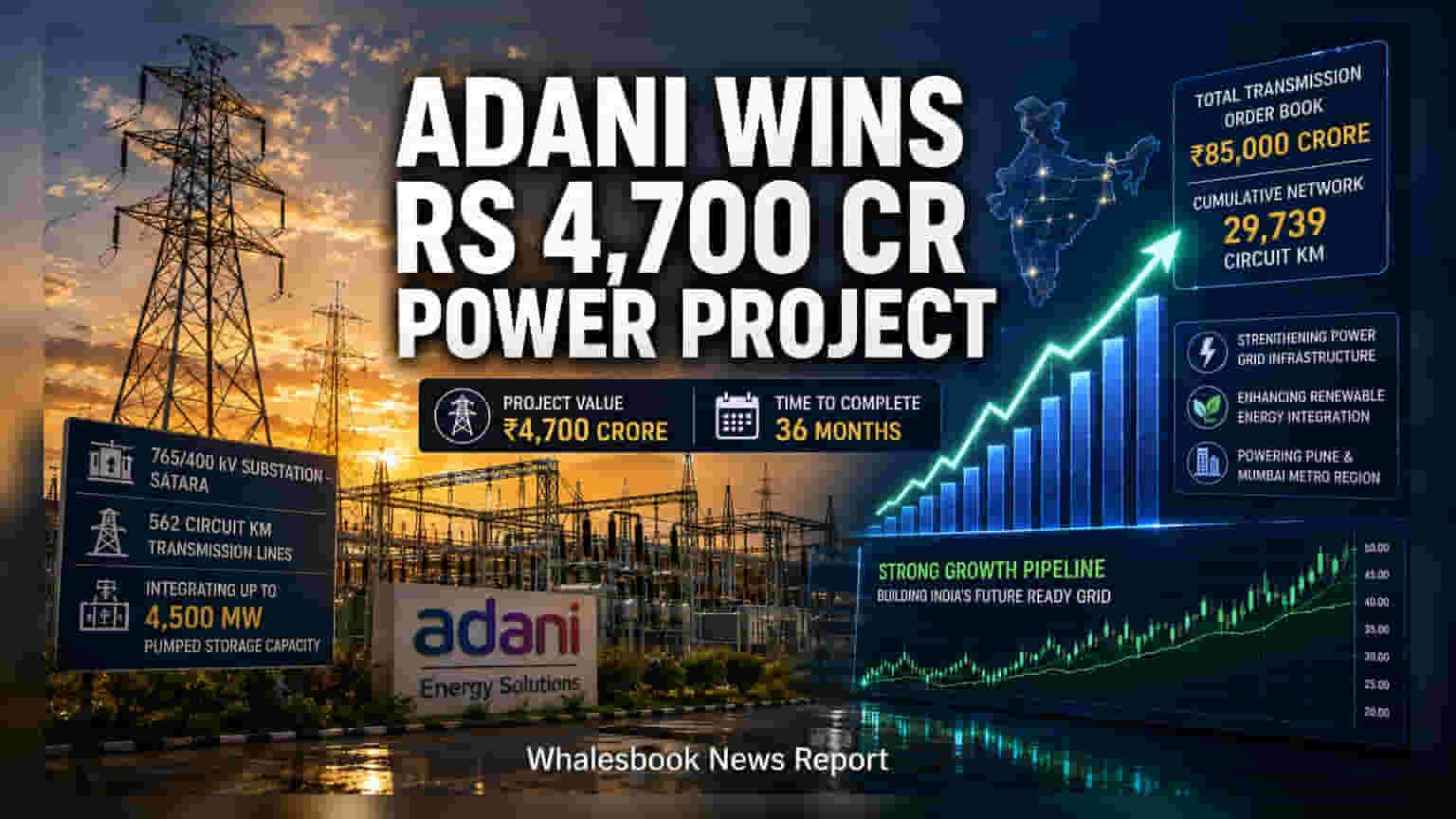
Adani Energy Solutions Limited (AESL) has secured a major transmission contract in Maharashtra valued at approximately Rs 4,700 crore. The project, awarded through a competitive tariff-based bidding process, is part of a larger plan to improve the power grid's capacity to handle energy from renewable sources and pumped storage facilities near Satara. The contract will be managed by a special purpose vehicle (SPV) established specifically for this purpose, named Satara Power Transmission Limited.
The project scope includes the construction of a 765/400 kV substation in Satara and the installation of 562 circuit kilometers of new transmission lines. Additionally, the project will upgrade the Kolhapur pooling station. These developments are aimed at improving the flow of electricity to load centers such as Pune and the Mumbai Metropolitan Region, facilitating the integration of up to 4,500 MW of pumped storage capacity. The company has a 36-month window to complete this infrastructure.
For investors, this win is a significant addition to the company's project pipeline. With this contract, the company's cumulative transmission network has reached 29,739 circuit kilometers, and its total transmission order book now stands at approximately Rs 85,000 crore. This steady accumulation of orders reflects the company’s ongoing efforts to scale its private transmission business as India modernizes its national power grid.
While the expansion of the order book is a growth indicator, the nature of these large-scale infrastructure projects requires careful monitoring. Power transmission is a capital-intensive business, meaning the company must deploy significant upfront capital to build the assets. A key area for investors to track is the company's debt management. Rapidly scaling infrastructure projects often leads to higher debt levels, and maintaining financial health while executing these projects is crucial for long-term stability.
Operational risks are also inherent in such large-scale construction efforts. A 36-month completion timeline relies on smooth execution, including timely land acquisition and the securing of necessary regulatory approvals. Any significant delays could lead to cost overruns. Furthermore, the company, like other players in the transmission sector, faces counterparty credit risk, which refers to the dependency on timely payments from state distribution utilities for the electricity transmitted through its grid.
Looking ahead, the primary monitorables for stakeholders will be the project's progress milestones, the company’s ability to adhere to the 36-month execution timeline, and how this capital expenditure impacts the company's overall debt-to-equity ratio and cash flow in upcoming quarterly results.