

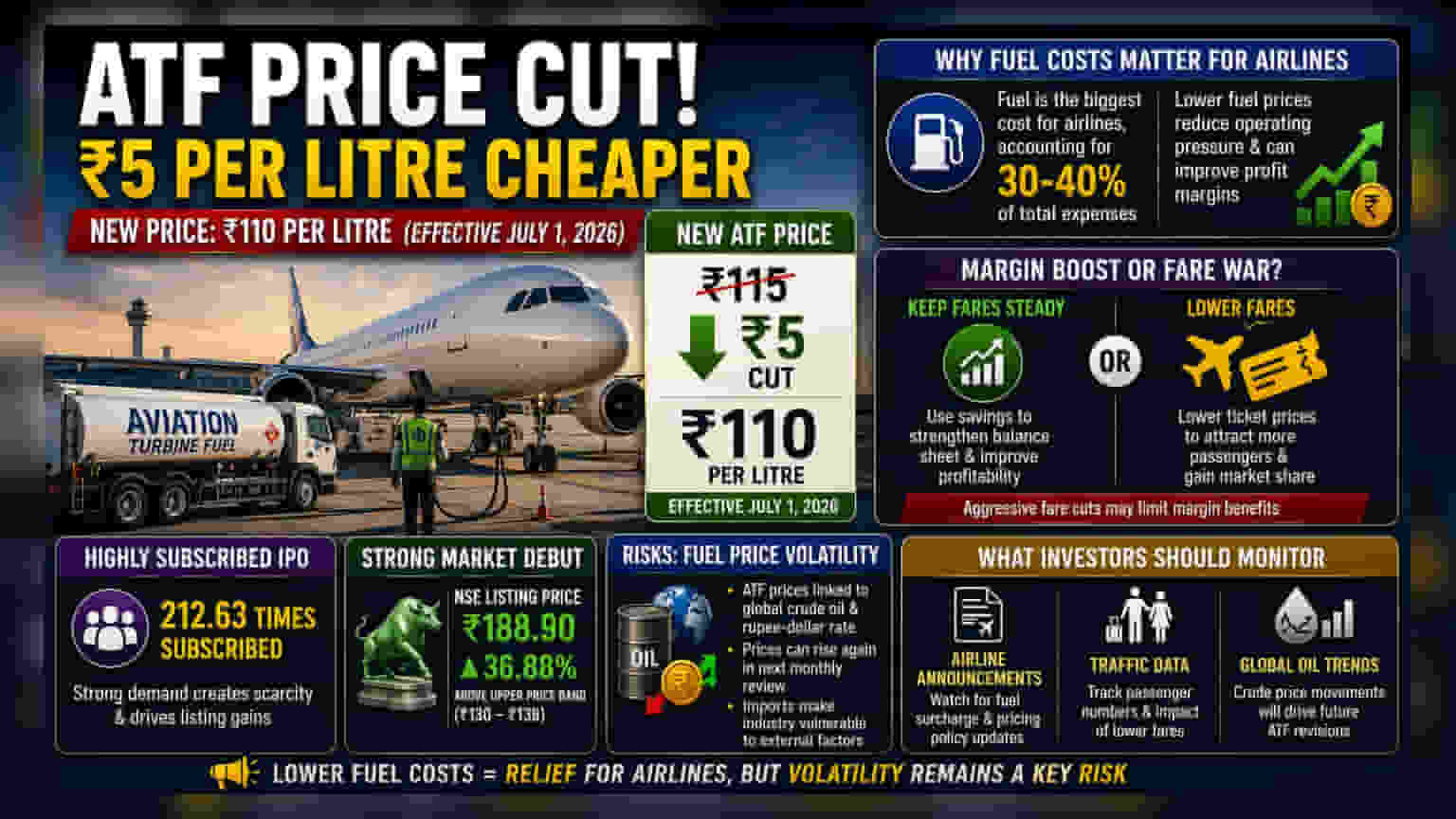
Oil marketing companies have lowered aviation turbine fuel prices by Rs 5 per litre, bringing the rate to Rs 110 per litre. This monthly price adjustment reduces the largest operating expense for Indian airlines. Investors are now watching whether this relief will boost profit margins or lead to lower ticket prices to drive passenger demand.
What Happened
Oil marketing companies in India have reduced the price of aviation turbine fuel (ATF) by Rs 5 per litre, effective July 1, 2026. The new price now stands at Rs 110 per litre. In India, fuel prices for aircraft are revised on the first of every month based on international oil rates and the value of the rupee against the US dollar. This change is part of the standard monthly cycle that impacts the operational expenses of the domestic aviation industry.
Why Costs Matter For Airlines
For any airline, fuel is the most significant operational expense, typically accounting for 30% to 40% of their total costs. When fuel prices drop, the immediate impact is a reduction in operating pressure, which can provide a cushion for airlines to improve their profit margins. Conversely, when fuel prices rise, companies often struggle to pass the full burden to passengers without hurting travel demand. A reduction of Rs 5 per litre provides a clear, albeit temporary, relief for the industry's bottom line.
Margin Or Fare War
The most important question for investors now is how airlines will use these savings. There are two likely paths. First, airlines might keep ticket prices steady to repair their balance sheets and recover from periods of high fuel costs. Second, in a competitive market, airlines might choose to lower ticket prices to attract more passengers and increase their market share. If airlines aggressively lower fares to boost volume, the benefit of the fuel price cut may not fully reflect in their profit margins. Investors often watch for management commentary in quarterly results to understand how the company balances these trade-offs.
The Risk Of Volatility
While this price cut is a positive signal for the sector, it is important to remember that ATF prices are highly volatile. They are linked to global crude oil prices and currency exchange rates. If international oil prices rise in the coming weeks or if the rupee weakens significantly against the dollar, the fuel companies may be forced to hike prices again in the next monthly review. Because the industry relies on imports for most of its fuel, these external factors remain a constant risk to the profitability of aviation companies.
What Investors Should Monitor
Investors may look for a few specific indicators following this update. First, watch for any announcements from major listed carriers like InterGlobe Aviation regarding changes in their fuel surcharge policies. Second, keep an eye on monthly traffic data to see if lower fuel costs are leading to lower airfares, which in turn could drive higher passenger numbers. Finally, continue tracking global crude oil trends, as they remain the primary driver for future ATF price revisions in India.