

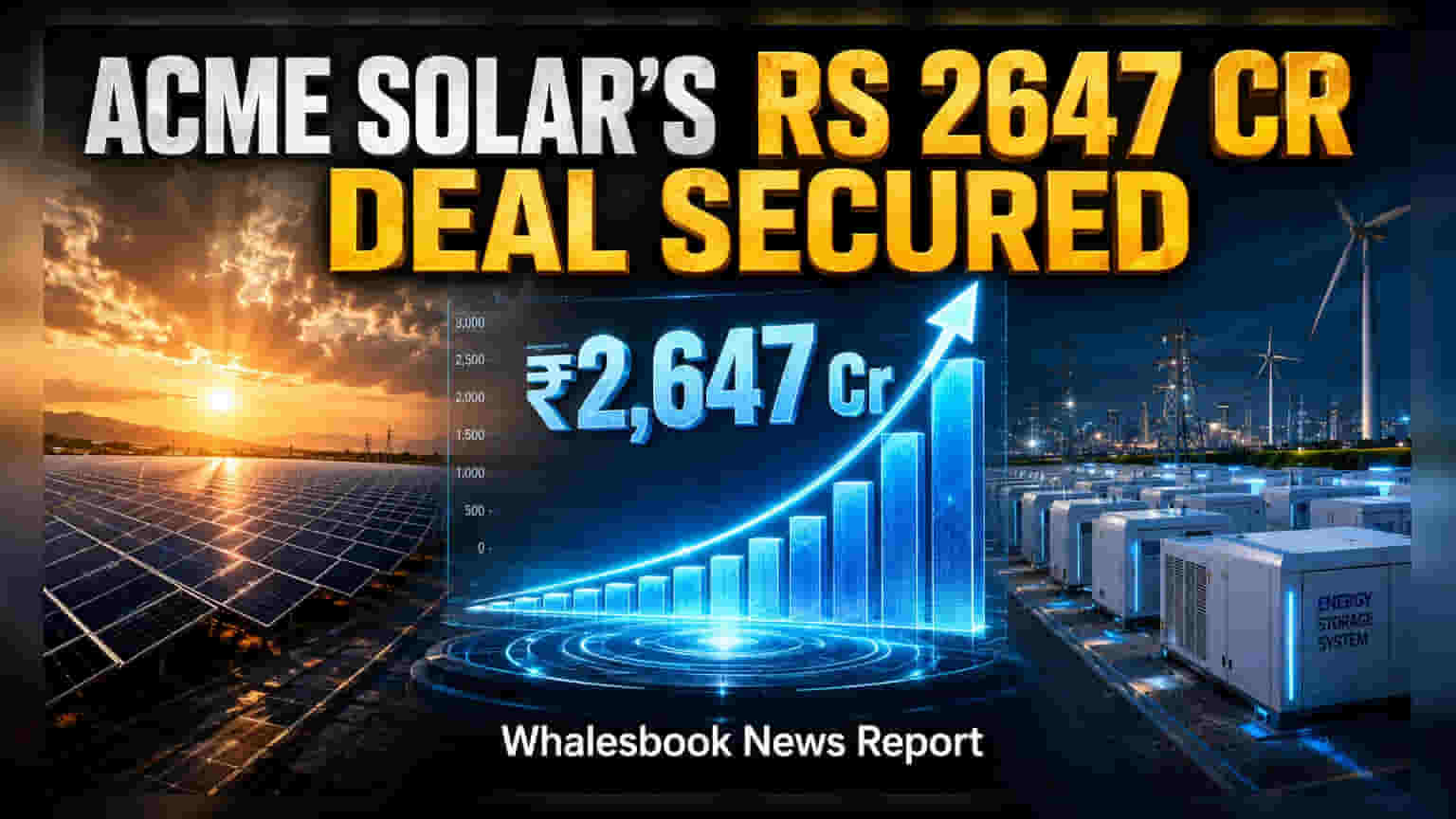
ACME Solar Holdings has obtained ₹2,646.6 crore in long-term financing from REC for a new solar and battery storage project. The venture features a 25-year agreement with SJVN to supply power at ₹6.74 per unit. This development provides the company with predictable, long-term revenue through an integrated energy storage model.
ACME Solar Holdings has secured a significant project financing package of ₹2,646.6 crore from the state-run power financier REC. This capital is dedicated to building a 450 MW solar project paired with 1,800 MWh of battery energy storage capacity. The loan, which carries a tenure of 20 years, marks a shift toward projects that offer more consistent power delivery compared to traditional solar-only plants.
Revenue Model and PPA Structure
The financial stability of this project rests on a 25-year power purchase agreement signed with SJVN, a state-owned power producer. The electricity generated from this facility will be sold at a fixed tariff of ₹6.74 per unit. For investors, this structure offers clear revenue visibility over the long term, reducing the impact of daily price fluctuations in the power market. This fixed-price model is a standard approach for large-scale renewable projects, helping companies manage debt obligations against guaranteed cash inflows.
Managing Debt and Expansion
ACME Solar currently manages a total portfolio of 8,070 MW across various renewable segments, including wind, solar, and hybrid assets. Taking on a loan of this size increases the company's reliance on borrowed capital, which is typical for capital-intensive infrastructure projects. The success of this project will depend on the company's ability to complete construction on schedule and manage the technical complexities of integrating battery storage systems with solar generation. Any delay in project commissioning or unexpected increases in battery costs could affect the project's return on investment.
Sector Trends in Storage
India’s energy sector is increasingly prioritizing 'firm' or 'dispatchable' power—energy that can be supplied on demand even when the sun is not shining or the wind is not blowing. By combining solar panels with large-scale battery storage, the company is positioning itself to meet this evolving grid requirement. While this technological move is intended to provide a competitive advantage, it also requires higher initial capital spending than standard solar setups. Investors should monitor how the company balances its debt levels with the need for continuous expansion in the high-growth renewable energy market. The next major update for stakeholders will be the project's construction progress and the eventual start of commercial operations.