

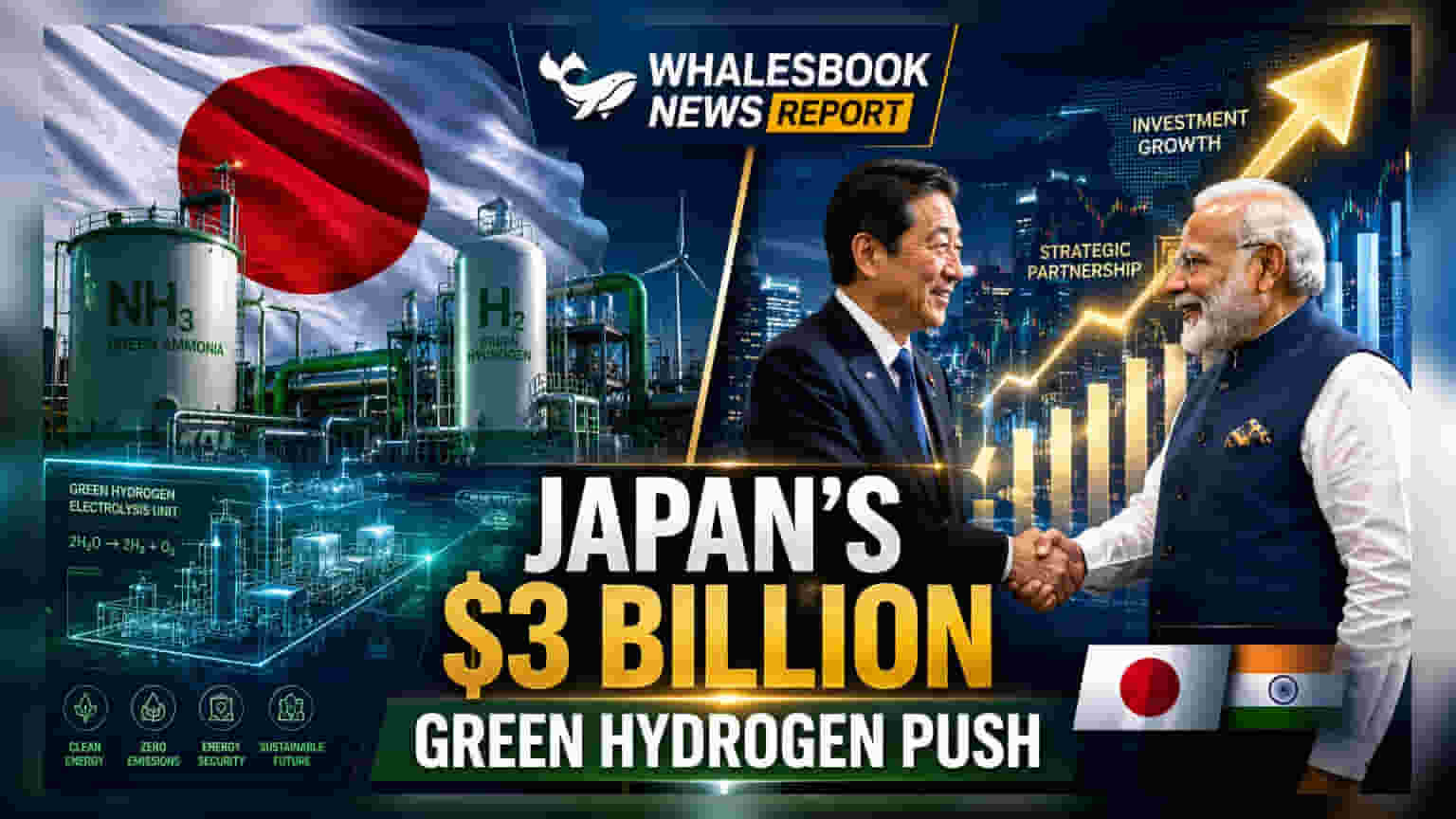
ACME Group has secured a $3 billion grant from Japan for its green ammonia project in Odisha, supporting the export of 228,000 tonnes annually starting in 2030. This funding provides 25 years of price backing, effectively solving the critical challenge of securing demand for green hydrogen products and strengthening the India-Japan Clean Energy Partnership.
What Happened
ACME Group has secured a $3 billion grant from Japan to support its green ammonia project located in Odisha. This financial support is part of Japan’s Contract for Difference (CfD) program, which provides price backing for 228,000 tonnes of green ammonia exports per year starting in September 2030. The project is a joint venture between ACME Group and Japan’s IHI Corporation. By bridging the cost gap between expensive green ammonia and traditional fuel, this grant aims to make the long-term production and export of clean energy commercially viable.
Why Demand Security Matters
The green hydrogen and ammonia sector often faces a major problem: while many companies have the technology to produce clean fuel, finding long-term buyers is difficult because green energy is currently more expensive than fossil fuels. This Japanese grant acts as a form of insurance. It guarantees that the producer will have a market for their output and that the price will remain stable for 25 years. This certainty helps the company obtain financing more easily and makes the project significantly more reliable for investors and partners.
The Project Scale and Timeline
The Odisha facility is the main part of ACME Group's larger strategy for clean energy production in India. The facility supported by this grant is designed to produce 228,000 tonnes of green ammonia annually for the Japanese market, with an additional 177,000 tonnes of capacity secured through Japan’s Long-Term Decarbonised Power Source Auction (LTDA) program.
Beyond this, ACME is developing a larger project in Paradip, Odisha, with a capacity of 800,000 tonnes per year, expected to start by 2029. This Paradip facility has already secured a purchase agreement for 370,000 tonnes with the Solar Energy Corporation of India (SECI), further demonstrating how the company is locking in demand before construction is fully complete. In total, the group plans for over 1.2 million tonnes of green ammonia capacity in the state.
Risks and Execution Challenges
While this grant is a major milestone, investors should recognize that these projects are massive and take years to build. The primary risk in this sector is execution. With operations starting in 2030, any delay in construction, technology implementation, or raw material supply could impact the project's profitability. Additionally, the project relies heavily on international partnerships and foreign subsidy programs. Changes in Japanese policy or global trade conditions regarding green energy could, in theory, affect the long-term sustainability of such financial support models.
What To Watch Next
The development of this project will be a key indicator of how India can grow its green export economy. Investors and industry watchers should track the progress of the Paradip facility, which is set to come online earlier in 2029. Additionally, monitor the commissioning dates for the joint venture with IHI Corporation and whether the company manages to keep project costs under control to ensure the benefits of the price-backing program are fully realized.