

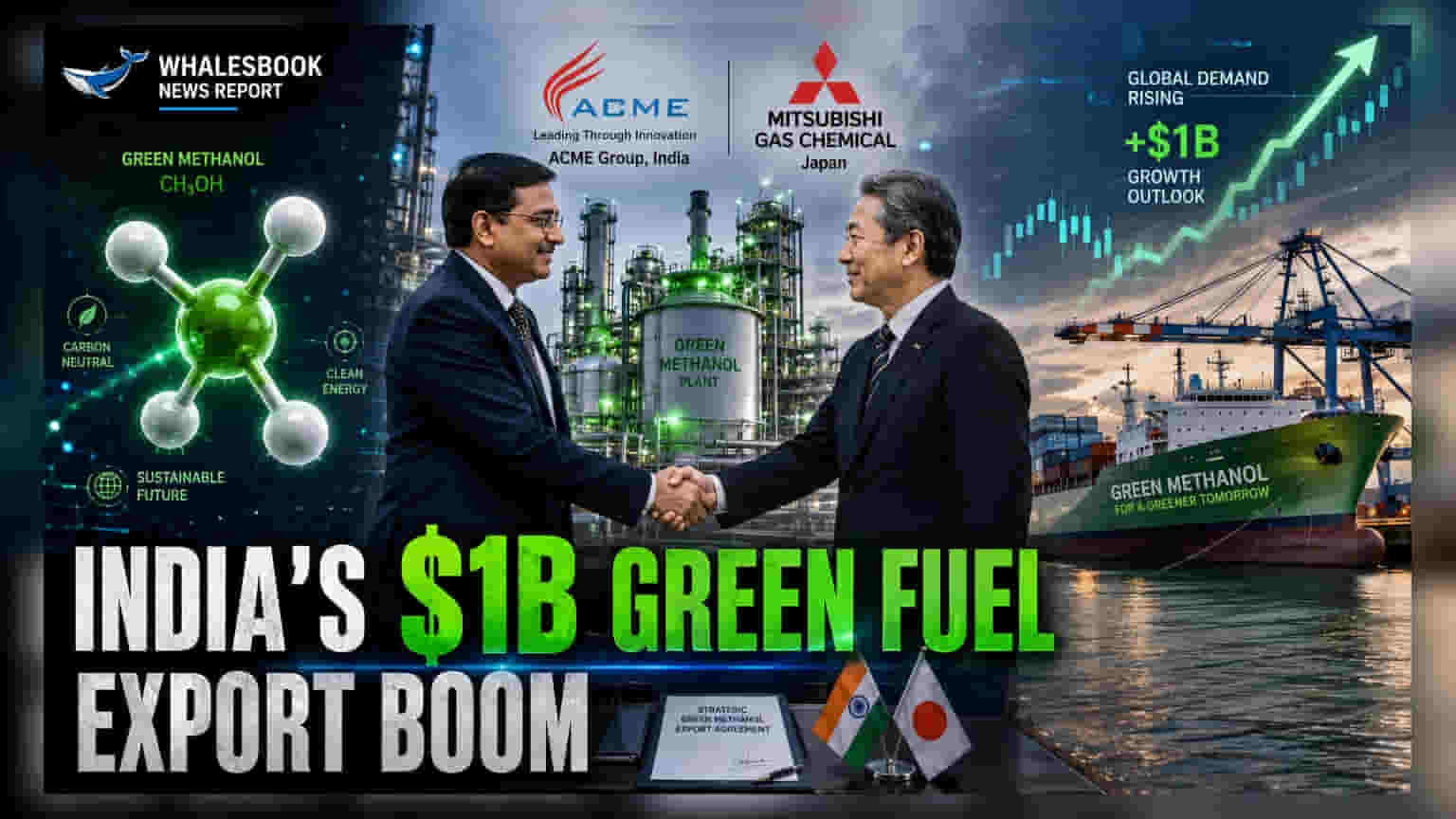
ACME Group has secured a $1 billion long-term contract to supply 100,000 tonnes of green methanol annually to Japan's Mitsubishi Gas Chemical. This deal, involving production from an upcoming plant in Odisha, marks a key step in India’s green hydrogen export plans by securing committed demand for future projects.
What Happened
ACME Group has entered into a binding, long-term agreement with Japan’s Mitsubishi Gas Chemical (MGC) to supply 100,000 tonnes of green methanol every year. The deal, valued at approximately $1 billion, will be serviced through ACME’s upcoming manufacturing facility in Paradip, Odisha. This partnership establishes one of the first major global supply chains for Indian-produced green marine fuel, targeting the growing international demand for sustainable shipping alternatives.
Why This Matters For Investors
For companies in the green energy space, securing long-term offtake agreements—contracts where a buyer commits to purchasing a product before it is fully produced—is crucial. Large-scale green hydrogen and derivatives projects require massive upfront capital spending. By locking in a customer like MGC for this production, ACME reduces demand risk. This level of revenue certainty is often a key requirement for lenders and financial institutions when deciding whether to provide funding for such capital-intensive projects. It transforms the project from a speculative venture into one with a confirmed business model.
The Role of Green Methanol
Green methanol is produced by combining green hydrogen with captured carbon dioxide. It is increasingly seen as a preferred fuel for the shipping industry because it is compatible with much of the existing fuel storage and transport infrastructure. This means the global shipping sector can adopt it without needing to overhaul its entire fleet or port facilities. The demand is driven by global regulatory pressures, such as the International Maritime Organization’s decarbonization targets and the European Union’s FuelEU Maritime framework, which require ships to transition to low-carbon fuels.
Risks And Implementation Challenges
While the contract is a significant positive, investors should remain aware of the typical risks associated with large energy infrastructure projects. These include the risk of delays in setting up the Paradip facility, potential cost increases during construction, and the complexities of managing green hydrogen supply chains. Additionally, the project’s long-term success depends on the company's ability to maintain production costs that remain competitive against other global suppliers of green fuels. Monitoring the progress of the facility’s construction and the actual commissioning timeline will be essential for gauging the company’s ability to meet these supply commitments.
What Investors Should Track
Moving forward, the primary monitorables for this project include the construction timeline of the Paradip facility and any updates on official project milestones. Investors should also watch for further details regarding the funding structure of this expansion, as the company’s ability to manage debt while undertaking large-scale capital spending will be a key factor in its long-term financial health. Finally, tracking broader changes in global environmental regulations will help in understanding whether demand for green marine fuels continues to grow as currently anticipated.