

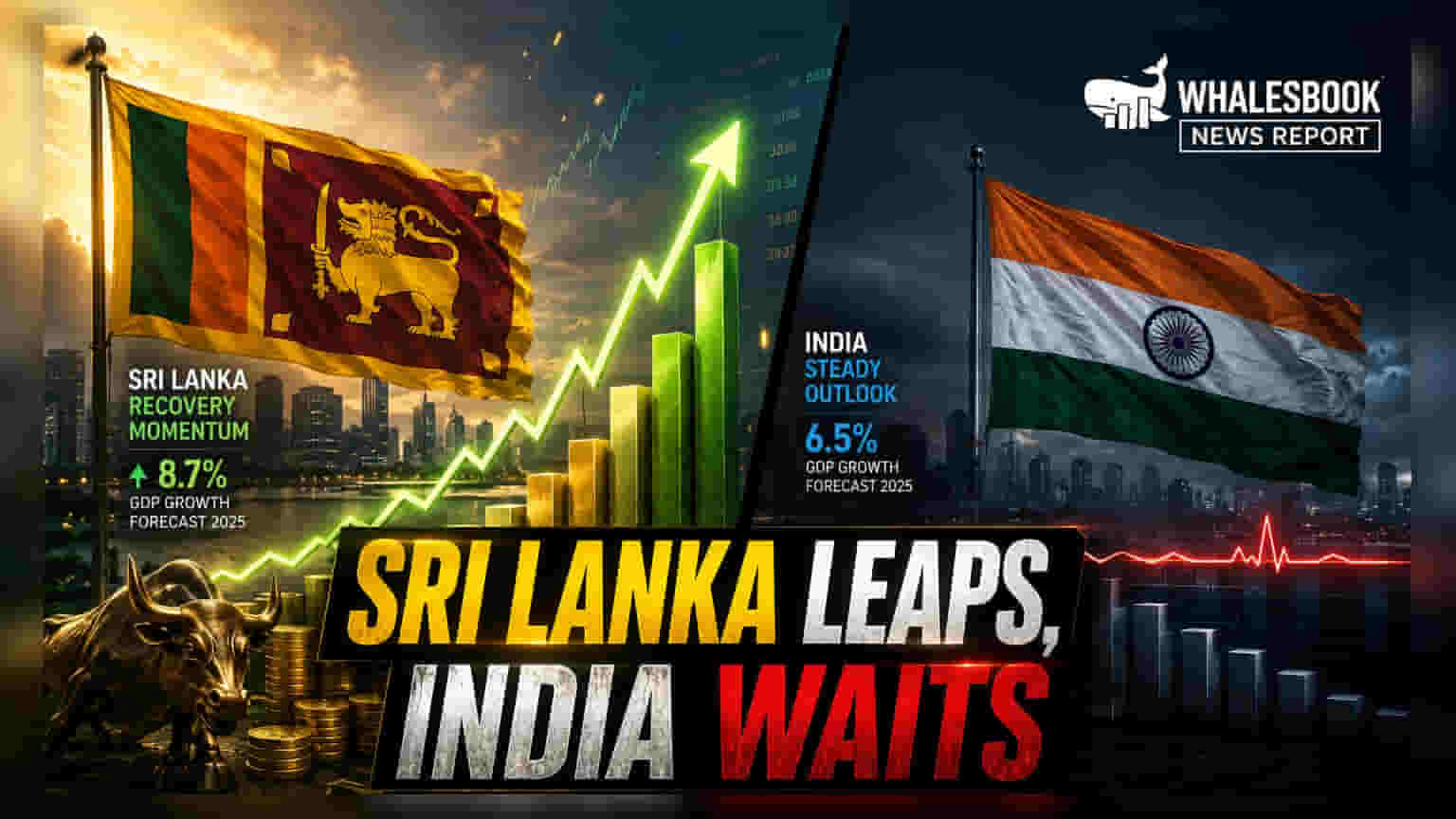
The World Bank has maintained India’s status as a lower-middle-income economy due to its GNI per capita falling below the $4,496 threshold. While nations like Sri Lanka have regained upper-middle-income status, India’s classification remains unchanged because its total national income is divided across a very large population.
What Happened
The World Bank has released its latest country income classifications for 2026. Sri Lanka has officially returned to the upper-middle-income category, marking a significant recovery from its 2022 financial crisis. Alongside Sri Lanka, Vietnam and the Philippines have also achieved upgrades. India, however, continues to be classified as a lower-middle-income country, a position it has held since 2007.
How Income Status Is Measured
The World Bank classification does not measure the total size of an economy, such as its Gross Domestic Product (GDP). Instead, it uses Gross National Income (GNI) per capita. This is calculated by taking a country’s total income earned by its citizens and dividing it by its population. For the 2026 fiscal year, the World Bank sets the threshold for upper-middle-income status at a GNI per capita of $4,496 or higher. India’s current GNI per capita sits in the $2,500 to $2,700 range, which keeps it firmly within the lower-middle-income bracket of $1,136 to $4,495.
Why India’s Large Population Matters
Investors often look at total GDP growth, which shows that India is one of the world's fastest-growing major economies. However, the World Bank’s methodology focuses on individual economic prosperity. Because India’s total income is distributed across a massive population, the per-person income figure grows much more slowly than the overall GDP. This means that even as the total economy expands rapidly, the average income per person remains well below the level needed to shift into the higher-income category.
Comparison With Regional Peers
The upgrade of countries like Vietnam and the Philippines highlights different economic trajectories. Vietnam has successfully utilized an export-oriented manufacturing model to drive consistent growth in individual income levels. Sri Lanka’s return to the upper-middle-income group is primarily a result of stabilization following its 2022 default, supported by IMF-led structural reforms and a recovery in tourism and industrial output. These upgrades suggest that focused sectoral growth and debt stabilization can help move countries across these income thresholds.
What Investors Should Track
For investors, this classification is more of a long-term macro indicator than a short-term market trigger. It highlights the vast potential for domestic consumption growth as India continues to work toward raising per capita income. The key long-term monitorable is the pace of GNI per capita growth, which depends on improvements in labor productivity, education, and the formalization of the economy. While the current status does not change immediate investment prospects, it serves as a reminder of the scale of the structural transition India is undergoing as it aims to improve the average income of its citizens.