 Whalesbook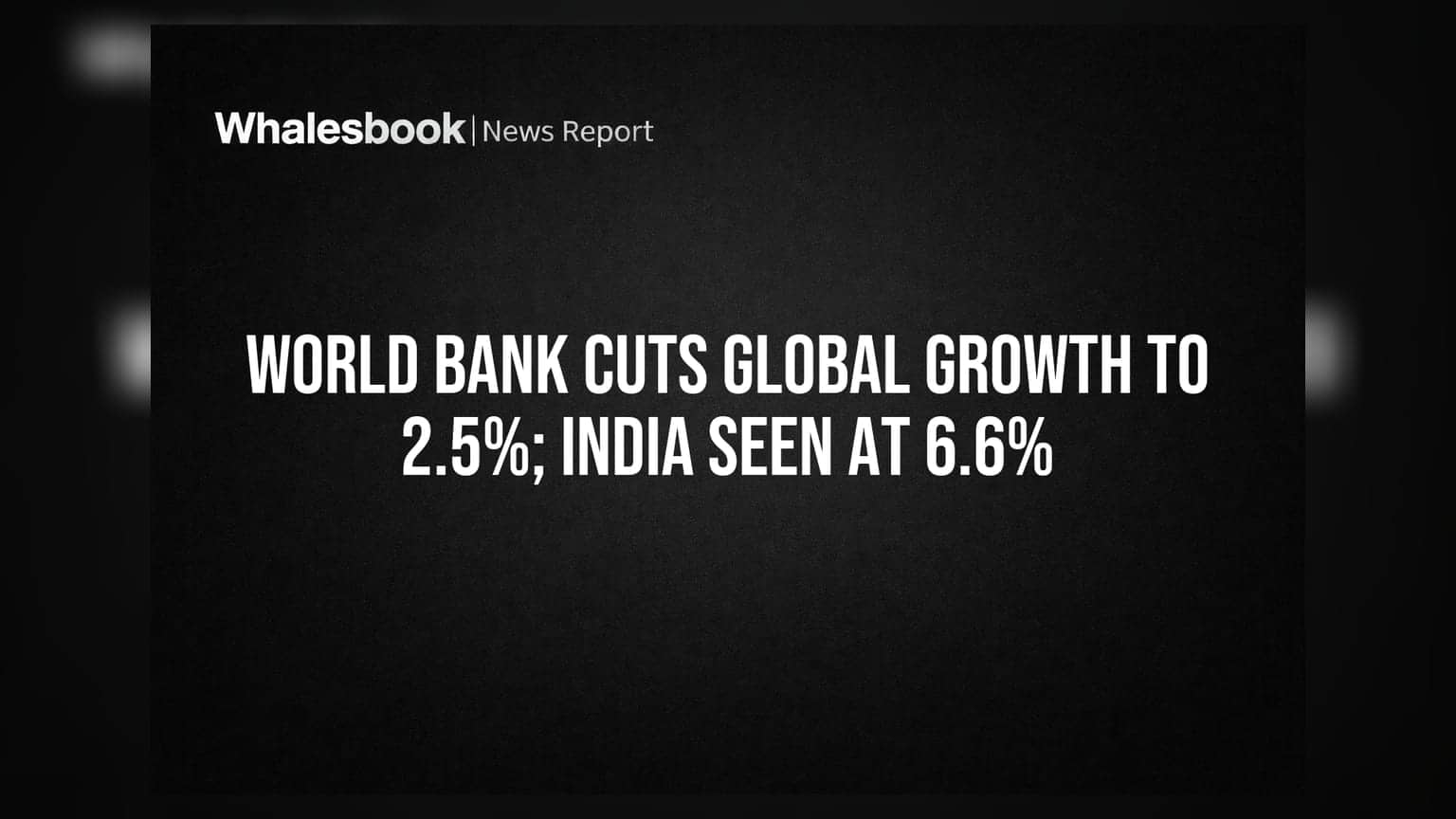


The World Bank has downgraded its 2026 global growth outlook to 2.5%, citing inflation and high energy costs. However, India's economy remains relatively resilient, with a projected growth of 6.6% for fiscal year 2027. Strong domestic demand and government policy support are key drivers, though investors should watch for risks like rising energy costs and geopolitical instability.
What Happened
The World Bank has released its latest economic outlook, lowering its global growth projection for 2026 to 2.5%. This is the slowest pace of expansion since the COVID-19 pandemic. The report highlights significant challenges for the global economy, including persistent inflation, rising energy prices, and tighter monetary policies across many countries. In contrast to the global trend, India's economy is expected to show resilience. The World Bank has forecast India's growth at 6.6% for the fiscal year 2026-27.
Why This Matters For Investors
For Indian investors, this divergence between global and domestic growth is significant. While the world faces a slowdown driven by trade disruptions and high energy costs, India's growth is being supported by strong domestic factors. The World Bank points to steady tax collections and a pickup in private consumption—particularly in rural areas—as the foundation for this performance. Investors often track these indicators as they suggest that Indian companies may continue to find demand within the country, even if international markets remain weak.
The Inflation and Energy Factor
A key concern highlighted by the report is the impact of geopolitical tensions, particularly in the Middle East, on energy shipments and prices. For India, higher oil and gas prices are a challenge because they can increase input costs for businesses and lead to higher inflation. When energy prices rise, profit margins for manufacturing and logistics companies can come under pressure. The World Bank noted that the government has been using measures like fuel tax reductions to help manage these costs, but it remains a critical factor that investors should track.
How Investors May Read This
Beyond just the headline growth number, investors should consider how specific policy shifts may influence different sectors. The report notes that changes in Goods and Services Tax (GST) rates and potential free trade agreements could help sustain consumer demand and boost exports. Companies that rely on domestic consumption or are involved in exports that could benefit from trade policy changes might be more sensitive to these developments. On the other hand, sectors that are highly dependent on global trade or are heavy energy consumers may face more volatility if the global slowdown continues.
Risks and Monitorables
While the 6.6% projection is relatively strong, the report also outlines clear risks. Geopolitical conflict remains the primary threat, as it continues to disrupt trade routes and keep energy prices elevated. If these prices stay high for an extended period, it could weigh on corporate profitability and consumer spending power. Furthermore, the global environment of high interest rates and tighter monetary policy could influence capital flows. Investors may continue to monitor upcoming economic data, management commentary on raw material costs, and any updates regarding government trade policies or tariff changes, as these will likely shape the business environment in the coming quarters.