 Whalesbook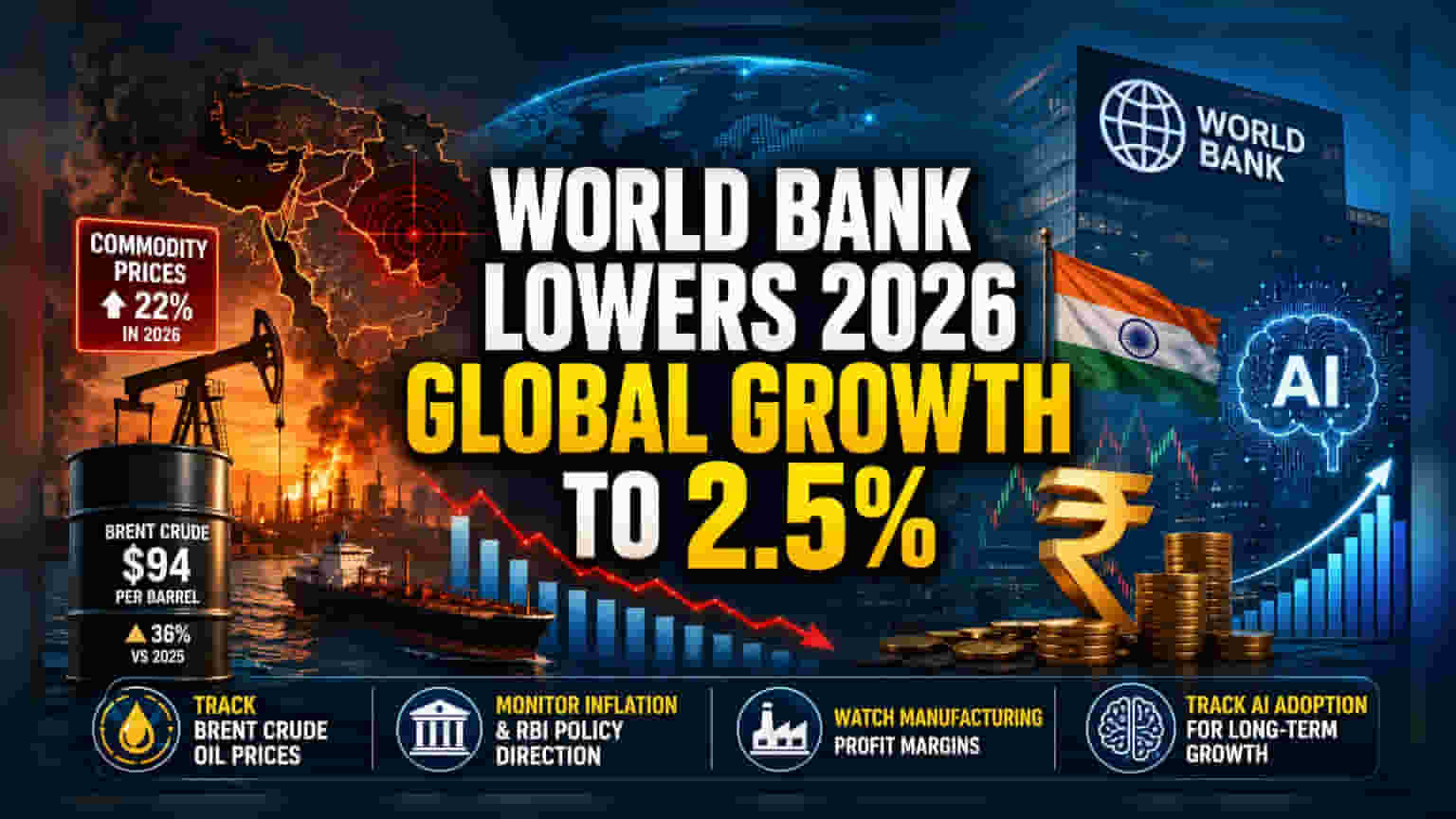


The World Bank has lowered its 2026 global growth outlook to 2.5%, citing the Middle East conflict and rising energy costs. This update suggests that higher commodity prices could fuel inflation, creating potential pressure for economies globally, including India. While the outlook is cautious, the report highlights AI as a potential growth driver.
What Happened
The World Bank has released its June 2026 'Global Economic Prospects' report, lowering the global economic growth projection for the year to 2.5%. This reduction is primarily driven by the ongoing conflict in the Middle East, which has caused significant disruptions in energy markets. The report warns that this new wave of instability is expected to increase commodity prices by 22% in 2026, a sharp change from earlier expectations of a decline. The forecast for Brent crude oil has been adjusted to an average of $94 per barrel, reflecting a 36% rise over 2025 levels.
Why This Matters For Investors
The global economic slowdown is a significant factor for investors to monitor. For India, which relies on imports for a large portion of its energy needs, higher oil prices can lead to a wider trade deficit and create pressure on the rupee. When global inflation rises, central banks, including the Reserve Bank of India, may find it harder to lower interest rates, as higher energy costs tend to spread across the economy, affecting everything from transportation to manufacturing.
Impact on Different Sectors
Investors often look at how rising energy prices affect specific business sectors. Energy-intensive industries such as cement, steel, and chemicals may face pressure on their profit margins if they cannot pass these higher costs on to customers. Similarly, oil marketing companies might experience volatility depending on how retail fuel prices are managed. Conversely, the World Bank identified the adoption and investment in artificial intelligence (AI) as a potential boost for growth. This is a positive signal for the information technology sector, as companies that lead in AI implementation may see improved efficiency and new revenue opportunities.
The Risk of Escalation
The report includes a warning about potential downside risks. If the Middle East conflict intensifies or lasts longer than expected, the World Bank cautioned that global growth could drop to as low as 1.3%. Such a scenario would likely cause more severe inflationary pressure and financial stress, which would be challenging for global equity markets. Investors should treat this 1.3% figure as a 'stress-test' scenario rather than the current baseline, but it highlights the importance of geopolitical events on investment portfolios.
What Investors Should Track Next
Investors should closely watch several monitorables to understand how the situation evolves. First, keep an eye on Brent crude oil prices, as they are a key indicator of energy-related inflation. Second, track domestic inflation data and statements from the Reserve Bank of India, as these will indicate how India is balancing growth with rising import costs. Third, monitor the quarterly profit margins of manufacturing companies to see if they are managing the energy cost burden effectively. Finally, look for trends in AI adoption across the corporate sector, as this remains the primary area identified for long-term growth and productivity gains.