

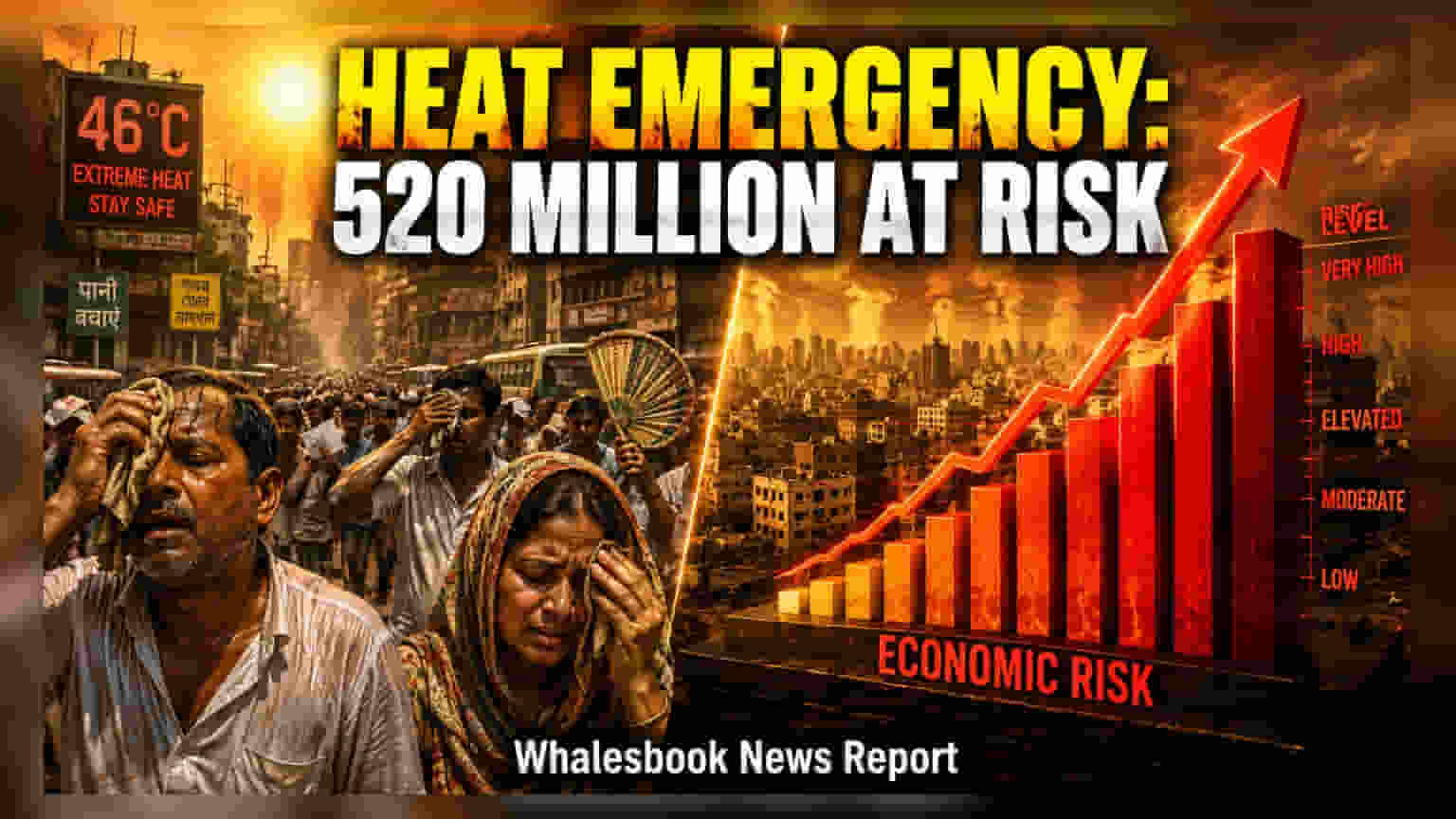
A new World Bank report warns that 520 million people in South Asia will face dangerous heat levels by 2070, four times higher than today. The crisis threatens to shrink the region's GDP by 7% by 2050 and causes 31 million full-time jobs to be lost annually. This development creates long-term challenges for labor productivity, urban infrastructure, and energy costs, forcing businesses to prioritize heat-resilient strategies.
A recent report by the World Bank, titled 'A Livable Future: Protecting Jobs and Growth from Extreme Heat in South Asia’s Cities,' has issued a sharp warning about the accelerating impact of extreme heat across the region. By 2070, an estimated 520 million people in South Asia are expected to endure at least one month of dangerous heat conditions annually. This represents a fourfold increase from current levels and highlights a major shift in climate-related risks for the subcontinent.
Economic and Productivity Risks
The economic implications of this rise in temperature are significant. Currently, extreme heat is already causing a loss equivalent to 31 million full-time jobs every year. If adaptive measures are not integrated into development strategies, the region's economic output could contract by nearly 7% by 2050. This productivity loss is largely driven by the declining capacity of outdoor and informal sector workers to function safely during peak temperatures. When health and labor conditions deteriorate, companies face direct disruptions, ranging from increased absenteeism to a loss of efficiency in labor-intensive industries like manufacturing, construction, and agriculture.
Urban Infrastructure and Energy Stress
Urban areas are becoming hotspots due to the 'heat island' effect, where concrete structures absorb and trap heat, often making cities up to 10°C hotter at night than surrounding rural zones. This creates a dual burden on infrastructure. First, it increases the strain on energy grids as demand for electricity for cooling rises sharply during heatwaves. Second, it limits the long-term competitiveness of cities, as energy costs for industries and commercial hubs may increase to maintain operational efficiency.
The Shift Toward Heat-Resilient Development
The World Bank's report suggests that extreme heat can no longer be treated as a seasonal inconvenience but must be addressed as a structural development challenge. For businesses and policymakers, this creates a need for substantial investment in heat-resilient infrastructure. This includes adopting sustainable cooling solutions, redesigning urban spaces to improve airflow, and investing in advanced building materials that naturally regulate indoor temperatures.
As the region faces these challenges, the future economic performance of South Asian nations will increasingly depend on their ability to adapt to these conditions. Investors and corporate stakeholders may closely monitor how companies and governments prioritize capital spending toward climate adaptation, grid stability, and energy-efficient cooling. The ability to manage these climate-related costs and risks will likely become a factor in long-term operational resilience for many industries in the coming decades.