 Whalesbook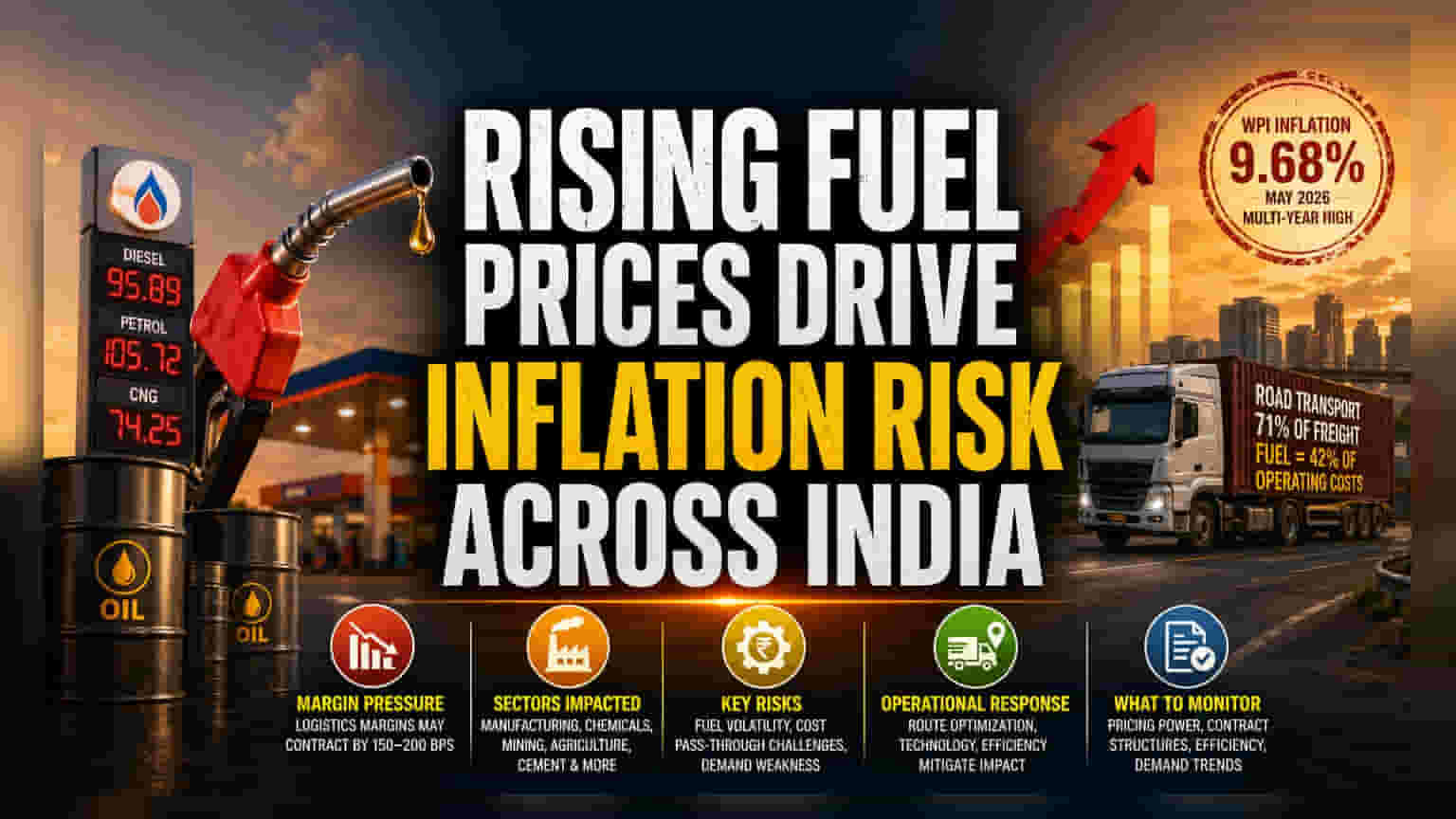


India is facing a surge in wholesale inflation, hitting 9.68% in May 2026, largely driven by fuel price spikes. As logistics costs rise, companies in manufacturing, mining, and agriculture face severe pressure on profit margins. Investors should watch if companies can pass these costs to consumers or if their pricing power is weakening.
What Happened
Rising fuel prices have become a significant concern for the Indian economy, acting as a primary driver of inflation across multiple sectors. A recent report by Crisil highlights that land transport is the most vulnerable input channel, as freight logistics account for a large portion of product pricing. With road transport representing 71% of all freight movement in India and fuel making up 42% of those operational costs, any spike in oil prices ripples quickly through the entire supply chain.
This trend is reflected in broader data, with India's Wholesale Price Index (WPI) inflation accelerating to 9.68% in May 2026, a multi-year high. Geopolitical tensions in the Middle East have sustained high energy prices, significantly impacting the cost of mineral oils and crude petroleum. This inflation is not limited to energy companies but is increasingly reflected in the input costs for essential sectors, including mining, chemicals, agriculture, and construction materials like cement and ceramics.
Why This Matters For Investors
The core risk for investors in 2026 is margin compression. When logistics and raw material costs rise, companies face a difficult choice: absorb the higher expenses and accept lower profits, or raise prices for consumers. If demand is weak or competition is high, companies may find it difficult to pass these costs on, which directly hurts their bottom line.
Rating agencies and market analysts have noted that sectors such as manufacturing and logistics are already seeing pressure. ICRA has indicated that road logistics margins may contract by 150–200 basis points if fuel price volatility continues. This margin pressure is especially critical for small and medium enterprises (SMEs) that lack the scale to absorb price shocks or the bargaining power to renegotiate fuel surcharges with large clients.
How Investors May Read This
Investors may look at two key factors to judge a company's resilience during this period: pricing power and operational efficiency. Companies with strong brands or unique products are generally better able to pass on higher costs to customers, protecting their profit margins. In contrast, commodity-like businesses or those in highly competitive sectors may struggle to maintain margins.
Another important monitorable is how companies manage logistics. Those using advanced routing software, telematics, and route optimization tools are better positioned to mitigate some of the impact of rising diesel costs. Conversely, companies relying on informal, fragmented transport networks may face more immediate and unpredictable cost spikes.
The Bigger Business Context
The inflationary impact is unevenly distributed across the economy. While sectors like financial services, real estate, and professional services remain relatively insulated from direct energy-related input costs, the manufacturing sector is deeply exposed. With manufacturing inflation accelerating to 7.48% as of May 2026, producers are dealing with rising costs for basic metals, chemicals, and textiles.
Furthermore, the government is navigating a balance between providing relief—such as potential excise duty adjustments—and managing fiscal impact. However, the reliance on imported crude remains a structural reality for India, making companies across the supply chain sensitive to global oil price fluctuations.
What Investors Should Track
Moving forward, investors may closely track management commentary during upcoming quarterly result calls for clues on margin trends. Key monitorables include:
- Pricing power: Can the company successfully implement price hikes without losing market share?
- Operational efficiency: Is the company using technology or new logistics models to lower freight costs?
- Contract structures: Do the company’s contracts include fuel escalation clauses that allow for automatic cost pass-throughs?
- Demand trends: Does the broader economic data suggest that consumers are pulling back on spending due to higher prices?
Tracking these variables will help determine which companies are capable of navigating the current inflationary environment and which ones remain highly vulnerable to volatile fuel prices.