

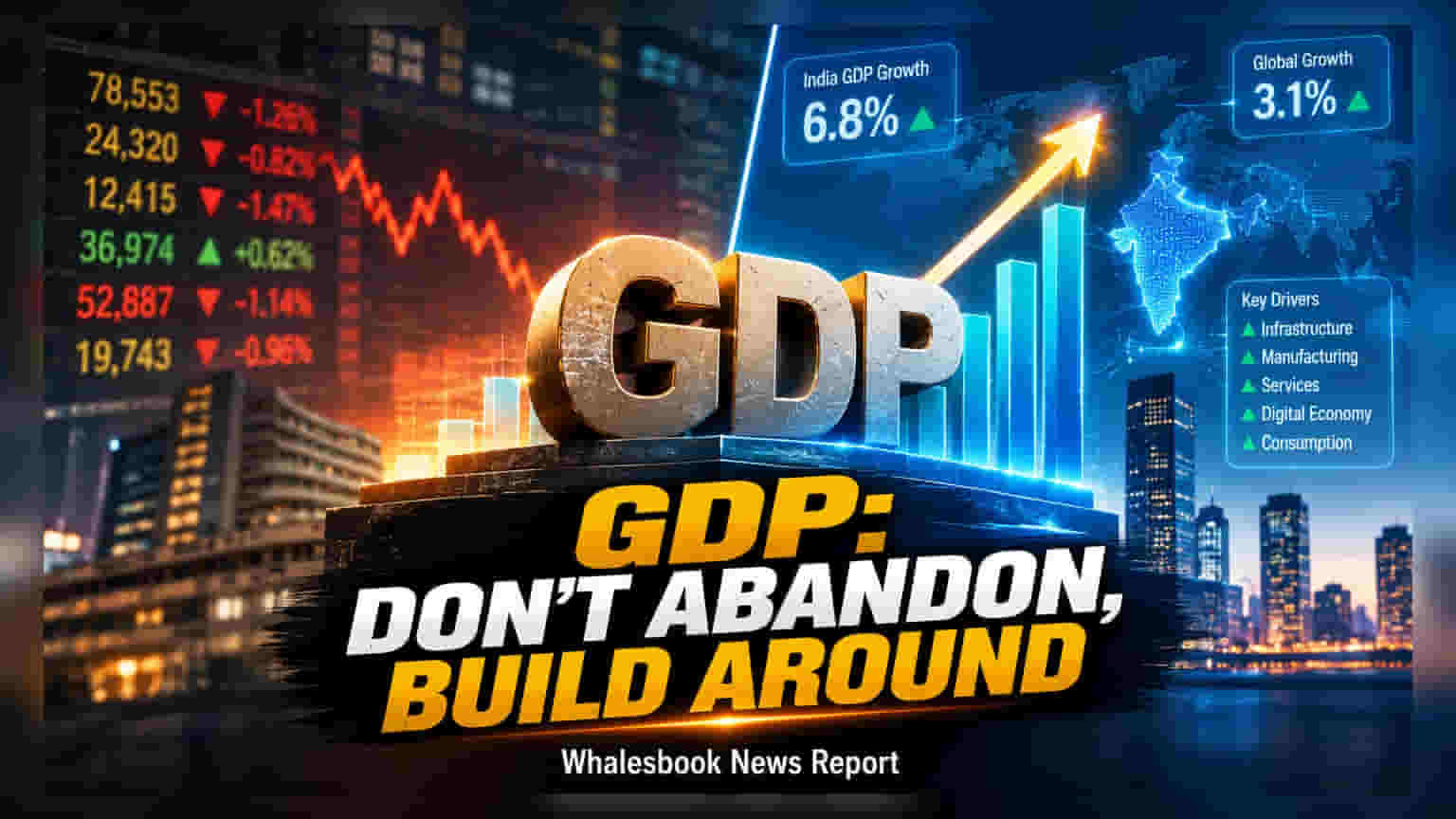
Despite debates over its limits, GDP remains a core tool for Indian fiscal planning and global financial regulation. Economists argue that instead of replacing it, the focus should be on building supplementary measures to capture broader welfare data.
Gross Domestic Product (GDP) continues to serve as the foundational metric for economic policy in India and across the world. While critics frequently point out that GDP fails to capture welfare, environmental health, or income distribution, its role in the global financial system has only grown deeper. The recent adoption of the System of National Accounts (SNA) 2025 emphasizes that the path forward for economic measurement involves adding new data points rather than discarding the established GDP framework.
Institutional Role in Indian Governance
In India, GDP is not just a statistical figure; it acts as a regulatory anchor. The Fiscal Responsibility and Budget Management (FRBM) Act, which guides how the government manages its debt and spending, relies on the fiscal deficit as a percentage of GDP. This structure provides a common language for finance ministries and international investors. Without such a standard, it would be difficult to create stable, long-term fiscal rules that markets can trust. Since 1965, the tax-to-GDP ratio has remained a stable benchmark for governments globally, and India has used similar metrics to forecast budgets and monitor the sustainability of public finances.
Why GDP Stays Relevant
GDP persists as the dominant indicator because of three specific attributes: comparability, stability, and legitimacy. Because GDP is calculated using an internationally agreed-upon methodology, investors can compare the growth of the Indian economy with other nations on an equal footing. Its long history and institutional support from organizations like the OECD and the World Bank make it a reliable basis for everything from corporate investment decisions to international trade agreements and defense spending targets.
Expanding Economic Measurement
The future of economic reporting is moving toward an augmented system. The latest international standards under SNA 2025 represent a change with continuity. This means maintaining GDP as the core production measure while integrating new, broader categories of data. These include distributional accounts, which look at how wealth is spread across different income groups, and environmental-economic accounting, which factors in natural resources. For investors, this evolution means that while GDP will remain the primary headline number for assessing economic health, more detailed supplementary data will become available, providing a clearer picture of long-term sustainability. The primary monitorable for analysts and policymakers will be how these new datasets are refined and standardized in coming years to provide a more comprehensive view of economic welfare without losing the comparative benefits of the traditional GDP figure.