

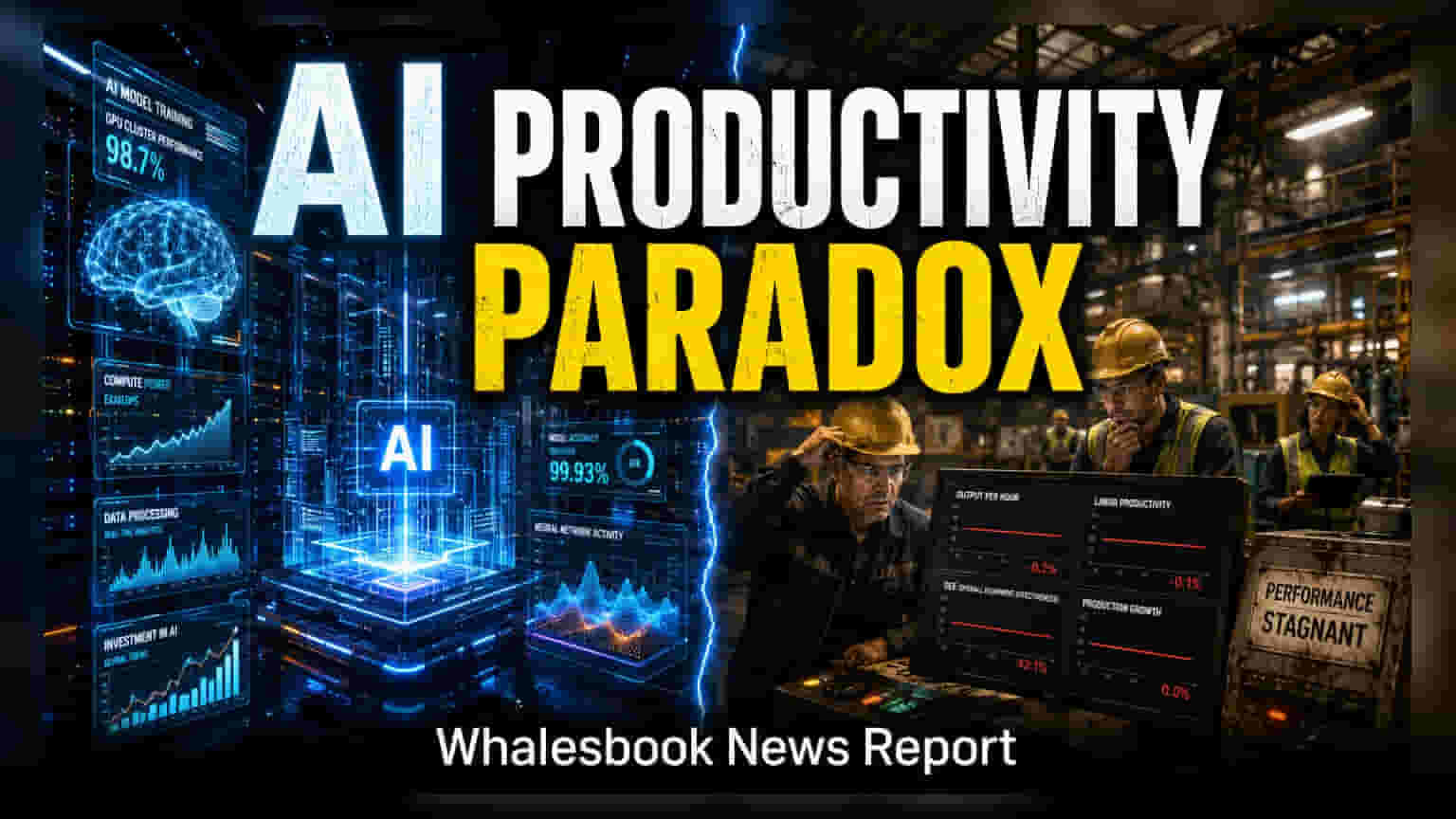
Despite massive AI investments, global productivity gains remain slow because organizations lack necessary operational changes. For India, the real economic opportunity lies in diffusing AI across MSMEs rather than just developing frontier models. Success depends on data quality, workforce training, and digitizing traditional business processes.
Artificial intelligence has shifted from a specialized technical field to a major economic focus, with global tech giants investing billions into infrastructure. While the International Monetary Fund (IMF) highlighted AI as a transformative force for labor markets and growth in its 2026 World Economic Outlook, actual productivity gains have yet to match the scale of investment. This lag reflects a recurring economic pattern where technological advancement does not immediately translate into higher output.
Lessons from the Productivity Paradox
Economic history provides context for this current phase. In 1987, Nobel laureate Robert Solow observed that while computers were becoming common, they were notably absent from productivity statistics. This 'productivity paradox' was eventually resolved not by hardware alone, but by businesses fundamentally redesigning workflows and management practices. Similarly, many modern firms are currently deploying AI tools like chatbots or coding assistants merely as add-ons to old systems. This approach often fails to improve efficiency, as employees remain burdened by disconnected databases and the need to manually verify AI-generated work.
Data Quality and Organizational Hurdles
True productivity growth is hindered by significant practical challenges, primarily data quality. AI systems rely on the information they process; therefore, fragmented, inconsistent, or duplicate records lead to flawed outcomes. Faster processing of poor-quality data does not equate to better decision-making. Furthermore, achieving tangible gains requires more than just capital spending on software. It demands robust organizational capital, sound governance, and the ability of management to reconfigure supply chains and retrain the workforce.
India’s Strategic Path Forward
India is uniquely positioned to address these challenges. With an established digital public infrastructure—including Aadhaar and the Unified Payments Interface (UPI)—the country has already set the stage for widespread digital adoption. While the national India AI Mission focuses on technological development, the broader economic impact will likely depend on how effectively these tools reach the country's vast network of micro, small, and medium enterprises (MSMEs).
MSMEs contribute roughly 30% of India’s GDP and support over 110 million jobs. Unlike large, tech-forward enterprises that have already begun digital transformation, millions of these smaller businesses still rely on manual processes. The most significant economic value for India may come from bridging this gap. Investors and policymakers may monitor how effectively AI tools are integrated into sectors like manufacturing, logistics, and agriculture. The ultimate success of India’s AI journey will be measured by the diffusion of these technologies among ordinary businesses, supported by investments in managerial capability and data governance, rather than solely by the creation of high-profile, frontier AI models.