

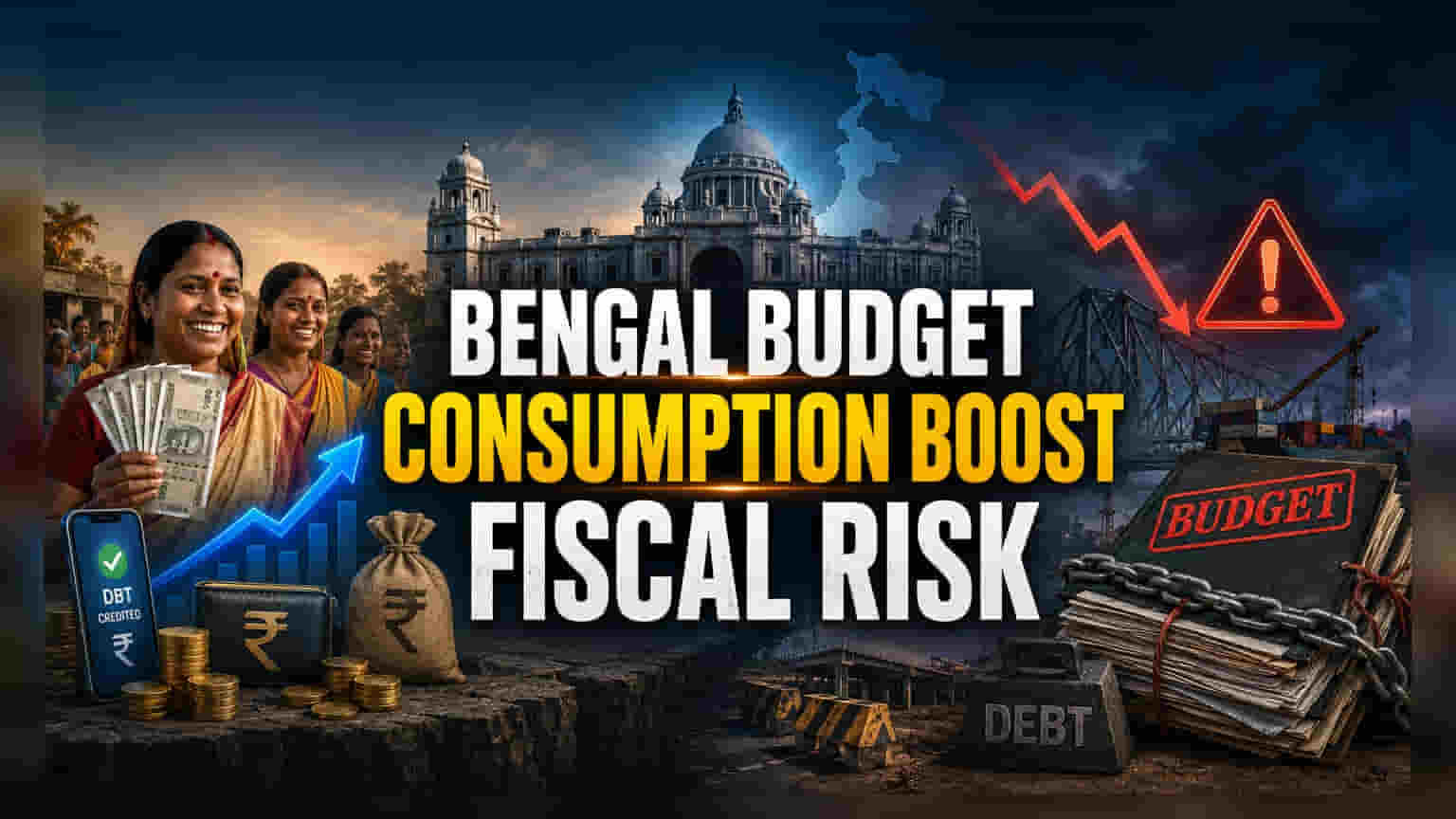
West Bengal's new government has presented its 2026 budget, pledging Rs 36,000 crore for a direct cash transfer scheme for women and a 20% Dearness Allowance hike for state employees. While these measures aim to boost consumption, the heavy welfare spending may pressure the state's fiscal health. Investors should monitor how the government balances these populist commitments with long-term debt and infrastructure development.
What Happened
The newly formed government in West Bengal has unveiled its 2026 budget, focusing on extensive social welfare and job creation. Finance Minister Swapan Dasgupta announced a 20 percentage point hike in the Dearness Allowance (DA) for state employees and pensioners, bringing the total to 38%. A major fiscal commitment is the 'Annapurna Yojana,' which allocates Rs 36,000 crore for direct cash transfers to women between the ages of 25 and 60.
Beyond cash transfers, the budget targets the creation of 1 lakh government jobs, including 20,000 police positions and 50,000 roles in education. The government has also introduced social incentives, including increased monthly pay for Anganwadi and ASHA workers and a pension increase for retired journalists.
Why Consumption May Get a Boost
The combination of higher DA for government employees and the Annapurna Yojana direct cash transfers is likely to increase disposable income for households in the state. Historically, such initiatives can act as a short-term stimulus for local consumption. Sectors that may benefit from increased household spending include fast-moving consumer goods (FMCG), retail, and two-wheelers. If the cash transfers effectively reach the targeted beneficiaries, it could support demand in rural and semi-urban areas of West Bengal.
The Infrastructure and Spending Trade-Off
While social spending dominates, the budget also includes plans for infrastructure projects, such as an elevated corridor in Kolkata, a new deep-sea port at Dadanpatrabar, and a bridge over the Mayurakshi river. The government also proposed feasibility studies for metro projects in Durgapur, Asansol, and Siliguri.
However, for investors, the key factor is the fiscal trade-off. Significant spending on subsidies and salary hikes reduces the capital available for development projects. If the state's tax revenue does not grow quickly enough to match these high expenses, the government may need to increase its borrowing. High state debt levels can sometimes limit funds available for future infrastructure expansion.
Risks and Financial Health
An aggressive focus on direct benefit transfers and salary adjustments often puts pressure on the state's fiscal deficit—the gap between how much the government earns and how much it spends. When a state borrows heavily to fund recurring expenses like salaries and subsidies, it leaves less room for productive capital spending. Investors should watch for the state's updated fiscal deficit targets in the coming quarters. A rising debt-to-GSDP (Gross State Domestic Product) ratio could lead to concerns regarding the state's long-term financial flexibility.
What Investors Should Track
Investors should keep an eye on three main factors. First, the actual implementation and timeline of the announced infrastructure projects, as execution delays are common in large-scale public works. Second, monitor the state's quarterly revenue collection reports to see if tax growth supports the new spending commitments. Finally, watch for any updates from credit rating agencies regarding the state's debt profile, as this will provide a clearer picture of how markets perceive the government's fiscal management.