 Whalesbook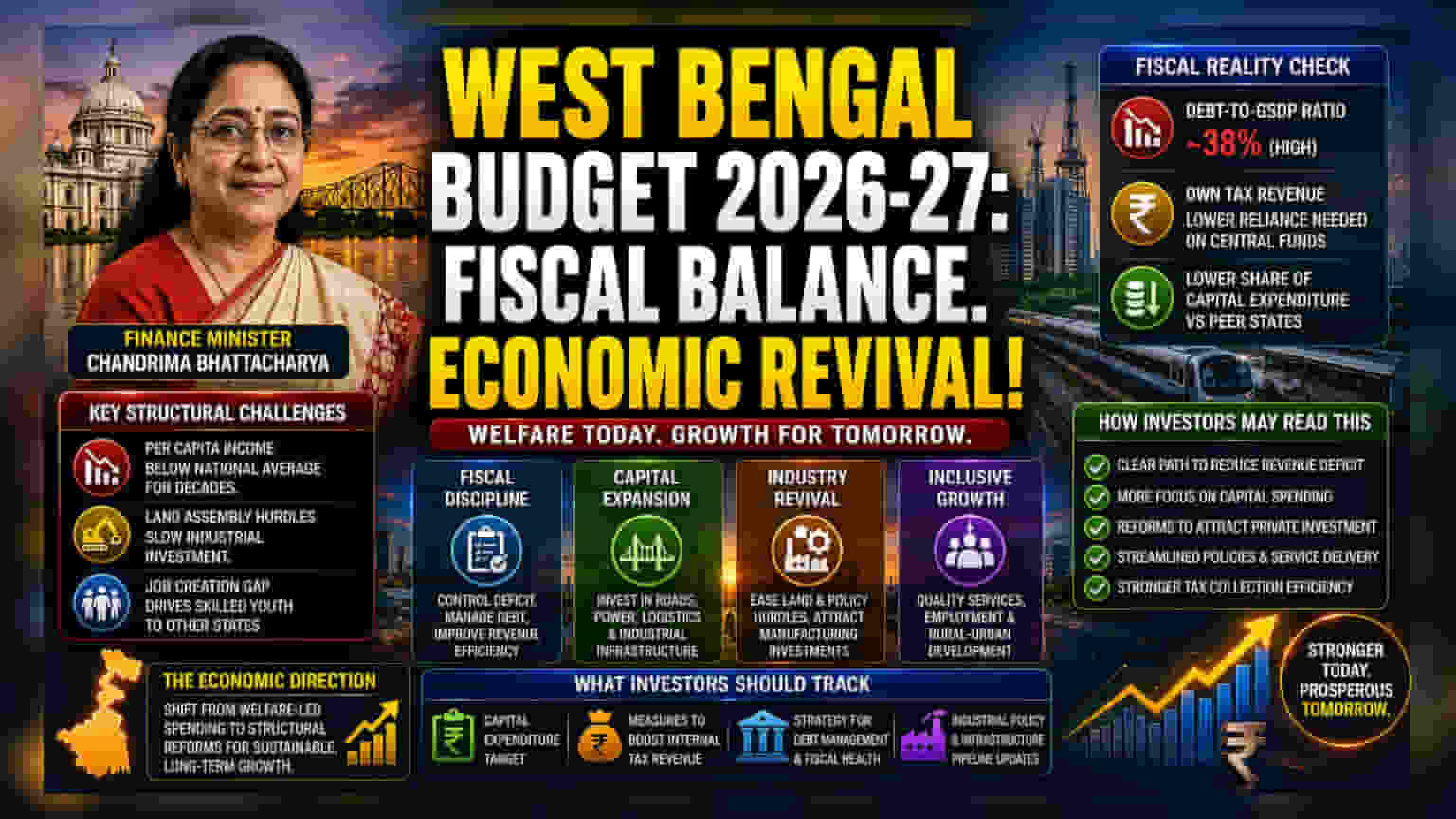


West Bengal's upcoming budget addresses critical economic hurdles, including a high debt-to-GSDP ratio and the need for structural industrial reforms. With per capita income lagging behind national averages, investors and observers are watching how the administration plans to balance welfare spending with essential capital investment to boost long-term growth.
What Happened
The government of West Bengal is preparing for the 2026-27 state budget. Finance Minister Chandrima Bhattacharya faces the task of presenting a roadmap that balances the state’s immediate welfare obligations with the long-term necessity of economic revival. The budget is set to address key fiscal pressures, including the reliance on central government funds and the need to mobilize internal revenue to improve the state's economic standing.
Why This Matters For Investors
The state’s fiscal health directly influences the broader investment environment. For investors, businesses, and policymakers, the budget serves as a signal of the state’s economic direction. The core challenge involves managing a significant debt burden while trying to stimulate industrial activity. When a state spends a large portion of its revenue on fixed costs like salaries, pensions, and interest payments, it leaves less room for capital spending—the money used to build roads, bridges, and industrial infrastructure that helps an economy grow.
The Fiscal Reality Check
West Bengal faces structural economic pressure. Data indicates the state's debt-to-GSDP ratio has remained high, hovering near 38% in recent periods. This level of debt reduces the state’s financial flexibility, making it harder to fund new development projects without relying on further borrowing or central transfers. The state’s own tax revenue collection has been a key area of focus for economists, as improving this is essential to reducing reliance on external funds. A lower share of revenue is being diverted toward capital expenditure compared to some other major states, which impacts the pace of infrastructure development.
The Structural Hurdle
Beyond the numbers, West Bengal faces deep-rooted structural questions. The decline in the state's per capita income relative to the national average over the last few decades remains a critical issue. Historically, the challenge of land assembly for industrial projects has been a recurring theme, often complicating the state’s ability to attract large-scale manufacturing investments. Without sufficient industrial growth, there are fewer productive, high-paying jobs, which has contributed to the trend of skilled workers migrating to other states in search of better employment opportunities.
How Investors May Read This
Market observers and economists are looking for clear signs of fiscal discipline in the upcoming budget. The focus will be on whether the state can demonstrate a credible path to reducing revenue deficits and allocating more resources toward capital expansion. Policy initiatives that address land acquisition hurdles, improve public service delivery, or foster a more supportive environment for private investment would be seen as positive developments. The ability to streamline administrative processes and boost tax collection efficiency will be key indicators of the state's commitment to long-term fiscal health.
What Investors Should Track Next
Investors and stakeholders will be closely watching for specific policy announcements. Key monitorables include the government’s target for capital expenditure, any new measures to boost internal tax revenue, and the strategy for managing outstanding debt. Additionally, any updates regarding industrial policy or infrastructure projects will be critical to understanding if the state can bridge the economic gap. The effectiveness of the budget will ultimately depend on whether it moves beyond welfare-led spending toward structural reforms that encourage sustainable economic growth.