 Whalesbook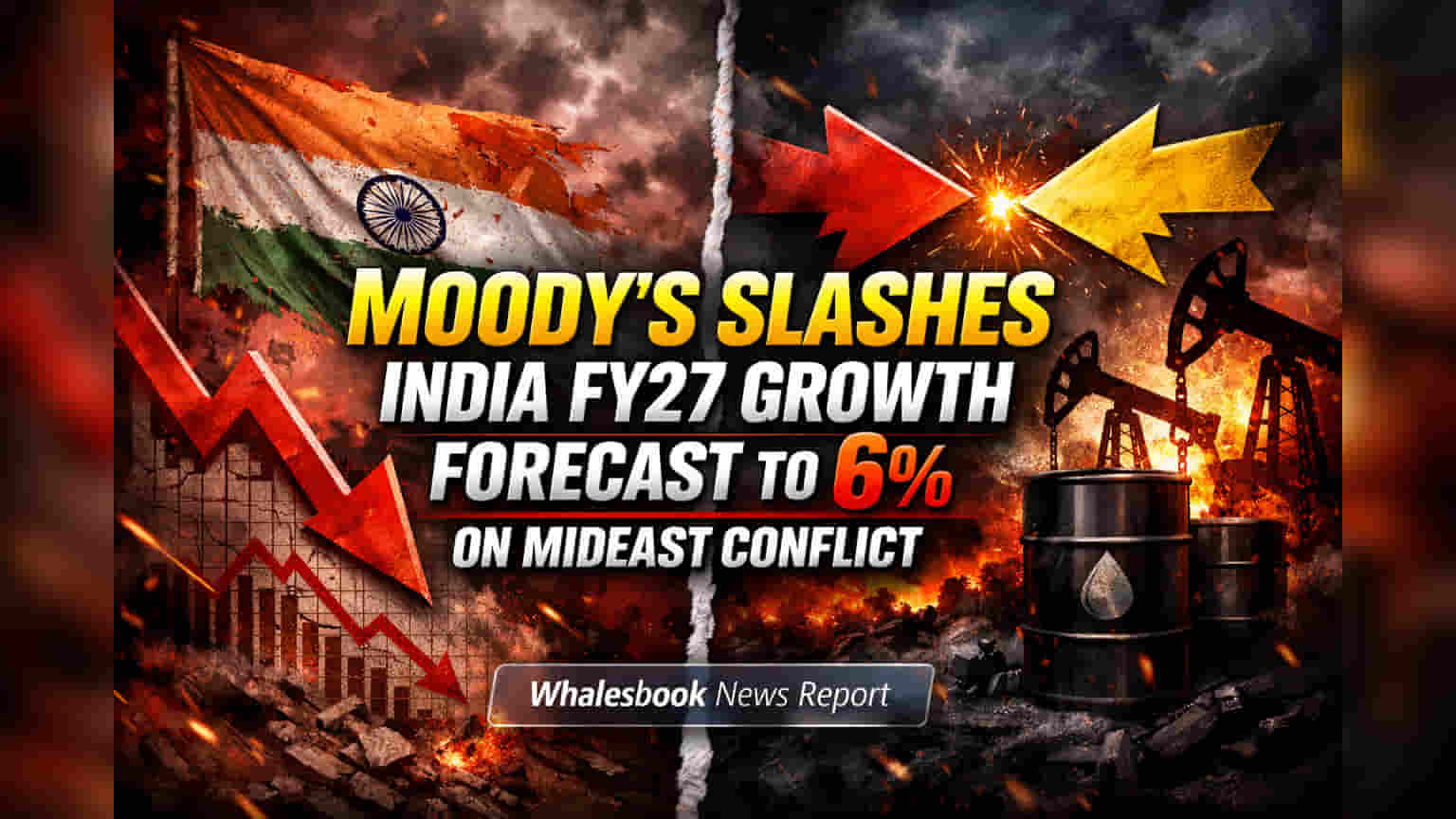


India's economic outlook has been revised by Moody's Ratings, which now projects 6% GDP growth for FY27, a decrease from its earlier 6.8% estimate. This adjustment reflects the disruption from the West Asia conflict on global trade and energy, alongside increased inflation and economic instability for nations dependent on imports.
Oil Prices and Inflationary Pressure
Brent crude prices have risen above $94 per barrel in March 2026, a nearly 50% increase since the start of the year and significantly higher than pre-conflict levels below $70. This surge, driven by West Asia tensions and disruptions at vital shipping routes like the Strait of Hormuz, directly increases costs for India. As a major importer of crude oil, sourcing about 55% of its oil and over 90% of its LPG from West Asia, India faces a higher import bill. This rise in energy costs is expected to push inflation higher, with CPI forecasts for FY27 now around 4.5% or more, potentially challenging the Reserve Bank of India's target. The Indian Rupee also weakened, reaching a record low of 95.21 against the US dollar on March 31, 2026.
Global Growth Forecasts Amid Uncertainty
Despite the downgrade, India's economy is still expected to grow faster than many other G20 nations. The IMF forecasts 6.4% growth for FY27, and the World Bank projects 6.5%. This suggests a general agreement that India will remain a top growth engine, even with slower momentum. Other institutions also provided projections: Fitch Ratings had forecast 6.9% for FY26 earlier, citing strong domestic demand, while Goldman Sachs predicts 6.7% for 2026. These varying forecasts highlight the uncertainty about how long the conflict will last and its full impact. The Reserve Bank of India's Monetary Policy Committee is widely expected to keep its benchmark repo rate at 5.25% and maintain a neutral policy stance in its April meeting, balancing economic support with inflation concerns.
Key Import Dependencies
The West Asia conflict clearly shows India's reliance on imports. Beyond oil, the country's significant need for imported fertilizers, much of which comes from West Asia, directly affects agricultural costs and food prices. The Gulf region also plays a crucial role in remittances, making up about 38% of India's total foreign inflows, which help fund the current account deficit. Any disruption to jobs or economies in these areas poses a direct threat to these vital foreign earnings, possibly widening the current account deficit to an estimated 1-1.5% of GDP in 2026-27. This dependency is more critical than during past energy shocks, such as the Russia-Ukraine war, where production issues were the main concern.
Navigating Fiscal Challenges
Higher global commodity prices increase pressure on government subsidies for fuel and fertilizers. This could lead to greater government spending and lower revenue. While the government aims to reduce debt gradually, targeting around 50% of GDP by 2030-31, persistent high energy prices and increased subsidy costs may limit fiscal flexibility and slow debt reduction efforts. Fitch Ratings has kept India's 'BBB-' rating with a stable outlook, recognizing strong growth potential and external finances, but high debt levels remain a significant concern. Potential US tariffs on Indian goods, though considered minor, add further uncertainty to export performance.