

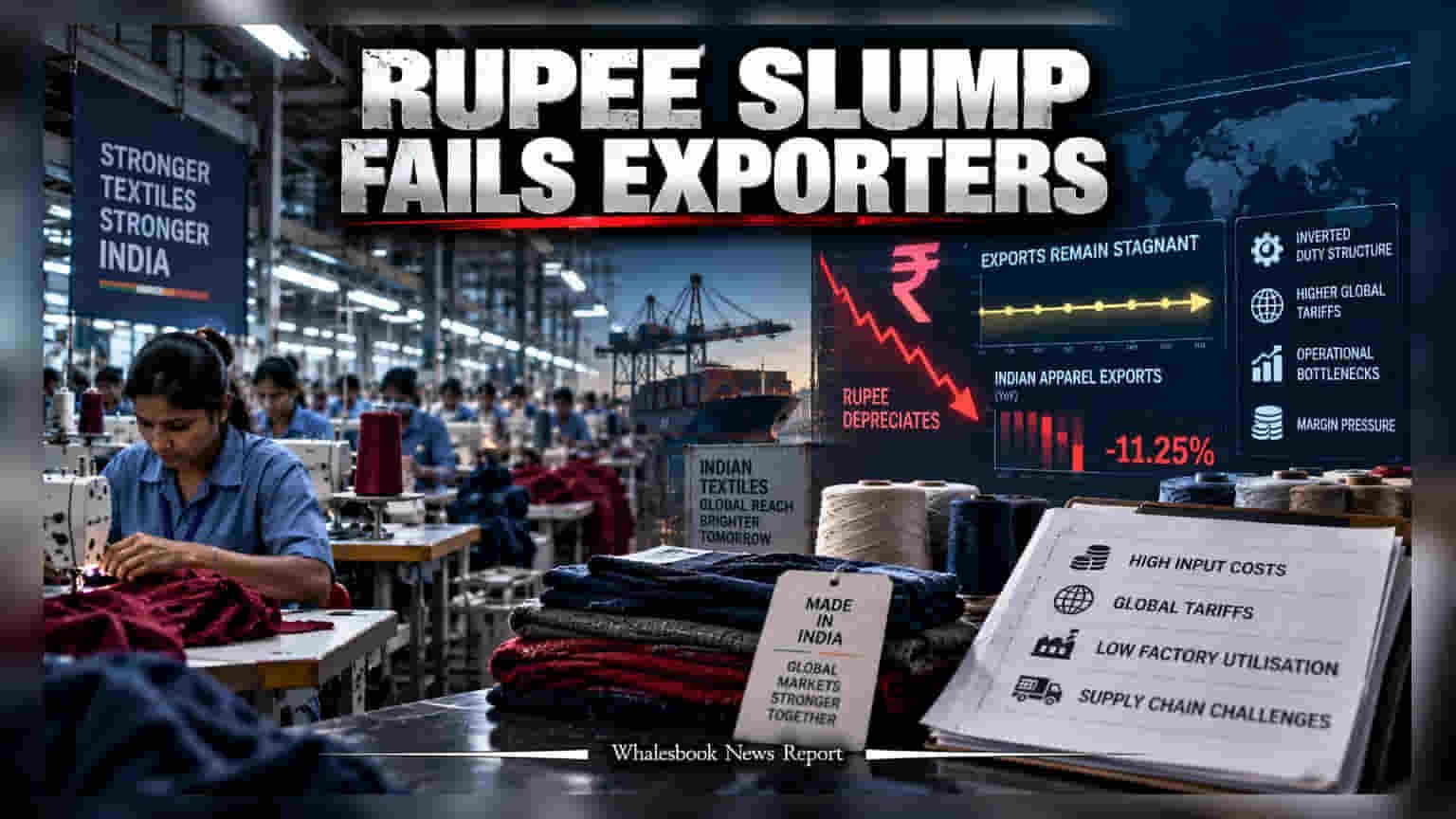
Despite the Indian rupee falling toward 94 against the dollar, textile exports continue to struggle, recording an 11.25% decline in June 2026. High international tariffs and an inverted duty structure are neutralizing currency benefits, creating persistent margin pressure for the industry.
The Indian textile and apparel sector is currently facing a notable paradox. While a depreciating local currency is typically expected to make Indian products cheaper for international buyers and boost export volumes, this has not translated into growth for the textile industry. In June 2026, apparel exports registered a year-on-year decline of 11.25%, highlighting that currency depreciation is insufficient to overcome deep-seated structural challenges.
The Inverted Duty Trap
A primary hurdle for manufacturers is the country's inverted duty structure. In simple terms, this means that the taxes paid on imported raw materials—such as synthetic yarns, fibers, and specialized chemicals—are often higher than the taxes levied on the finished clothing items. This imbalance inflates the cost of production for domestic companies, making it difficult to compete on pricing even with a weaker rupee. Because the cost of inputs is artificially high, many manufacturers find their profit margins squeezed, leaving little room to pass on currency-related price benefits to global customers.
Global Tariff Disadvantage
Beyond domestic taxes, Indian textile exporters face a significant disadvantage in international markets. Countries like Bangladesh and Vietnam have secured preferential trade agreements that grant them easier, low-tariff access to major buying hubs like the European Union and the United Kingdom. Indian goods, conversely, often face higher standard tariffs. When the tariff difference is significant, it effectively wipes out any price advantage gained from a weaker rupee. This competitive gap means that global buyers are often incentivized to source from neighboring manufacturing hubs rather than India.
Operational Efficiency Challenges
Internal operational bottlenecks are further limiting export performance. Current data indicates that many Indian factories are operating well below optimal capacity, often achieving only 58% to 70% of their target sewing output. These inefficiencies are compounded by logistics hurdles. Frequent supply chain disruptions force exporters to rely on expensive air freight to ensure timely delivery to international clients. This high logistics cost eats directly into the already thin profit margins of textile companies, making the business model vulnerable to demand fluctuations in Western markets.
What Investors Should Monitor
While high-tech sectors like electronics have managed to leverage currency shifts to grow their export presence, the textile segment requires more than just a weak rupee to recover. Investors should track progress on potential policy reforms, such as the rationalization of duty structures, which could reduce input costs. Additionally, the pace of GST refund settlements for exporters and any changes in export incentive schemes will be critical factors. For the coming quarters, the key monitorable will be whether companies can improve factory efficiency and resolve working capital issues caused by delayed tax refunds, rather than relying on currency movements for performance.