

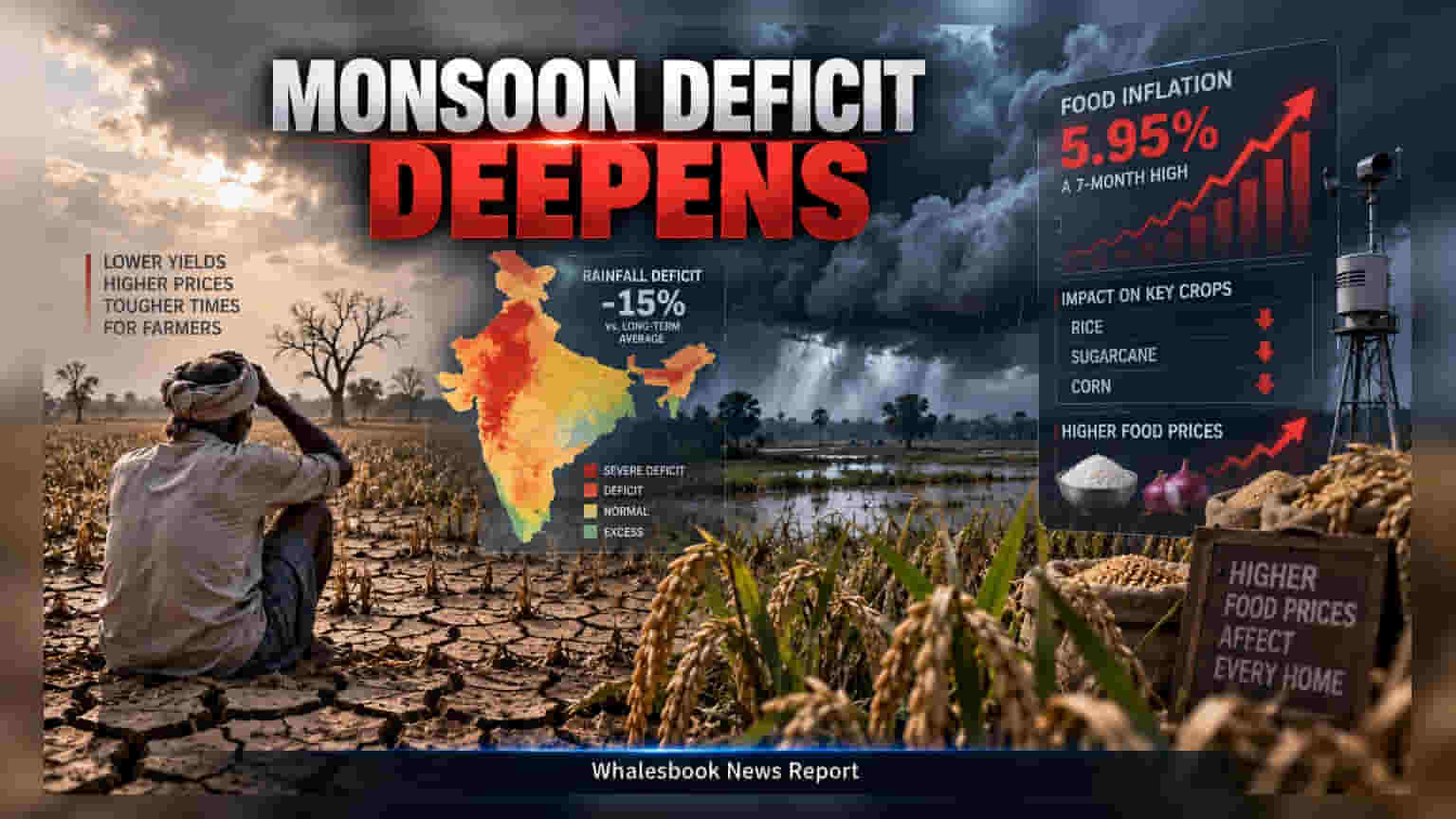
India’s monsoon is 15% below average, marking the driest season since 2009. This shortfall affects the sowing of rice, sugarcane, and corn, potentially raising food inflation. Investors are monitoring how this supply pressure impacts rural consumption and the Reserve Bank of India’s future interest rate decisions.
India is witnessing its weakest southwest monsoon season since 2009. Official weather data shows that rainfall is 15% below the long-term average, largely driven by persistent El Niño conditions. This weather pattern, which typically reduces rain across large parts of the country, is now creating significant concerns for the agricultural sector and the broader inflation trend in India.
The rainfall deficit has already hindered the sowing of critical crops like rice, sugarcane, and corn. As irrigation depends heavily on these seasonal rains in many parts of the country, a prolonged dry spell often leads to lower crop yields. This lower production can tighten the supply of essential food items, creating upward pressure on prices for consumers.
Food inflation reached 5.95% in August, which is a seven-month high. Economists and policymakers often worry about how such inflation affects the broader economy. If food prices remain elevated, it complicates the task for the Reserve Bank of India (RBI) in managing interest rates. A central bank faced with persistent food inflation may be forced to keep interest rates higher for longer to bring price levels under control, rather than lowering them to stimulate economic growth.
The implications for investors go beyond crop output. Rural markets are a major source of demand for consumer goods companies and agricultural input suppliers. When farm incomes fall due to poor harvests, spending on household products, personal care items, and processed foods tends to slow down. Similarly, demand for tractors, fertilizers, and seeds may be hit if farmers have less income to invest in their land.
The government has started taking steps to manage supply, such as permitting duty-free sugar imports and subsidizing onion sales in specific states. These interventions aim to stop sharp price spikes for essential commodities. However, the effectiveness of such measures is limited if the underlying supply gap remains large due to weather-related issues.
Investors may monitor three key areas in the coming months. First, the latest food inflation numbers and whether the current upward trend continues. Second, company performance updates from the consumer goods, tractor, and fertilizer sectors, as these businesses are most exposed to changes in rural sentiment and buying power. Third, any further government steps to control commodity prices or assist the agricultural sector, which could influence market sentiment in affected industries.