

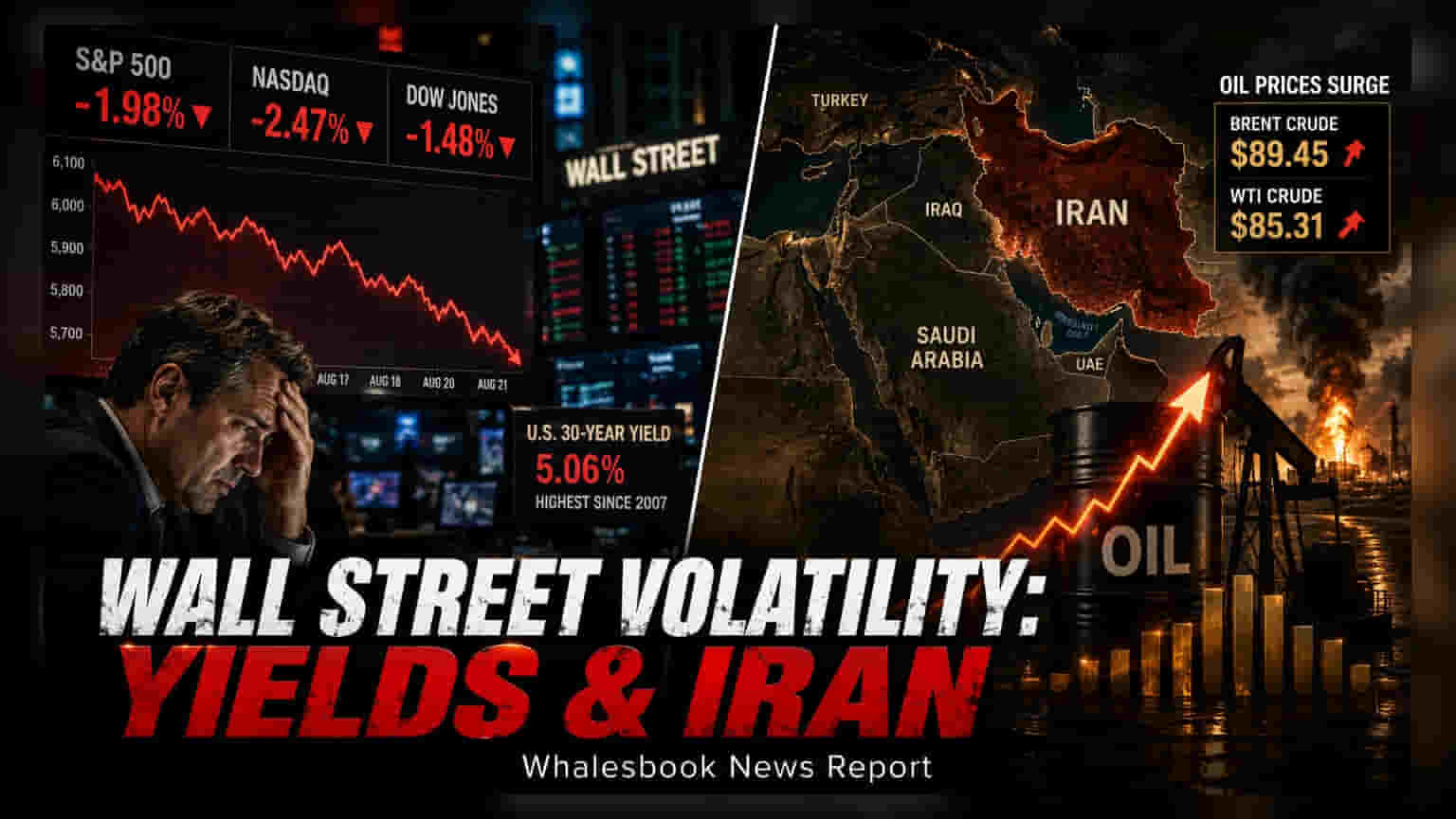
Wall Street indices closed higher on Friday but finished the week with losses, as high bond yields and Middle East uncertainty weighed on sentiment. While strong U.S. services data provided some relief, rising oil prices and persistent inflation fears continue to drive market volatility. For Indian investors, this global trend highlights potential risks regarding foreign fund flows and import costs.
Wall Street saw a mixed finish to the trading week as of August 21, 2026. While equity markets managed to post gains in Friday’s session, the broader weekly performance was negative. The S&P 500, the Nasdaq Composite, and the Dow Jones Industrial Average all closed the week in the red, effectively ending a three-week winning streak for the S&P 500 and the Nasdaq.
Bond Yields And Treasury Action
The primary driver of market anxiety throughout the week was the movement in U.S. government bond yields. Investors remained concerned about elevated borrowing costs, which tend to reduce the appeal of stocks. In an attempt to stabilize the market, U.S. Treasury Secretary Scott Bessent announced an increase in long-term bond buyback capacity to $4 billion per operation. However, the market reaction suggested that investors remain skeptical about whether these measures can durably lower long-term rates. During the week, the 30-year Treasury yield hit levels not seen since 2007, reflecting broader concerns about the scale of U.S. national debt.
Geopolitical Impact On Oil
Geopolitical tensions in the Middle East, specifically regarding the ongoing conflict involving Iran, have become a focal point for global markets. Following the expiration of a U.S.-Iran ceasefire memorandum of understanding, threats of new economic sanctions have pushed oil futures higher. As oil is a critical global commodity, sustained price increases often reignite inflation concerns. For the week, both Brent and U.S. crude benchmarks saw significant gains, adding a layer of uncertainty to the global economic outlook.
Economic Signals: Services vs. Manufacturing
Economic data released during the week painted a bifurcated picture of the U.S. economy. The services sector showed its strongest growth in nearly two years, suggesting that consumer and business spending remains resilient. Conversely, the manufacturing sector struggled. Reports indicated that supply chain disruptions linked to the conflict with Iran, combined with reduced inventory accumulation, weighed heavily on factory activity.
What This Means For Indian Investors
For Indian market participants, these global developments carry specific implications. First, rising U.S. bond yields typically strengthen the U.S. Dollar. When the dollar is strong, foreign institutional investors (FIIs) may reduce their exposure to emerging markets like India, potentially putting pressure on local stock indices. Second, India is a major importer of crude oil. A consistent rally in global oil prices increases the country's import bill, which can impact the current account deficit and contribute to domestic inflation. Finally, increased global volatility often leads to cautious sentiment in the domestic market, as traders wait for clearer signals on global interest rates and commodity supply stability. Investors should track future updates on U.S. inflation data and geopolitical stability in the Middle East as key indicators for global market direction.