

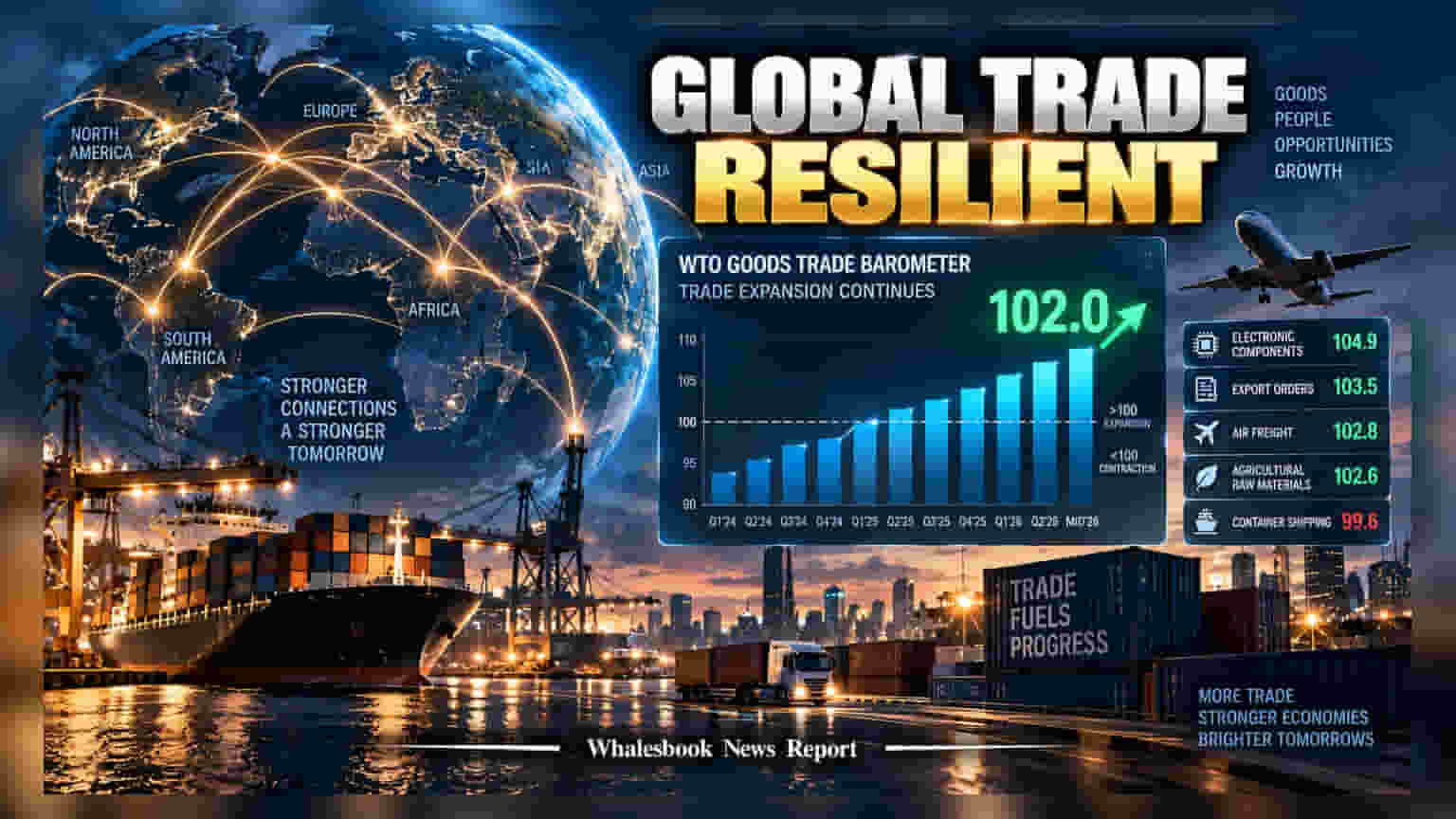
The World Trade Organization’s latest Goods Trade Barometer climbed to 102.0, signaling that global trade is growing faster than expected. A surge in demand for AI-related hardware is offsetting geopolitical pressures, though container shipping remains a weak spot. This trend highlights a shift toward high-value tech exports despite ongoing global logistics challenges.
Global merchandise trade is showing unexpected strength as of mid-2026, defying significant geopolitical tension in regions like West Asia. The World Trade Organization’s (WTO) latest Goods Trade Barometer has reached a reading of 102.0, improving from 101.7 earlier in the year. This indicator helps track trade momentum; a reading above 100 suggests that trade is expanding above its long-term trend, indicating a robust underlying economy.
AI Demand Powers Trade Growth
The primary engine behind this upward trend is the massive global investment in artificial intelligence. The index for electronic components has jumped to 104.9, a clear reflection of the intense demand for high-end hardware, chips, and components needed for data centers and AI model training. This structural shift toward AI-related infrastructure is acting as a necessary buffer, helping to support global trade volume even when other parts of the economy face friction from high energy prices or political instability.
For investors, this suggests that companies involved in the semiconductor supply chain, electronic manufacturing, and high-tech components are benefiting from a sustained, global spending cycle. This trend is not just isolated to one region; it is appearing in broad-based data across major economies.
Sectoral Performance and Logistics Risks
While the headline numbers are positive, the picture is mixed across different transport and industry sectors. Export orders, a key indicator for future production, remain strong at 103.5. Additionally, the international air freight market is performing well with a score of 102.8, and agricultural raw materials are holding steady at 102.6. This indicates that global demand for both essential goods and high-value tech remains intact.
However, there is a clear warning sign in maritime logistics. The container shipping index has slipped to 99.6, falling below the baseline of 100. This weakness highlights that shipping goods by sea is still difficult and expensive, largely due to ongoing logistical bottlenecks and security concerns in critical maritime routes like the Strait of Hormuz. While companies are successfully moving high-value tech components by air, the bulk movement of standard goods is facing delays and higher costs.
What Investors Should Monitor
The ability of the AI-driven trade boom to overcome these logistical hurdles will be a key theme for the coming months. If maritime costs continue to rise or if geopolitical conflicts in West Asia disrupt supply chains further, profit margins for companies that rely on bulk sea freight may come under pressure. Conversely, the strength in electronic components and air freight suggests that demand for high-value technology remains resilient. Investors may want to keep a close watch on global logistics costs, energy prices, and any updates on trade policy, as these factors will determine whether the current recovery can be sustained through the rest of the year.