

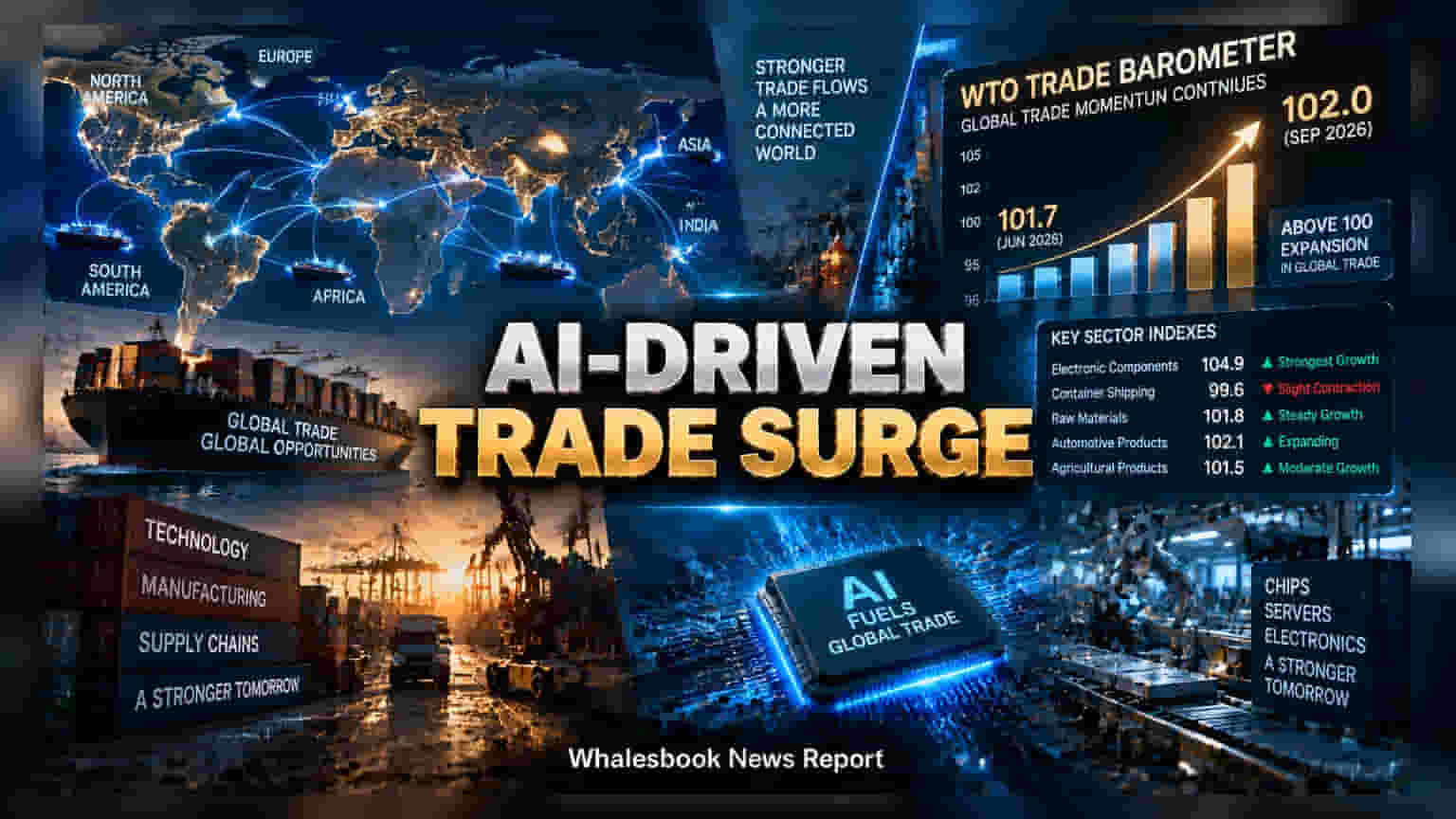
The WTO’s Goods Trade Barometer rose to 102.0 in September 2026, showing global trade remains resilient despite geopolitical hurdles. The growth is primarily driven by high demand for AI-related electronics, while shipping faces minor friction. For Indian investors, this trend highlights the importance of the country's transition toward high-value electronics and technology manufacturing.
The World Trade Organization (WTO) has released its latest Goods Trade Barometer, which climbed to 102.0 in September 2026, up from 101.7 in June. A reading above 100 signifies that global merchandise trade is currently expanding above long-term trends. This indicator suggests that global commerce is proving remarkably durable, managing to grow despite ongoing geopolitical pressures and instability in the Middle East that often threaten shipping lanes.
The AI-Driven Trade Surge
The most significant finding in the report is the pivot toward technology-heavy trade. The electronic components index, which tracks the global movement of chips, servers, and other high-tech hardware, reached 104.9. This makes it the strongest sector within the barometer, confirming that the massive global investment in artificial intelligence (AI) infrastructure is a primary engine of current trade volumes. By acting as a counterweight to wider economic uncertainty, the demand for AI-related tech is keeping trade flows active.
However, not all sectors are expanding at the same pace. The container shipping index, which measures the volume of goods moved by sea, fell slightly to 99.6. This figure sits just below the baseline, indicating that while total trade is healthy, global logistics still face minor frictions. These challenges are likely tied to the need for ships to navigate longer routes or adjust schedules due to regional conflicts, which can increase transportation time and costs for businesses involved in international shipping.
Implications For Indian Investors
For the Indian economy, the global shift toward silicon-based trade presents a strategic challenge and an opportunity. As India continues to position itself as a manufacturing hub, much of the current growth in electronics exports still relies on importing components for assembly. While this assembly model provides initial jobs and volume, the WTO data reinforces the global trend toward high-value, complex tech products.
To move up the supply chain, analysts often point to the need for domestic capabilities in areas like semiconductor design, complex component manufacturing, and proprietary technology development. Investors monitoring the Indian manufacturing sector may track whether companies are moving beyond simple assembly and reinvesting in research and development to capture a larger share of the value chain. Reliance on imported parts remains a standard business risk, as it leaves manufacturers exposed to global price swings and supply delays.
Moving forward, the health of global trade will depend on whether the demand for AI infrastructure can continue to offset potential energy price fluctuations and trade policy uncertainties. Investors may monitor monthly export data and updates on domestic manufacturing output to see how effectively the country is aligning with this global appetite for high-tech components.