

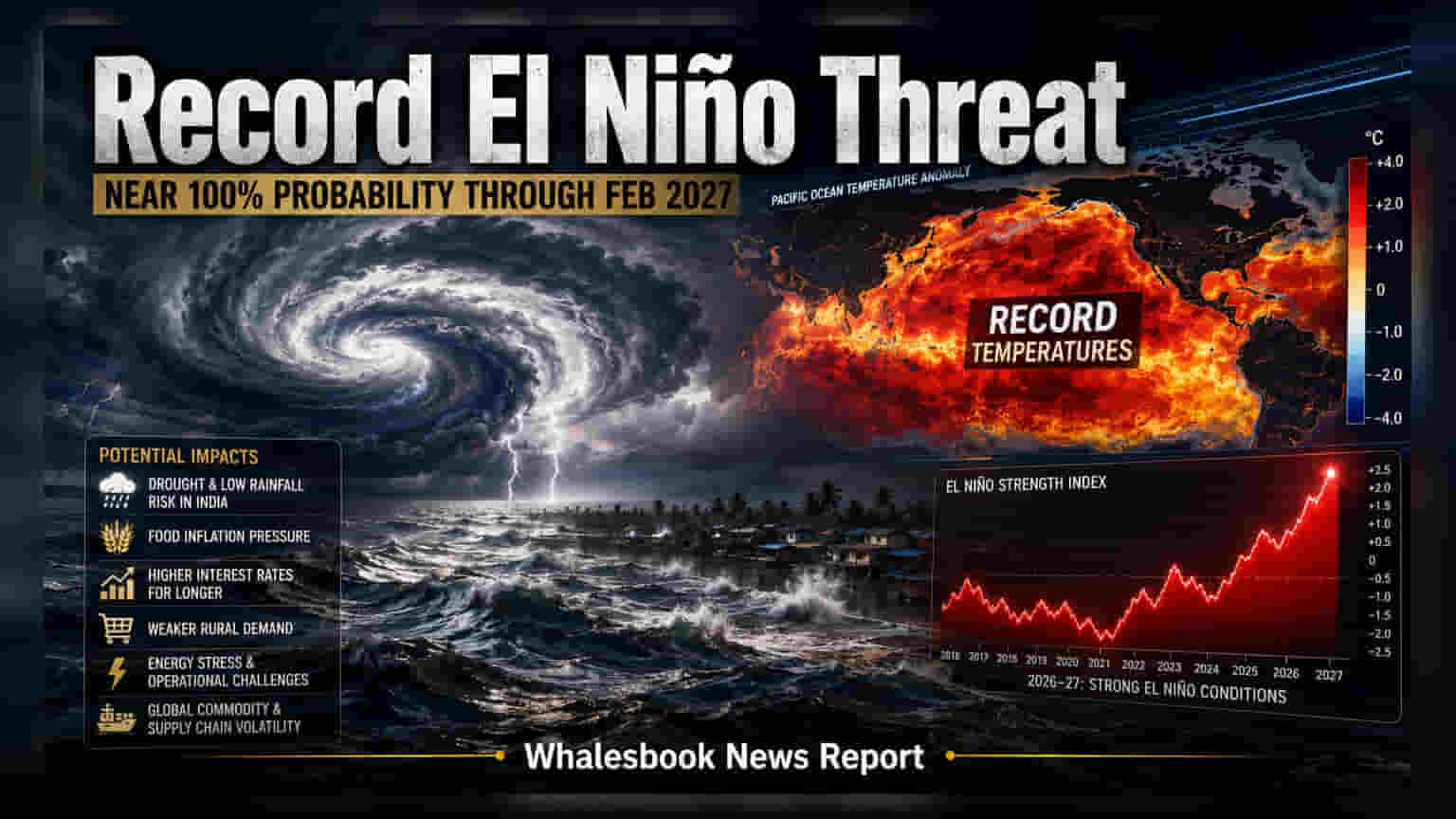
The World Meteorological Organization has confirmed a very strong El Niño event that will likely persist through February 2027. For Indian investors, this creates significant macro-economic risks, including potential inflation due to crop failure and supply chain volatility. Investors should track commodity prices, food inflation, and consumer demand trends as this climate pattern unfolds.
The World Meteorological Organization (WMO) has issued a critical update on September 3, 2026, confirming that an intense El Niño event is now firmly established. The organization has projected a near 100 percent probability that these climate conditions will persist through February 2027. Weather models indicate that surface and subsurface temperatures in the Pacific are at record levels, raising concerns that the coming months could see severe weather disruptions globally.
For the Indian economy, El Niño is a significant macro-economic variable. Historically, this phenomenon is often associated with drier-than-normal weather patterns across the subcontinent. Because large parts of the Indian economy and rural income remain sensitive to monsoon rainfall, any disruption to precipitation cycles can have a cascading effect on the broader market.
Investors typically view these climate updates through the lens of inflation and consumer demand. When rainfall is insufficient, agricultural output for key crops like rice, wheat, and pulses may face pressure. A decline in food production can push food inflation higher, which complicates the inflation targets for the Reserve Bank of India. If food prices spike significantly, it may limit the central bank's ability to lower interest rates, thereby keeping borrowing costs higher for businesses and individuals for a longer period.
Several sectors are particularly sensitive to these climate shifts. In the agriculture and fertilizer space, erratic monsoons can impact planting schedules and input demand. Meanwhile, companies in the Fast-Moving Consumer Goods (FMCG) sector rely heavily on rural consumption. If farm incomes are hit by poor harvests, rural demand for items like packaged foods, soaps, and home care products often softens. Additionally, the energy sector may face operational challenges, as extreme heat increases electricity demand, while potential water shortages could impact hydropower generation.
Beyond domestic factors, El Niño can also create volatility in global commodity markets. Disruptions in global shipping lanes or supply chains for essential agricultural commodities like palm oil, rubber, and coffee can affect the margins of Indian companies that rely on imports.
Looking ahead, market participants will likely monitor several key indicators. Investors may track monthly inflation data, both CPI and WPI, to assess the impact of food prices. Additionally, management commentary from companies in the FMCG, agriculture, and chemical sectors regarding rural demand trends and cost pressures will be important to follow. Future updates from the government regarding monsoon performance and food buffer stocks will also serve as critical data points for assessing the potential economic impact of this climate cycle.