

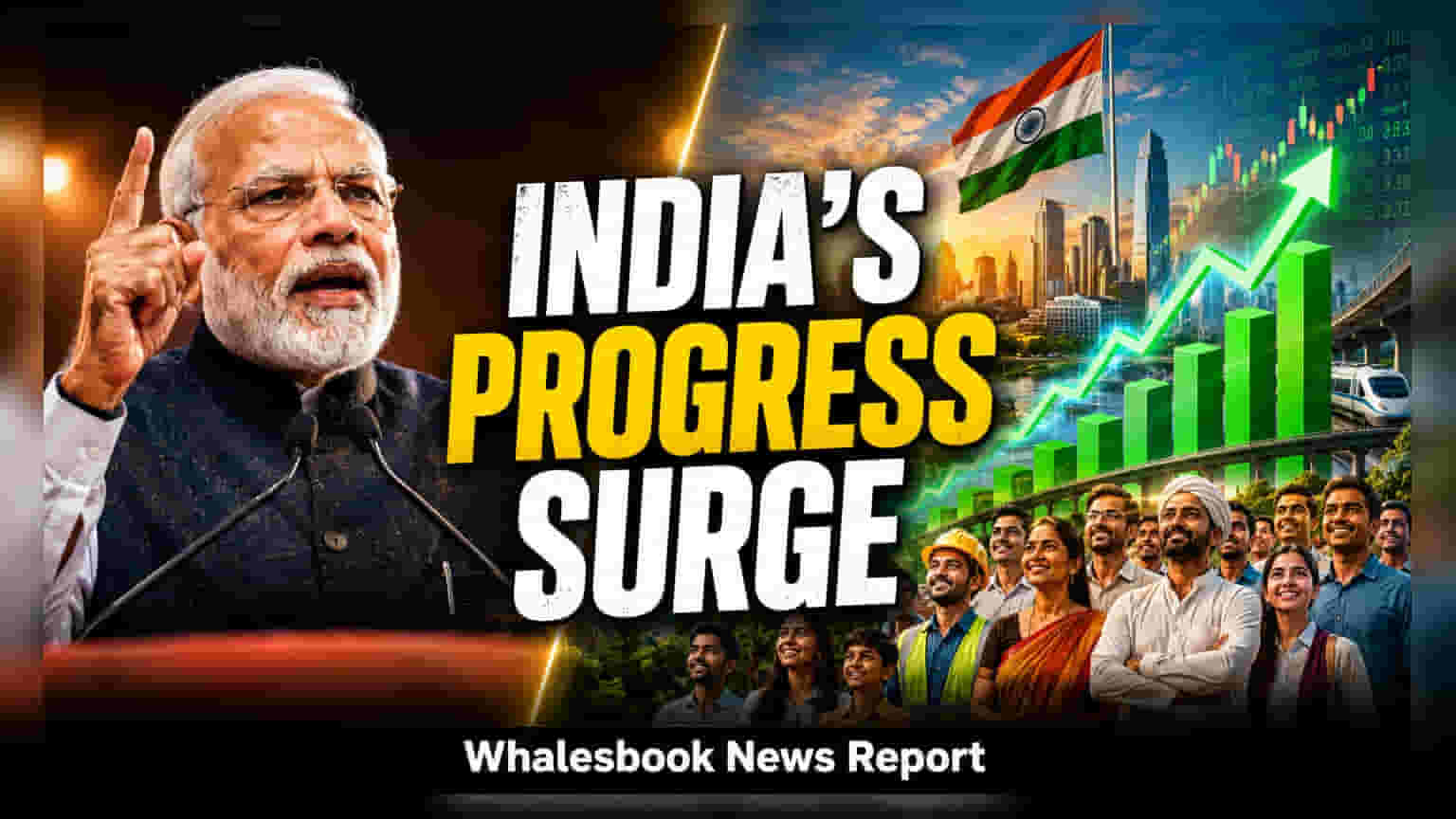
Prime Minister Narendra Modi’s 80th Independence Day address reaffirmed the goal of a developed India by 2047. For investors, the speech reinforces the expectation of continued policy focus on infrastructure, manufacturing, and digitalization, which remain central pillars for the Indian economy’s long-term growth trajectory.
On the occasion of India’s 80th Independence Day on August 15, 2026, Prime Minister Narendra Modi addressed the nation from the Red Fort, emphasizing the collective contribution of 1.4 billion citizens in driving the country’s economic and social progress. While the event marked a significant national milestone, it also provided insights into the government’s continued economic priorities, which are closely monitored by market participants and institutional investors.
The Prime Minister focused on the vision of 'Viksit Bharat' (Developed India) by 2047. For the Indian capital markets, such high-level policy communication often serves as an indicator of the government's long-term commitment to economic reforms. The emphasis on 'Yuva Shakti' (youth power) and the continued push for indigenous manufacturing suggests that sectors related to defense, technology, infrastructure, and green energy may remain key areas of government support and investment in the coming years.
Economic Backdrop and Market Relevance
The Indian economy has maintained a steady growth path, with recent reports indicating economic performance for FY 2025-26 at 7.7%, supported by robust domestic demand and infrastructure spending. Investors typically interpret the Prime Minister’s Independence Day signals as a reaffirmation of the country's macroeconomic stability. Consistency in policy is a vital factor for both domestic and foreign institutional investors when evaluating the attractiveness of the Indian market against other emerging economies.
The address highlighted the importance of 'Atmanirbhar' (self-reliant) initiatives. Historically, the market has responded to such policy frameworks by favoring companies that benefit from import substitution, domestic manufacturing expansion, and public sector infrastructure projects. Companies involved in large-scale infrastructure development, capital goods, and digital public goods have frequently been the recipients of the government’s expansionary fiscal approach.
Monitoring Future Triggers
While the national vision for 2047 provides a long-term roadmap, investors generally monitor the practical implementation of these goals. The actual impact on corporate earnings will depend on factors such as sustained fiscal discipline, the ability to maintain inflation within target ranges, and the pace of private capital spending.
Looking ahead, market participants will likely track upcoming government budgetary allocations, project execution timelines, and global macroeconomic cues that could influence India’s growth momentum. The key for investors remains the ability of the broader economy to navigate global risks while capitalizing on domestic consumption and the ongoing structural shift toward formalization and digitization.