

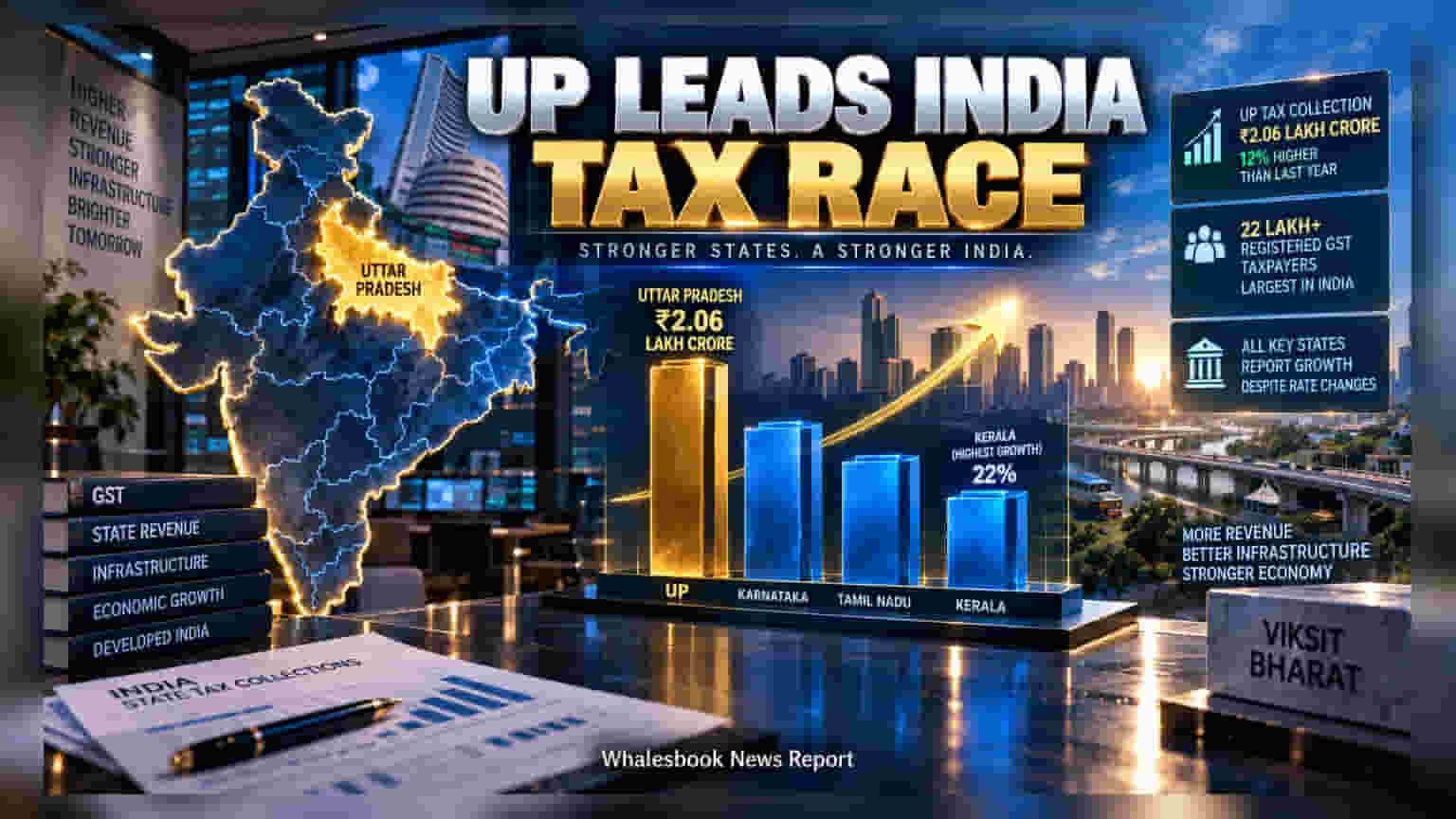
Uttar Pradesh secured the highest tax revenue among Indian states, collecting over ₹2.06 lakh crore between April and August 2026. This reflects a 12% annual increase, according to data from the Comptroller & Auditor General. While UP leads in total volume, Gujarat has prioritized infrastructure development with capital spending of ₹29,600 crore. These figures come as officials emphasize the need for states to expand revenue sources and encourage more private sector participation.
Uttar Pradesh has secured the top position in India's state tax collections, bringing in over ₹2.06 lakh crore during the first five months of the current financial year. This reflects a 12% increase compared to the same period last year, according to data from the Comptroller & Auditor General. With over 22 lakh registered GST taxpayers, the state maintains the largest base in the national network. Following Uttar Pradesh, Karnataka and Tamil Nadu hold the next spots for total tax receipts. Kerala stood out for its 22% growth rate, which was the highest among the ten states analyzed.
Revenue Drivers and Infrastructure Spending
The State Goods and Services Tax (SGST) remains the primary source of revenue for these states. Even with changes in tax rates and the end of central compensation payouts, all observed states reported growth in GST receipts. Uttar Pradesh collected over ₹73,000 crore from SGST between April and July, rising from ₹66,000 crore in the same period previously.
While tax revenue grows, states are also competing to improve their infrastructure. Gujarat leads in this area, having spent over ₹29,600 crore on development projects in the first five months of the year, which is higher than the ₹26,000 crore spent in the same window last year. Uttar Pradesh and Karnataka also showed steady infrastructure spending, deploying ₹21,000 crore and ₹15,600 crore respectively.
States Eye Private Funding for Growth
These performance figures were discussed as federal and state officials reviewed the financing needed for India’s long-term economic development. N.K. Singh, Chairman of the 15th Finance Commission, noted that states should focus on improving collections from local sources like property taxes, state excise, and mineral royalties by using better data analytics.
Economic Affairs Secretary Anuradha Thakur highlighted the need to move toward higher private sector participation in financing development projects. The message to states is that government budgets alone cannot support the scale of growth required to meet national targets, making it essential to shift toward more private capital investment. Investors looking at state-level development trends may track how individual states improve their local revenue collection and how they manage to attract private sector funding for long-term projects.