

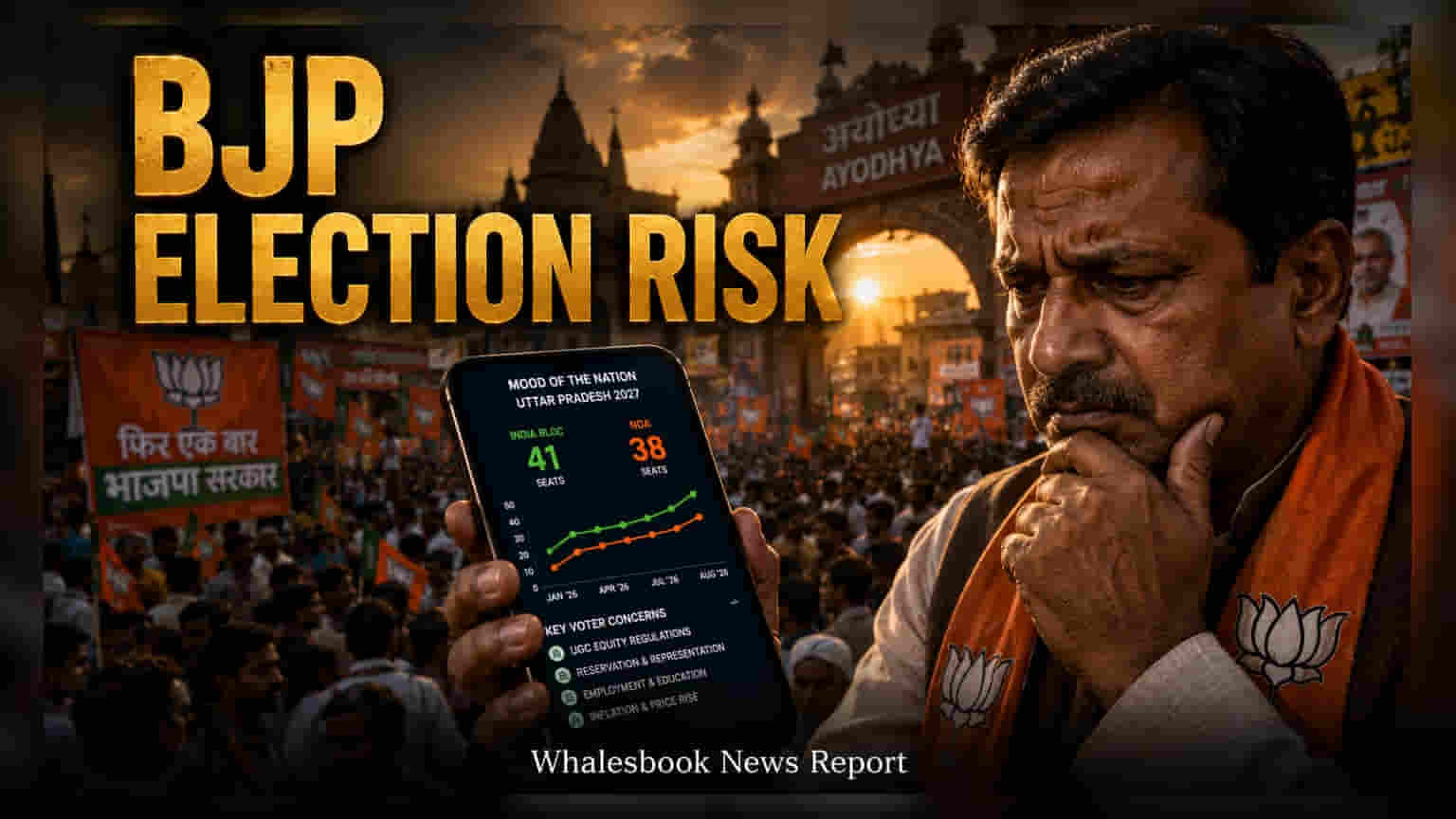
Recent polling suggests a narrowing lead for the NDA in Uttar Pradesh, a critical state for India's economic policy. As the 2027 assembly elections approach, investors are tracking how political dynamics and internal policy debates—such as the recent UGC regulation controversy—may influence administrative stability and future infrastructure spending.
The political environment in Uttar Pradesh is drawing increased attention from market observers as recent 'Mood of the Nation' surveys indicate a shift in voter sentiment. The data shows the INDIA bloc tracking at 41 seats compared to the NDA’s 38, marking a departure from previous projections. For investors, Uttar Pradesh is not just a political battleground but a central pillar of India's infrastructure and industrial growth strategy. Changes in the political climate often serve as a bellwether for policy continuity, making the lead-up to the 2027 assembly elections a period that market participants monitor closely.
A focal point of recent policy friction has been the UGC (Promotion of Equity in Higher Education Institutions) Regulations, 2026. While intended to address campus equity, the regulations triggered widespread unease among various voter demographics, including upper-caste groups, who feared the policies could lead to institutional bias. The Supreme Court has since stayed the implementation of these regulations, and the central government has indicated it is reconsidering the framework. For investors, this episode highlights the complexities of policy execution and the potential for regulatory friction to impact public sentiment and administrative focus.
Political stability in Uttar Pradesh is directly linked to the state’s ability to attract large-scale capital spending. The state has been a significant beneficiary of major infrastructure projects, including expressways and industrial corridors, which have been key drivers for the manufacturing and logistics sectors. A shift in electoral momentum often leads to a recalibration of government priorities. Investors typically watch whether such shifts result in a continued focus on large-scale infrastructure investment or a transition toward more short-term, populist fiscal measures to secure voter support.
Internal party dynamics and administrative efficiency also form part of the risk assessment for institutional investors. Reports of internal tensions and the need for the BJP to conduct surveys across all 403 constituencies suggest the party is working to stabilize its support base. Market participants often evaluate these efforts to gauge the government's ability to maintain a consistent economic agenda despite electoral pressure.
Looking ahead, the next key developments for observers will be the government's approach to the revised UGC regulations and the state budget allocations leading up to 2027. Investors generally track whether policy decisions prioritize long-term economic growth or shift toward measures aimed at immediate electoral relief. As the assembly election cycle nears, the primary monitorables remain the stability of major infrastructure project timelines, the health of state finances, and the consistency of industrial policy implementation in one of India’s most critical economic regions.