

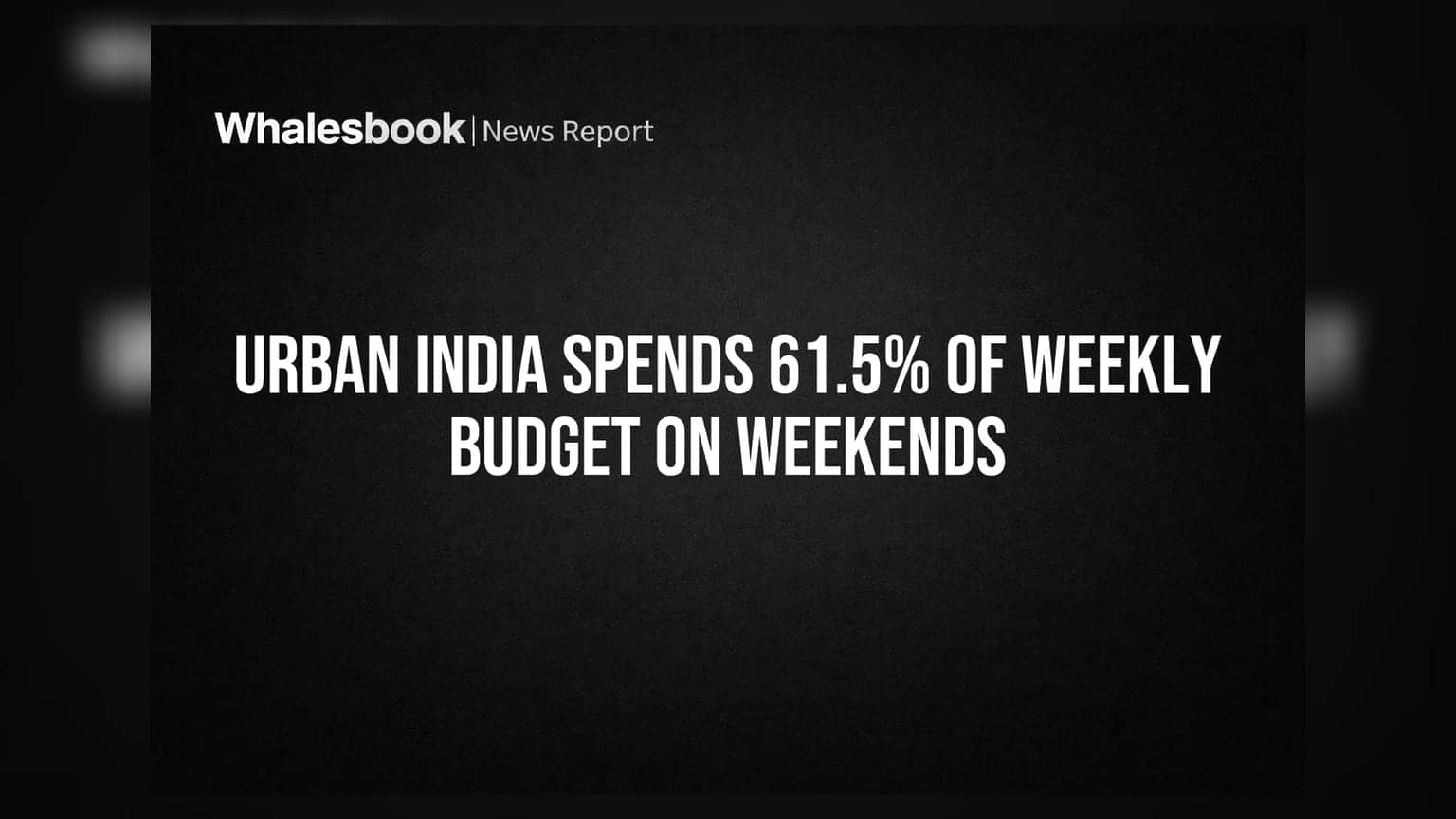
Urban consumers in India concentrate 61.5% of their weekly spending, or ₹10,732, during the weekend compared to ₹6,724 on weekdays. This shift toward a weekend-focused economy is driven by busy professional schedules and a rising demand for discretionary experiences. Investors may monitor companies in retail, dining, and entertainment that can effectively capture this concentrated surge in consumer activity.
Detailed Coverage
A new report titled 'The many urban Indias,' jointly produced by PRICE and Tata Sons, highlights a significant shift in consumption patterns across the country's top 100 cities. Data shows that urban households now funnel over 60% of their total weekly expenditure into the two-day weekend window. This phenomenon is reshaping how businesses approach everything from store operating hours to inventory management.
Discretionary Spending Peaks on Saturdays and Sundays
While weekday spending often focuses on essentials and routine needs, the weekend surge is heavily fueled by discretionary categories such as fashion, electronics, and dining. The report notes that during the five-day work week, average expenditure stands at ₹6,724. This figure jumps significantly to ₹10,732 for the weekend, indicating that consumer sentiment and willingness to pay are far higher during leisure periods.
This behavior is linked to the rise of dual-income households, where time-poverty during the work week limits shopping and recreational activities. As professionals balance long working hours and heavy commutes, the weekend becomes the primary window for family engagement and personal consumption. Psychologically, consumers are also more inclined to invest in experiences—such as eating out or visiting entertainment hubs—to recover from the stress of the previous five days.
Strategic Implications for Retail and Services
For businesses listed on Indian stock exchanges, this concentration of spending offers a clear operational signal. Retail chains and hospitality companies that can optimize their staffing, inventory, and marketing for Saturday and Sunday traffic may see better asset utilization. Companies that offer 'in-store experiences' beyond just selling products—such as those integrating workshops, cafes, or interactive zones—are better positioned to convert foot traffic into sales during these peak hours.
However, this trend also introduces risks related to operational efficiency. Retailers must manage the challenge of handling extremely high footfall on weekends while maintaining profitability during the slower weekday periods. If a business is too reliant on weekend spikes, it may face pressure on profit margins due to high fixed costs like rent and labor that apply throughout the week, regardless of sales volume.
Future Trends to Monitor
Investors may look for companies that are actively aligning their strategies with this weekend-heavy demand. Key indicators include improvements in same-store sales growth specifically during weekends and the ability of firms to maintain higher profit margins despite the potential strain of high-volume weekend operations. Future developments to watch include potential infrastructure improvements in urban centers, such as pedestrian-friendly 'weekend zones' or enhanced public transport, which could further amplify this consumption trend and benefit organized retail and service-oriented sectors.