

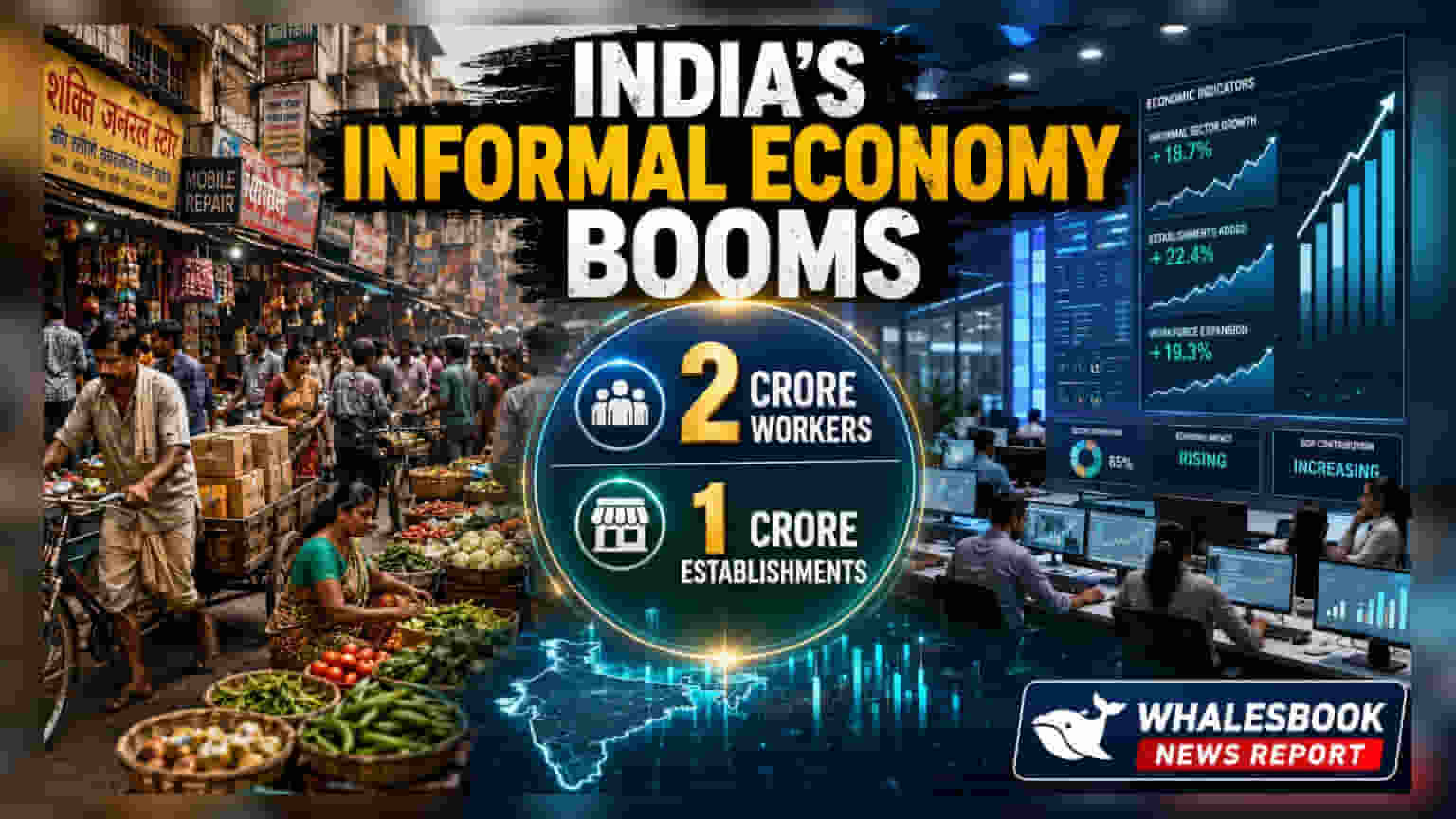
A government report shows 46 major Indian cities host nearly 2 crore informal workers, challenging the idea that such businesses are mostly rural. Greater Hyderabad leads in worker count, while Kolkata has the most informal units. Investors should note that this sector contributes 21% of Gross Value Added in these urban areas, highlighting its role in the economy despite slowing wage growth.
New data from the Ministry of Statistics and Programme Implementation (MoSPI) highlights the massive scale of the informal economy within India's largest urban centers. The Annual Survey of Unincorporated Sector Enterprises (ASUSE) for 2025 reveals that 46 of India’s most populous cities host approximately 1.98 crore workers across nearly 1 crore informal establishments. This evidence shifts the perspective on India's economic structure, proving that informal work is deeply embedded in metropolitan areas rather than being a strictly rural phenomenon.
Concentration of Informal Employment
Greater Hyderabad emerges as a major hub, reporting the highest count of informal workers at 15.7 lakh. In contrast, Kolkata holds the largest number of informal business units, with 8.84 lakh establishments. Six metropolitan areas—Greater Hyderabad, Delhi, Kolkata, Surat, Greater Mumbai, and Jaipur—together account for 40% of all informal workers across the 46 cities surveyed. These establishments are critical to local economies, representing 21% of the total Gross Value Added (GVA) in these regions, despite covering non-agricultural activities such as small-scale manufacturing, trading, and services.
Regional Productivity and Wage Trends
Economic productivity varies significantly across these cities. Pimpri-Chinchwad leads in productivity, recording a GVA per worker of Rs 2.9 lakh, which reflects higher efficiency in its unincorporated enterprises. Jaipur offers the highest annual compensation for workers in establishments with hired staff at Rs 2.33 lakh, closely followed by Greater Hyderabad at Rs 2.14 lakh. At the other end of the spectrum, cities like Gwalior and Varanasi report lower compensation levels and productivity metrics, indicating a wide economic gap between different urban hubs.
Gender Participation and Economic Challenges
The informal sector also shows varying levels of female participation, with women making up about 26% of the total informal workforce in these 46 cities. Greater Visakhapatnam stands out with the highest female worker proportion at 42.5%, while cities like Srinagar and Varanasi report much lower figures at 10.5% and 12.1%, respectively. Investors tracking these trends should be aware that wage growth in the informal sector slowed to 3.9% in 2025, a significant decline from the previous year. This slowdown in earnings, combined with varying productivity levels, suggests that while this sector is a massive employer, it faces ongoing pressures regarding profitability and wage sustainability. Monitoring future reports on GVA trends and wage inflation in these urban centers will be crucial to understanding the broader health of India's unincorporated economic segment.