

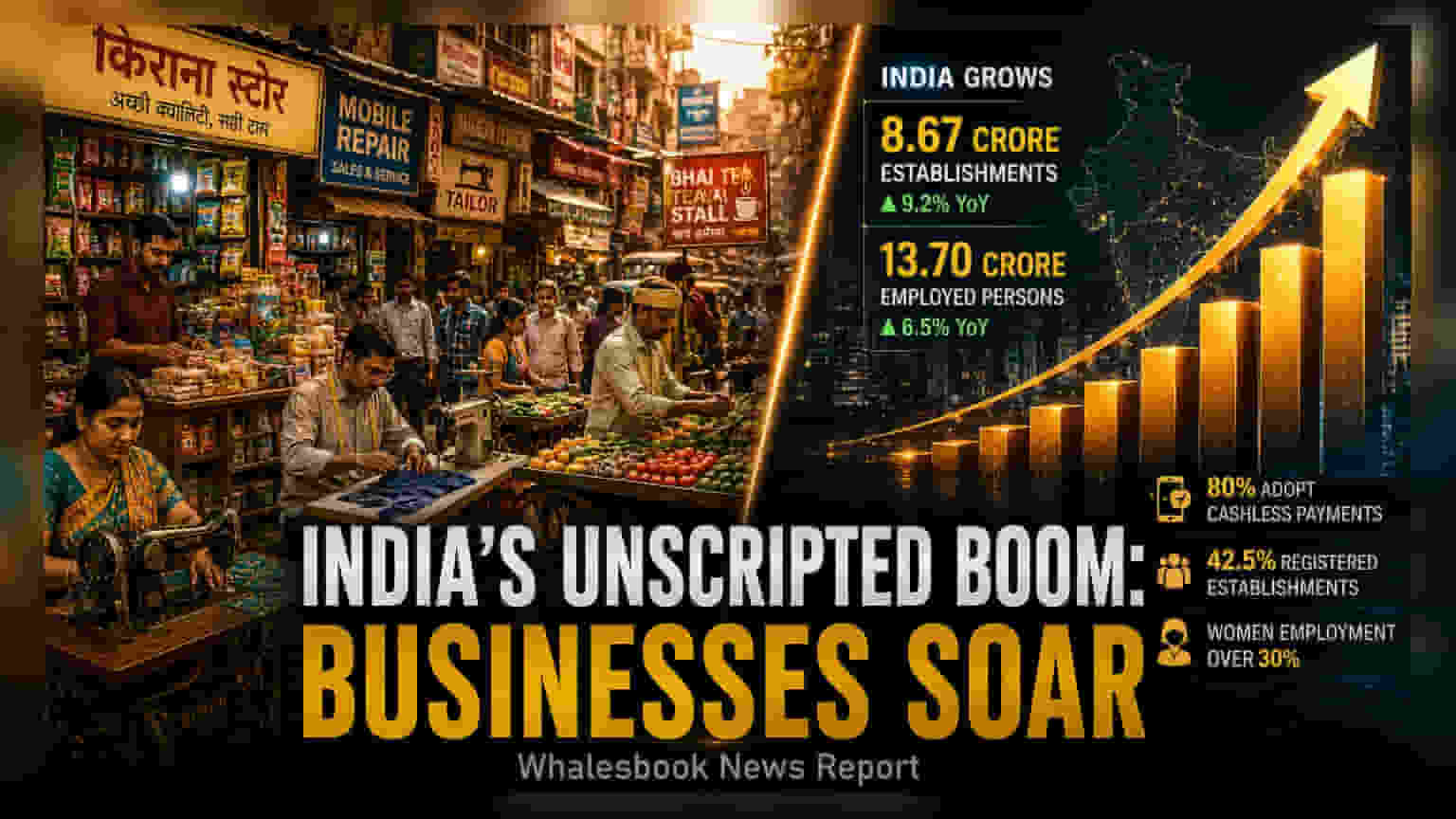
India’s unincorporated non-agricultural businesses grew 9.2% year-on-year to 8.67 crore in the April-June 2026 quarter, with employment rising by over 6.5%. While the sector shows increased digital adoption and formalization, the trade segment is shrinking, pointing to potential pressure on small retailers amid shifting consumer habits and e-commerce growth.
The latest Quarterly Bulletin on Unincorporated Sector Enterprises (QBUSE), released by the National Statistics Office, reports that India's unincorporated non-agricultural sector saw a 9.2% year-on-year expansion in the first quarter of the fiscal year, reaching a total of 8.67 crore establishments. Employment figures followed a similar upward trend, rising over 6.5% to 13.70 crore workers. This sector, which serves as a vital economic engine for self-employment, shows a growing inclination toward formalization, with registration levels climbing to 42.5%.
Digital transformation is a standout theme in the latest data. Approximately 80% of these establishments have adopted cashless transaction methods, a shift that generally improves their ability to access formal credit channels and banking services. The workforce composition also remains steady, with working owners continuing to dominate, accounting for over 62% of the sector, while women represent over 30% of total employment.
Despite the positive year-on-year growth, investors should look closely at the underlying trends. While the sector grew compared to the same period last year, some data indicates a sequential contraction, meaning the pace of growth has cooled compared to the immediately preceding quarter. This suggests that while the long-term trend remains positive, momentum in new business creation and job additions may be slowing down in certain regions, particularly rural areas.
Sectoral performance also tells a mixed story. The 'other services' category performed strongly, with employment and establishment counts both rising by over 21%. However, the unincorporated trade sector—which covers small retail shops and local vendors—reported a year-on-year decline, with establishments falling nearly 8% and employment dropping over 10%. This contraction is a notable monitorable for the economy, as it may reflect the growing impact of e-commerce expansion and changing consumer spending patterns on traditional small-scale retail.
For investors, the health of this sector is an important indicator of broader consumption demand and credit demand in the banking system. The decline in the trade segment suggests that small retailers are facing intense competition, which could affect their ability to sustain operations or seek further credit. The next important updates will be the trends in credit growth for these micro-enterprises and whether the trade sector can stabilize in the coming quarters.