

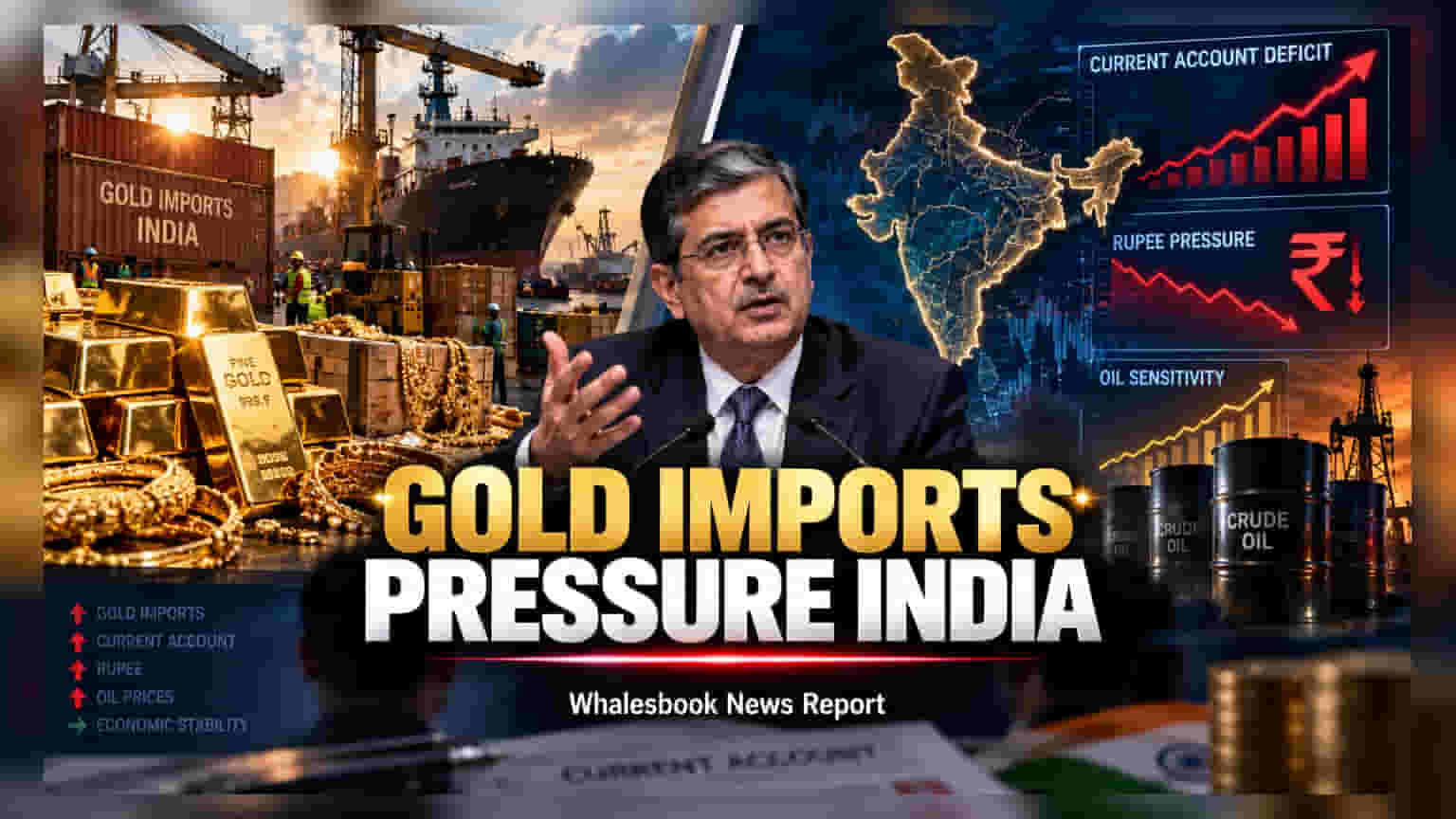
Uday Kotak has cautioned that gold imports, which reached $72 billion in FY26, could drive India’s current account deficit to $60 billion in FY27 if crude oil prices average $90 a barrel. This structural pressure on the country's external balance highlights potential risks for the rupee and overall economic stability, triggering calls for reforms to manage household gold demand.
Uday Kotak, founder and director of Kotak Mahindra Bank, has flagged concerns regarding the impact of high gold imports on India's external financial health. He suggested that policymakers need to find ways to balance household demand for gold with the need to protect the country’s current account, which measures the difference between what a nation earns from exports and what it spends on imports.
In FY26, India recorded a current account deficit of approximately $25 billion, while gross gold imports reached nearly $72 billion. Kotak noted that without the heavy outflow for gold, the country might have seen a current account surplus. His projections for FY27 suggest that if crude oil prices average $90 per barrel, the current account deficit could widen to roughly $60 billion. In this scenario, he estimated that gold imports could further increase to between $88 billion and $90 billion, putting additional strain on the economy.
Impact on External Finances and Currency
The combination of high oil and gold imports creates a significant demand for foreign currency. When a country needs more foreign currency to pay for its imports, it can put downward pressure on its currency, in this case, the rupee. A wider current account deficit also leaves the economy more vulnerable to global market volatility, as India becomes more dependent on external capital flows to bridge the gap.
Addressing this issue is complex because gold is deeply rooted in Indian culture as both a consumption item and a primary store of value for households. Kotak proposed that a formal committee should study how to meet this household demand without relying entirely on physical imports. He suggested that encouraging the use of financial products, recycling gold, and developing domestic supply channels could be part of the solution to move capital into more productive economic activities.
Broader Economic Priorities
Beyond gold imports, Kotak touched on broader macroeconomic priorities for India. He highlighted the need for fiscal consolidation, noting that the consolidated fiscal deficit remains above 7%, and emphasized the importance of coordination between the central and state governments.
He also shared a perspective on the stock market, arguing that capital markets should remain focused on long-term capital formation rather than just high-frequency trading. He cautioned that an excessive focus on volume can distract from the fundamental purpose of stock exchanges, which is to support liquidity, price discovery, and investment.
For investors, the key monitorable is the interaction between global commodity prices—specifically oil and gold—and their impact on India’s external deficit. Trends in these areas will remain critical for understanding potential pressures on the rupee and overall market sentiment in the coming quarters.