

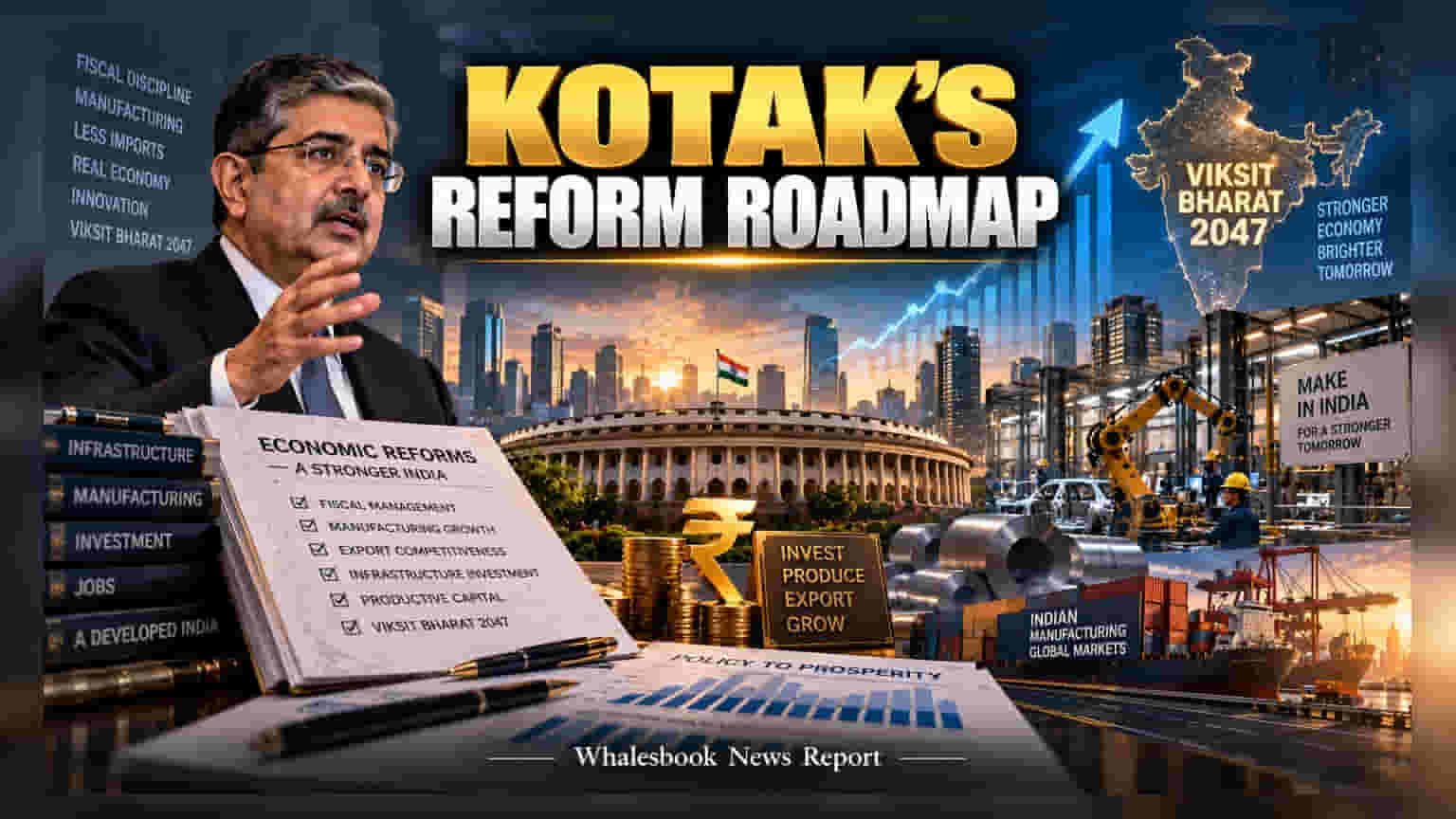
Veteran banker Uday Kotak has called for tighter fiscal control and a stronger manufacturing sector to help India reach its 2047 development goals. He cautioned against high consolidated fiscal deficits and excessive focus on financial assets over the real economy, while urging policymakers to integrate household gold into productive investment channels.
Veteran banker Uday Kotak has emphasized the need for stricter fiscal management and deeper economic reforms as India works toward its goal of becoming a developed nation by 2047. Addressing a gathering of state finance officials, the former leader of Kotak Mahindra Bank pointed out that India's consolidated fiscal deficit—the combined spending of the central and state governments—remains above 7%. He noted that this is higher than in countries like the United States, which operates at a deficit of around 6%, suggesting that India requires more efficient public spending to maintain long-term economic stability.
Manufacturing and Import Reduction
Kotak argued that India must prioritize reducing its reliance on imports by significantly expanding domestic manufacturing. He stressed that the country should focus on producing goods that are in high demand in international markets. Strengthening manufacturing capabilities is essential not only for boosting exports but also for building a globally competitive industrial base. This strategy is intended to protect the economy from external shocks while encouraging domestic job creation.
Balancing Financialization and Growth
Another critical observation was the risk of over-financialization. This happens when money flows primarily into financial assets like stocks and bonds rather than into the real economy, such as factories, infrastructure, and services. While healthy financial markets are necessary, Kotak warned that focusing too heavily on financial flows at this stage of development could hinder productive, tangible growth. He suggested that long-term progress requires a balance where capital is also directed toward building and expanding real-world businesses.
Productive Use of Gold
Addressing the persistent pressure on India's current account—the difference between what the country earns and spends abroad—Kotak highlighted the large amount of gold held by households. He suggested that policymakers should explore ways to channel this dormant wealth into the productive economy. If effective systems are created to monetize these assets, it could help reduce the country’s import bill and lessen the strain on foreign exchange reserves.
Next Steps for Policy
Looking ahead, Kotak stressed the importance of better coordination between the central and state governments to tackle external economic challenges. He also urged companies to adopt innovation and new technologies like artificial intelligence to modernize. For investors, the monitorable trends will include government efforts to narrow the consolidated fiscal deficit, policies related to manufacturing incentives, and any new initiatives aimed at unlocking value from household assets to support sustainable economic expansion.